Fisher challenges emerald claim
BY ADAM LINHARDT Citizen Staff
alinhardt@keysnews.com
http://keysnews.com/node/37095
1/10/2012
When Key West treasure salvor Jay Miscovich found emeralds worth as much as $500 million scattered on the sandy sea floor with no ballast pile or other sign of a shipwreck nearby, other salvors took notice.
But thus far, only one salvor is legally challenging Miscovich's claim to the treasure. Kim Fisher, the son of the late treasure-hunting legend Mel Fisher and head of Delaware-based salvage company Motivation Inc. claims the gems Miscovich recovered in the Gulf of Mexico in January 2010 came from the Spanish galleon Nuestra Señora de Atocha, which sank in a hurricane off Key West in 1622.
The Fisher family's companies have a legal claim to the Atocha and her sister ship, the Santa Margarita.
Though none of the precious stones were listed on manifests of the Atocha or the Santa Margarita -- the Spanish crown required only gold and silver to be listed -- Fisher claims Atocha inventories suggest it was carrying a large number of gems like those Miscovich recovered.
Though Miscovich has not found remnants of a ship on his site, he did find a cannonball, said his attorney, David Paul Horan. The exact location of the treasure site has not been disclosed, but it is west of Key West and at least 40 miles north of the main Atocha site, according to court documents.
If the stones were not from the Atocha or the Santa Margarita, then their source remains a mystery. For now. Fisher claims the Atocha site's boundaries have been amended periodically because the ship broke apart and was pushed northward by the hurricane that sank it, and from prevailing winds and ocean currents since that time, according to court documents.
"The Atocha artifact scatter trail now extends northward approximately 9.5 nautical miles from the Hawk's Channel Outer Reef point of impact that caused her sinking," according to court documents.
That scatter trail reportedly has continued a northern course through the Quicksands area, about 18 miles west of the Marquesas Keys, over the past two years.
Horan said the Atocha site and scatter trail have always been amended west by northwest, not some 40 miles due north, where Miscovich claims he found the gems. Fisher's claim disputes that location, saying Miscovich found the gems from 26 miles to 30 miles north.
Miscovich's company, JTR Enterprises, is asking U.S. District Judge James Lawrence King to dismiss Fisher's claim, and if dismissal is denied to ask Fisher to establish "objectively, verifiable criteria" when identifying Atocha emeralds, Horan said. "Otherwise, we're putting the cart before the horse," Horan said.
The emeralds, stored in a safe deposit box in New York City and a jewelry store in Pennsylvania, are headed to a safe deposit box in Key West, where they must be stored for the judge to have jurisdiction in the case, Horan said.
Miscovich submitted samples of the emeralds for analysis to the Smithsonian Institution's Museum of Natural History in Washington, D.C., the Gemological Institute of America and laboratories in France and Switzerland, according to court records. Miscovich plans to publish those findings when they are complete.
There appears little argument on either side that many of the stones were mined in the Muzo region of Colombia, in the foothills of the Andes. That determination was made by the Smithsonian, according to court documents.
There is some evidence, however, that some of the emeralds came not just from the Muzo mines, but the Chivor mines in Colombia, another heavily mined area that was abandoned in 1593, about 30 years before the Atocha sank.
alinhardt@keysnews.com
http://keysnews.com/node/37095


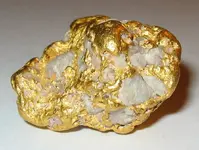


 Grubby is the prime holder of these claims. Wyatt was a sub owner. Worst that can happen is Wyatt will be removed. lol Maybe your vindictive motives should come into play here sir. Oh here's another that my dad found last month. 100.7 gramer, another three ouncer. Good try guys. Dad owns the claims as the primary. LOL Jealousy is a green eyed monster. Fact that they do not know is my father has owned these claims for over 10 years and added Wyatt just a few short years ago. To bad boys, you'll have to find another way to get to Grubby. He'll think of you as he runs a nozzle on a 8 in dredge in Sierra leone.