What's new

Fossils , concretions, need help w disc shaped fossil.

WoodsDigger

Sr. Member
Joined
Oct 6, 2024
Messages
283
Reaction score
489
Golden Thread
0
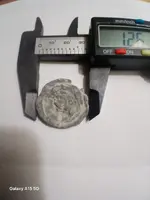
I have been picking these up at my local boat launch over the years. Nothing like I have ever seen . Source is the east end of Lake Ontario.
1000003816.webp
 

Attachments

  • 20260428_194113.webp
    20260428_194113.webp
    136.9 KB · Views: 43
  • 20260428_194044.webp
    20260428_194044.webp
    132.4 KB · Views: 48
Neat. Those appear to be clay or mudstone concretions, given various names according to locality but most commonly generically known as ‘clay babies’ or 'mud babies'. Typically they formed in the bottom sediments of post-glacial lakes (such as in the Great Lakes region) by mineral precipitation and carbonate cementation of the sediments around a nucleus. The nucleus that triggers their formation may have been organic in nature, so a fossil origin (of a kind) is possible, but with an age in the thousands of years rather than millions.

Lake Ontario was formed from glacial meltwater after the retreat of the Laurentide Ice Sheet roughly 12,000–16,500 years ago.

Some examples (but a wide variety of discoid shapes are possible, often showing concentric rings and a central dimple) and sometimes two or more discoids conjoined. They aren't always as 'perfectly' formed as these:

Mud Babies.webp
 
Last edited:
Neat. Those appear to be clay or mudstone concretions, given various names according to locality but most commonly generically known as ‘clay babies’ or 'mud babies'. Typically they formed in the bottom sediments of post-glacial lakes (such as in the Great Lakes region) by mineral precipitation and carbonate cementation of the sediments around a nucleus. The nucleus that triggers their formation may have been organic in nature, so a fossil origin (of a kind) is possible, but with an age in the thousands of years rather than millions.

Lake Ontario was formed from glacial meltwater after the retreat of the Laurentide Ice Sheet roughly 12,000–16,500 years ago.

Some examples (but a wide variety of discoid shapes are possible, often showing concentric rings and a central dimple) and sometimes two or more discoids conjoined. They aren't always as 'perfectly' formed as these:

View attachment 2251995
Thanks RC thats a solve as far as I am concerned. Nice work. I had a biology teacher tell me they were snails. One looks like it has a Mayfly emerging from it .
 
Neat. Those appear to be clay or mudstone concretions, given various names according to locality but most commonly generically known as ‘clay babies’ or 'mud babies'. Typically they formed in the bottom sediments of post-glacial lakes (such as in the Great Lakes region) by mineral precipitation and carbonate cementation of the sediments around a nucleus. The nucleus that triggers their formation may have been organic in nature, so a fossil origin (of a kind) is possible, but with an age in the thousands of years rather than millions.

Lake Ontario was formed from glacial meltwater after the retreat of the Laurentide Ice Sheet roughly 12,000–16,500 years ago.

Some examples (but a wide variety of discoid shapes are possible, often showing concentric rings and a central dimple) and sometimes two or more discoids conjoined. They aren't always as 'perfectly' formed as these:

View attachment 2251995
I tried to mark this solved. I am not finding the option.
 

Users who are viewing this thread

Back
Top Bottom