What's new

Found a 1920's dump site, but having trouble cleaning them up. Some are cracking!

FreeBirdTim

Silver Member
Joined
Sep 24, 2013
Messages
4,216
Reaction score
8,058
Golden Thread
1
Location
Scituate, RI
🥇 Banner finds
2
Detector(s) used
Garrett AT Pro
Primary Interest:
All Treasure Hunting
Discovered a 1920's dump site a few days ago while metal detecting. Found a few good things, such as a Warwick Bottling Works (W.B.W.) soda bottle, an Acme mason jar and 6 jar lids, including a couple of aquas. Nothing rare or valuable, but fun to find.

So here's my problem. Out of the 20 or so I brought home, 5 of them cracked when I was cleaning them up. After I cracked a couple with warm water, I went over to cooler water. But I still cracked 3 more with that method. The ground isn't cold here yet, so I didn't think I'd have any issues with this happening.

I cracked 4 jars and 1 bottle, but none of them were anything special. But I still don't like cracking them after I spend the time digging them up, dragging them through the woods and then cleaning them up. What am I doing wrong? Should I give them time to acclimate to my house temp and then clean them the next day? Any tips would be appreciated.

Here's what some of them looked like before cleaning. This dump is one muddy and nasty spot! LOL!
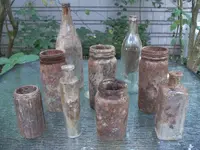
DSC07537.webp
 
Last edited:

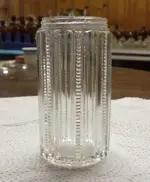
I'd also appreciate some help IDing this jar. It's 4 1/4" high and very heavy for it's size (11 ounces). No makers mark or any numbers on the bottom of the jar. Any guesses on this one?

DSC07549.webp
 
That's strange, the only thing I can think that would break glass would be temperature change. Match the water temp with the glass. Some poision bottles have ridges singular to your jar but I have no other clue. I hope that dump gives you some good keepers. Good luck.
 
I've had a handful of bottles crack in just the last few weeks. The temps haven't been cold at all, so I'm just as mystified.
 
I guess the safest way would be to wrap each find in newspaper straight out of the ground, take them home and let them sit for 24 hours, then wash in water as close in temperature to that of the glass as possible. Your finds look like later glass, which usually is more tolerant of temperature changes than earlier bottles.
 
I believe that piece you want identified is a salt/pepper/sugar shaker. It's got those studs for better grip, so that you don't shake the shaker right into your food while you're shakin'!

What these guys have said about preventing cracks is all good advice. Personally, after mine come out of the ground, the very first thing I do is wipe them off and observe them for damage (sometimes the damage you think you did was already there under the dirt). Then I wrap them in newspaper and store them at the bottom of my digging bag, which I keep out of the sun. If I'm going to keep digging though, I'll make a little temporary pile and cover the bottles with the cold dirt they came out of, and wrap them only when I'm about to head home. In the winter, once I get home I go down in the basement and completely submerge them in a bucket of water that's as cold as the average air temperature outside (so usually I just run the tap as cold as it can go). In the summer months (or especially during the spring thaw), the difference between the temperature of the air outside and the soil only a few feet underground can be much greater, so I'll sometimes go as far as to stuff the bottle or jar with the cold soil from which it came, then wrap and store in my bag out of the sun. How long you leave the bottle submerged in water is dependent on how great the temperature change was from when you took it out of the ground to when you got it in the water. I usually go two or three days for the more sensitive situations or if it's a bottle that I really don't want damaged. You might have to change the water in the bucket once or twice, because the water will warm up faster than an ice-cold bottle. The key is to gradually bring the water (and so the bottle) up to room temperature. The more slowly you do this, the safer!

Nice finds, and good luck!
 
those bottles likely had the damage before you cleaned them. Also if your worried about the bottles you can simply soak in vinegar to help break stuff loose, instead of scrubbing and putting pressure on them. Then if you can keep them in one piece there is ways to use special uv cure glue or this other stuff called hextal to repair important items or strengthen cracked areas that may break more. Hextal is the most archival choice and can be even used to recast chipped or missing pieces. let me know if you have any questions or need help or reference to materials.
 
those bottles likely had the damage before you cleaned them

That's probably the answer for most of them. They're so grungy that I didn't see the cracks ahead of time.
 
I guess the safest way would be to wrap each find in newspaper straight out of the ground, take them home and let them sit for 24 hours, then wash in water as close in temperature to that of the glass as possible

Sounds like a good idea. I'll try that method next time I drag some of them home. It's really annoying because the ground isn't cold yet. Never had this problem with other dump finds over the years.

Thanks for all the great advice, guys!
 
I believe that piece you want identified is a salt/pepper/sugar shaker

Thanks! That makes sense to me.
 
The glass was likely damaged before you brought it home. If you pull the bottles out of the ground and get all dirt/debris/gunk out of them, the bottles should warm up to the air temperature in about an hour or so. You can crack the glass by running warmer water inside them or submerging them in warmer water. Just let them acclimate to the inside temp of your home and clean them with tap water
 
I guess patience is a virtue when it comes to cleaning up bottles. I'll try to resist the urge to clean them right away and leave them alone until the next day.
 
Just a quick update. I dug 10 bottles and jars on Thursday morning. Brought them home, but didn't clean them right away. Let them sit in a box on my kitchen floor until Friday morning. Managed to clean all 10 with no cracking! So I guess that was the problem. They needed time to warm up and adjust to the higher temp of my kitchen before cleaning. Thanks for the input, guys!

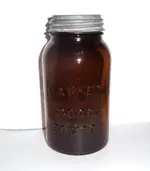
Here's the highlight of the dig. A really nice embossed "Wan-eta Cocoa" amber quart jar. No zinc lid on it when I dug it, so I scrounged one up to make it complete.

DSC07819.webp
 
Nice find! You said that the ground isn't that cold yet, but what about the air? If it is, then that's a change in temperature right there that can cause problems. That's why I suggested wrapping them straight out of the hole until you get home. Ground to air. Air to car. Car to house. A lot of changes for old glass...
 
I did wrap them in newspaper as well. I also put them in the trunk of my car instead of the back seat, which is what I usually do. Air temps are in the 50's and low 60's, so not too much different than the 55 degree ground. Back to the dump today!
 
Good thinking. Now, you'll be prepared for the day when you start finding those colored pontiled goodies!
 
If I ever find any pontiled bottles they'll be sitting in my kitchen for a week before I try to clean them. Cracking a 1920's bottle is a drag, but cracking an 1850's bottle would kill me!
 
it has been a while since I dug bottles but i remember having the same issues with cracking. even when I let them acclimate to current temps and match the water temps i still got some that cracked. i suspect when this happens it was a situation just like bass and Tpmetal stated. they may have had slight damage and trying to wash them was the proverbial straw and camel situation.
 
nice job free bird, that temp change DOES matter. But usually only when there is already stress or a flaw like a scratch or crack. So I'm assuming you figured out how to baby them through the cleaning process quite well by your last post. Don't worry if you break an old bottle ill talk you through fixing it. We have a guy i learned from in corning ny I learned from who fixes 4 to 5 thousand year old glass for museums.
 
nice job free bird, that temp change DOES matter. But usually only when there is already stress or a flaw like a scratch or crack. So I'm assuming you figured out how to baby them through the cleaning process quite well by your last post. Don't worry if you break an old bottle ill talk you through fixing it. We have a guy i learned from in corning ny I learned from who fixes 4 to 5 thousand year old glass for museums.

wow had no idea you could fix old bottles, very cool
 

Users who are viewing this thread

Back
Top Bottom