What's new

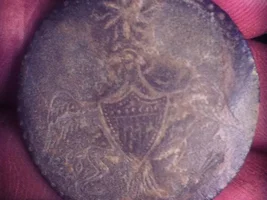
French relic from colonial site?

Almy

Bronze Member
Joined
Mar 18, 2011
Messages
2,010
Reaction score
3,978
Golden Thread
0
Location
Maritime Provinces
Detector(s) used
Tesoro Cibola
Primary Interest:
Other
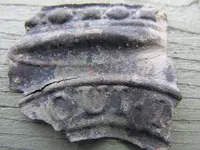
This area has a pre-Loyalist, French history but so far I have found only Loyalist-era relics and coins. But this piece of thin brass has "OUI" and a space and then an "M" or "N". This looks like a section of a circular object that, from the curvature, might be 6" in diameter or larger. I can think of words in French and Spanish that have "oui" in them, but not at the end. So this may be the French "yes." What do you all think?
 

Attachments

  • IMG_1350.webp
    IMG_1350.webp
    289.9 KB · Views: 657
It is amazing to me that you could recognize the motto from that fragment. Must be the same talent that ancient text translators use. Looking closely, I can see the little que on the capital O that makes it a Q. I did not notice it before. So it fits the Order of the Garter all right. Having looked at the description of that, I see it is limited to royalty, pretty well, with very limited numbers of members. Accoutrements are rich, gold and returned to the reigning monarch of England when a member dies. So how could a thin, brass Order emblem be in a poor (probably), Loyalist home in Canada?
 
Upvote 0
AcadienLoyalistMarco said:
It is amazing to me that you could recognize the motto from that fragment. Must be the same talent that ancient text translators use. Looking closely, I can see the little que on the capital O that makes it a Q. I did not notice it before. So it fits the Order of the Garter all right. Having looked at the description of that, I see it is limited to royalty, pretty well, with very limited numbers of members. Accoutrements are rich, gold and returned to the reigning monarch of England when a member dies. So how could a thin, brass Order emblem be in a poor (probably), Loyalist home in Canada?

The 'Order' itself is limited as you say. But the use of the motto is common for many British Military Regiments, so its most likely British Military related (although there are a couple of other establishments which use it). Being stamped Brass/copper-alloy its probably not much older than WWI, however, there is not enough left for me to say it's function.
 
Upvote 0
Thank you, Cru. It now fits with the other relics I have been finding.
 
Upvote 0

Users who are viewing this thread

Back
Top Bottom