What's new

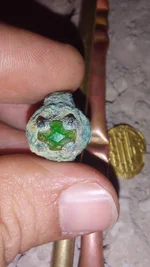
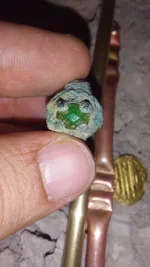
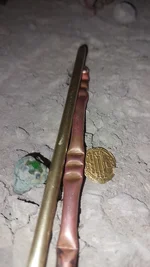
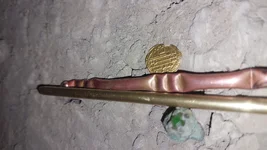
Gold Coin Hunt & Silver Ring with Green Jade Gemstone Discovery

MR.MHMD(MOHAMMAD)

Jr. Member
Joined
Oct 1, 2026
Messages
36
Reaction score
82
Golden Thread
0
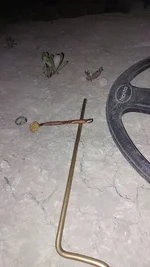
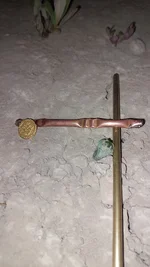
Search, Identification & Recovery Using a Custom Dowsing Structure and Geochemical Formula
Designed to support the simultaneous search and differentiation of two metals.
  • Search Radius: 20 meters
  • Recovery Depth: 50 cm
  • Complementary Metal Detector: Impact Pro
A field exploration combining a custom dowsing structure, a geochemical formula, and complementary metal-detection equipment.
 

Attachments

  • 20250605_025843.webp
    20250605_025843.webp
    212.2 KB · Views: 27
  • 20250605_025829.webp
    20250605_025829.webp
    178.2 KB · Views: 23
  • 20250605_025710.webp
    20250605_025710.webp
    2.4 MB · Views: 25
  • 20250605_025647.webp
    20250605_025647.webp
    2.6 MB · Views: 25
  • 20250605_025544.webp
    20250605_025544.webp
    3.3 MB · Views: 25
  • 20250605_025556.webp
    20250605_025556.webp
    3 MB · Views: 24
  • 20250603_205457.webp
    20250603_205457.webp
    2 MB · Views: 24
  • 20250603_205434.webp
    20250603_205434.webp
    1.7 MB · Views: 26
  • 20250603_205329.webp
    20250603_205329.webp
    2.9 MB · Views: 23
  • 20250603_205233.webp
    20250603_205233.webp
    2.8 MB · Views: 24
  • 20250603_204937.webp
    20250603_204937.webp
    2 MB · Views: 26
Upvote 6

How does your Custom Dowsing Structure and Geochemical formula work?
Is there a reason your gonna mention it in every post, but keep us in the dark.
Congrats on your finds!
 
Thank you for your question and for the congratulations.
The reason I repeatedly mention the Custom Dowsing Structure and Geochemical Formula, while not explaining the exact mechanism or composition, is mainly because of the nature of my work and also the rules of this platform. TreasureNet is primarily a place for sharing finds and experiences, and I do not want my posts to become promotional or commercial content.
I am an independent researcher and inventor from Iran, working on specific formulations and custom structures for metal detection and discrimination. I have also documented my work in a research paper. However, I have not yet been able to proceed with patent registration in the United States. As an independent researcher, I currently lack the necessary international connections, legal guidance, and resources to properly navigate the U.S. patent process.
For that reason, I intentionally keep the chemical composition, proportions, preparation methods, and some technical details confidential. This is not intended to keep the community in the dark; it is simply a matter of protecting unpublished research until I can establish the appropriate legal and research framework.
I am happy to share the actual finds, field observations, testing experiences, and general methodology whenever possible, without revealing proprietary details.
And there is more to come. I will soon be revealing another interesting European historical artifact that I think will make for an even more interesting post.
One of my personal goals as a researcher is to eventually have the opportunity to conduct large-scale, completely legal exploration in the United States, following all applicable laws and regulations, and to put my research to the test under properly documented field conditions.
Thank you again for your interest and for taking the time to ask.
 
Are you able to sell your finds?
What do you use for your complimentary metal detector, is it a deep detector?
 
Are you Long range locating, Lrl?
Are you using a set of Dowsing rods or electronics?
What distances do you get?
 
Search, Identification & Recovery Using a Custom Dowsing Structure and Geochemical Formula
Designed to support the simultaneous search and differentiation of two metals.
  • Search Radius: 20 meters
  • Recovery Depth: 50 cm
  • Complementary Metal Detector: Impact Pro
A field exploration combining a custom dowsing structure, a geochemical formula, and complementary metal-detection equipment.
The ring looks interesting.
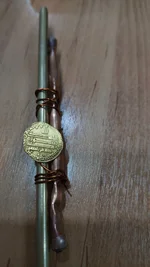
The coin in your photo is a casted copy though.

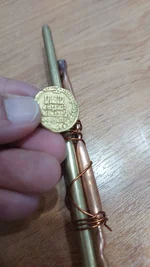
The item is modeled directly after an early Islamic Gold Dinar from the Abbasid Caliphate (dating roughly to the late 8th century, such as the reigns of caliphs Al-Mansur or Al-Mahdi). However, it exhibits several hallmarks of modern cast reproductions:
  • Soft, Spongy Details: Genuine Abbasid dinars were hammered coins. A genuine specimen features crisp, sharp, geometric lines in its Arabic Kufic script. In contrast, this piece features soft, rounded, and mushy lettering, which occurs when a mold is made from an existing coin to cast copies.
  • Surface Pitting and Texture: The fields (the flat background areas) display an uneven, granular texture and tiny pinholes. This is a classic indication of a cast reproduction where air bubbles were trapped in molten metal.
  • Incorrect Coloration and Patina: Authentic dinars are struck from high-purity gold (frequently 95%–99% fine). High-carat gold does not naturally dull or oxidize in this matte, dull-greenish gray tone. The color suggests a base metal alloy (such as brass or pewter) that has been treated or chemically aged.
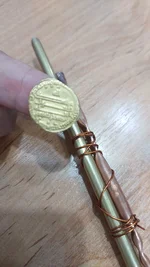
  • Modern Alteration: The piece is actively being used as a decorative cap or jewelry accent, wrapped roughly onto copper wires and metallic tubes.
While it beautifully captures the central Islamic declaration of faith ("Allah" is clearly legible at the top of the central script), the physical construction points heavily toward it being a costume jewelry piece or a modern educational souvenir reproduction.

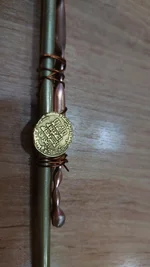
The other side:

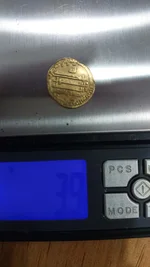
The text on this side is modeled after the central reverse inscription of an early Islamic coin, which reads "Muhammadur Rasoolullah" (Muhammad is the Messenger of God). However, the physical flaws from casting are even more evident here:
  • Soft and Merged Lettering: The early Arabic Kufic script is completely rounded out and faint. On an authentic hammered coin, these letters would stand out in sharp, distinct relief. Here, the characters appear "mushy" and look like they flowed together in a liquid mold.
  • Artificial Surface Pitting: The entire surface—especially in the flat fields around the lettering—is covered in heavy, grainy pitting. This microscopic bubbling is the classic hallmark of cheap centrifugal or sand-casting methods using base metals, rather than the clean, flat surfaces produced by striking coin blanks with hand-carved steel dies.
  • Faux Wear Patterns: The uneven rim and the wavy edges are intentionally stylized to give the illusion of ancient, irregular hand-striking, but the uniform dull brassy texture throughout reveals it was manufactured all at once.
This piece is a decorative replica, likely made out of brass, bronze, or a plated base metal, meant to be used as a design element or jewelry component.
 
Thank you for your question and for the congratulations.
The reason I repeatedly mention the Custom Dowsing Structure and Geochemical Formula, while not explaining the exact mechanism or composition, is mainly because of the nature of my work and also the rules of this platform. TreasureNet is primarily a place for sharing finds and experiences, and I do not want my posts to become promotional or commercial content.
I am an independent researcher and inventor from Iran, working on specific formulations and custom structures for metal detection and discrimination. I have also documented my work in a research paper. However, I have not yet been able to proceed with patent registration in the United States. As an independent researcher, I currently lack the necessary international connections, legal guidance, and resources to properly navigate the U.S. patent process.
For that reason, I intentionally keep the chemical composition, proportions, preparation methods, and some technical details confidential. This is not intended to keep the community in the dark; it is simply a matter of protecting unpublished research until I can establish the appropriate legal and research framework.
I am happy to share the actual finds, field observations, testing experiences, and general methodology whenever possible, without revealing proprietary details.
And there is more to come. I will soon be revealing another interesting European historical artifact that I think will make for an even more interesting post.
One of my personal goals as a researcher is to eventually have the opportunity to conduct large-scale, completely legal exploration in the United States, following all applicable laws and regulations, and to put my research to the test under properly documented field conditions.
Thank you again for your interest and for taking the time to ask.
 
Are you able to sell your finds?
What do you use for your complimentary metal detector, is it a deep detector?
We only sell our finds to licensed and authorized dealers. In Iran, selling archaeological finds is illegal outside the legal framework.
As a complementary detector, we use the Impact Pro, a Turkish-made point detector. For a metal target approximately 30 × 30 cm in size, the maximum depth we have observed it detecting is around 130 cm.
 

Users who are viewing this thread

Back
Top Bottom