What's new

Silver Coin Discovery Using a Geochemical Formula 🪙🔬

MR.MHMD(MOHAMMAD)

Jr. Member
Joined
Oct 1, 2026
Messages
32
Reaction score
70
Golden Thread
0
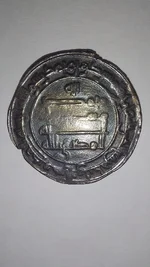
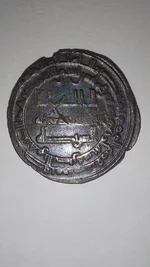
🪙 An Exceptional Silver Coin Discovery
Using a specialized dowsing instrument supported by a geochemical approach to target identification and discrimination.
📍 Reported field results:
  • Search radius: 30 meters
  • Recovery depth: 50 cm
  • Target: Silver coin
🔬 Independent field research combining specialized dowsing techniques with encapsulated geochemical formulas.
A remarkable find from the field!
from Iran.khouzestan
 

Attachments
  • 20260615_115513.webp
    20260615_115513.webp
    422.7 KB · Views: 21
  • 20260615_115527.webp
    20260615_115527.webp
    456.2 KB · Views: 21
Upvote 6
🪙 An Exceptional Silver Coin Discovery
Using a specialized dowsing instrument supported by a geochemical approach to target identification and discrimination.
📍 Reported field results:
  • Search radius: 30 meters
  • Recovery depth: 50 cm
  • Target: Silver coin
🔬 Independent field research combining specialized dowsing techniques with encapsulated geochemical formulas.
A remarkable find from the field!
from Iran.khouzestan
Very interesting. What can you tell us about the coin. Congratulations.
 
Your coin appears to be a silver dirham minted during the early Abbasid Caliphate, specifically matching the era of the second Caliph, Al-Mansur (reigned 754–775 CE / 136–158 AH) or the third Caliph, Al-Mahdi (reigned 775–785 CE / 158–169 AH).
Based on the die structure and character spacing, coins bearing this precise calligraphy style were struck at the central capital mint of Madinat al-Salam (Baghdad) between 146 AH and 160 AH (roughly 763–777 CE).
Keep swinging and posting.
Don in SoCal
 
Very interesting. What can you tell us about the coin. Congratulations.
Thank you for your kind words and congratulations!
This discovery is part of my field research using a specialized dowsing tool combined with my own geochemical formula.
I’m currently documenting my findings, and I’m particularly interested in the historical background and identification of the recovered objects. Further examination would be needed to determine the coin’s exact age, origin, and historical significance.
I’m happy to share more details about the discovery process and my ongoing research.
Best regards,
Mohammad Mortezazadeh
 
Your coin appears to be a silver dirham minted during the early Abbasid Caliphate, specifically matching the era of the second Caliph, Al-Mansur (reigned 754–775 CE / 136–158 AH) or the third Caliph, Al-Mahdi (reigned 775–785 CE / 158–169 AH).
Based on the die structure and character spacing, coins bearing this precise calligraphy style were struck at the central capital mint of Madinat al-Salam (Baghdad) between 146 AH and 160 AH (roughly 763–777 CE).
Keep swinging and posting.
Don in SoCal
 
Thank you so much, Don! I really appreciate your detailed analysis and historical insight. Your observations regarding the calligraphy, die structure, and possible minting period are very interesting.
The coin was discovered in southern Iran, along with several other artifacts, which makes the historical context of this find particularly fascinating. Given the region’s long history of trade and cultural exchange, several possibilities remain open until a more detailed examination of the coin’s inscriptions, design, and mint marks can be carried out.
I’m continuing to document my discoveries and would genuinely value any further insights you might have. It’s great to connect with people who share a passion for history and artifact hunting.
Thanks again for taking the time to share your knowledge, and happy hunting!
Best regards,
Mohammad
 
Thank you so much, Don! I really appreciate your detailed analysis and historical insight. Your observations regarding the calligraphy, die structure, and possible minting period are very interesting.


The coin was discovered in southern Iran, along with several other artifacts, which makes the historical context of this find particularly fascinating. Given the region’s long history of trade and cultural exchange, several possibilities remain open until a more detailed examination of the coin’s inscriptions, design, and mint marks can be carried out.


I’m continuing to document my discoveries and would genuinely value any further insights you might have. It’s great to connect with people who share a passion for history and artifact hunting.


Thanks again for taking the time to share your knowledge, and happy hunting!


Best regards,
Mohammad
 
Sir: If you could post more pics of both sides of the coin in natural sunlight (without the glare), more details may become evident.
Don in SoCal
 
Reading the coin's specific date is 'above my pay grade' since the date is spelled out in numerical words (e.g., sana arba' wa-sittin wa-mi'a for the year 164 AH) rather than numerical digits. I'll still enjoy seeing more pics.

Researching the coins on this page (Caliphs and dirham) might pin down the exact coin.
Don in SoCal.
 
Last edited:
Very interesting. What can you tell us about the coin. Congratulations.
Reading the coin's specific date is 'above my pay grade' since the date is spelled out in numerical words (e.g., sana arba' wa-sittin wa-mi'a for the year 164 AH) rather than numerical digits. I'll still enjoy seeing more pics.
Don in SoCal.

Thank you so much for your kind words and congratulations!
The coin was found in southern Iran, an area with a long and fascinating history. From its appearance, inscriptions, and overall style, it looks like an Islamic silver coin, possibly a dirham.
I’m still trying to identify the exact ruler, mint, and date. Those details could tell us a lot more about the coin and how it may have circulated in the region.
What makes the discovery even more interesting is that it was found along with other historical objects in the same area. I’ll post clearer photos of both sides of the coin soon so that the inscriptions and details can be examined more closely.
I’d really appreciate hearing your thoughts and opinions on it!
 

Users who are viewing this thread

Back
Top Bottom