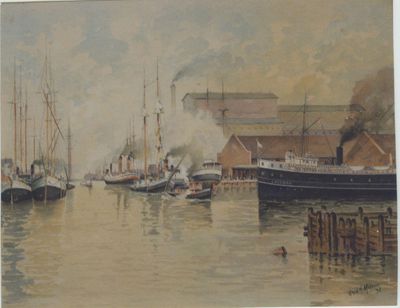
- #1
Thread Owner
I have nearly completed volume three of a planned six volume set of (ORIGINAL) lost treasure stories. The stories I place on Treasurenet are those that are nice to know about, but for the average treasure hunter will probably be to difficult to search for, so I am allowing you to peruse them as you see fit. Unlike many, if not all, treasure books, my stories will all have GPS locations to give the treasure hunter places to start looking. (I was always frustrated looking for a treasure after it was re-written by every author who put pen to paper ten or fifteen times.) If you ever find one of these treasures, please send me a token of your appreciation. Some time this summer after I have written a few more stories from my treasury I will be looking for a publisher. My current estimate is that each book will have treasures valued at one billion dollars or more with the metal rates expected by the end of the year. My expected metal values will be Gold - $5,000, and Silver $100 by the end of the year.
Gone Through a Crack in the Lake:
The Gold and Silver of the SS Chicora©
By
T. R. LewisShe left Milwaukee on a cold January morning and never came back. All 24 aboard died. Her treasure has been on the lake floor for 130 years.
$50,000 in gold coins, 1895 value
Silver ingots aboard at time of sinking
270 feet depth of the wreck
16 miles offshore from Saugatuck
Chicora wreck site (approx.) · 42° 30' N 86° 45' W; St. Joseph, MI — home port · 42° 06' 24" N 86° 29' 12" W; South Haven Light · 42° 24' 08" N 86° 17' 04"; W Saugatuck Harbor · 42° 40' 35" N 86° 12' 58" W; Bridgman Beach · 41° 58' N 86° 33' W (approx.)
The Queen of the Lake
On June 26, 1892, about a thousand people crowded onto the Orleans Street waterfront in Detroit to watch a new ship slide into the water. She was 217 feet long, built of heavy planking six inches thick, and fitted out in a way that made other Great Lakes steamers look plain. Her passenger cabin ran almost the full length of her deck. Inside, the walls were mahogany. She had 56 private staterooms, sleeping space for 200 people, a social hall, a smoking room, and 250 electric lights powered by her own onboard generator. She could make the run from Benton Harbor to Chicago — 65 miles of open water — in three hours and forty minutes. Her owner paid $150,000 for her. She was called the Queen of Lake Michigan.
Her name was the SS Chicora, and she belonged to the Graham & Morton Transportation Company, based out of St. Joseph and Benton Harbor, Michigan. In the summers she ran daily passenger service between the Michigan shore and Chicago. In the fall and winter, when passenger traffic dried up, she hauled freight.
She was built to handle winter sailing. Her outer planking was six inches thick. Three waterproof compartments ran through her hull. Her builders gave her a guaranteed top speed of 17 miles per hour — fast for a ship her size. The Detroit Dry Dock Company designed her to push through ice and ride out January gales on Lake Michigan, which are some of the worst storms in the freshwater world. Owners and crew were confident she could take whatever the lake threw at her.
SS Chicora — Ship Record
One Last Trip
By January of 1895, the Chicora had been tied up at her dock in St. Joseph for the winter. Her carpets were ashore. Her piano was ashore. Her windows were boarded over and parts of her hull were wrapped in iron sheeting to protect against drifting ice. She was done sailing until spring. So were most of her crew, who had scattered back to their homes in St. Joseph, Benton Harbor, and Lapeer.
Then a job came in. Someone in Milwaukee had a shipment of flour that needed to reach St. Joseph before the winter closed down completely. John Graham, the company owner, decided to make the crossing. He wired Captain Edward Stines and told him to get the Chicora ready.
Edward Stines had been working the Great Lakes for 20 years. He knew every mood the lake could be in, and he knew what January could do. He also knew his crew was thin. Several regular hands had gone home for the winter and weren't coming back until spring. To fill the gap at Second Mate, Stines signed on his own son, Benjamin Edward Stines, 23 years old, to take the post.
Key Location · St. Joseph Home Port
St. Joseph Harbor, Michigan
42° 06' 24" N · 86° 29' 12" W
The Chicora's home port, where she was docked for the winter when the final voyage began. Captain Stines and most of the crew were local men from St. Joseph and neighboring Benton Harbor. The harbor sits at the mouth of the St. Joseph River on Lake Michigan's eastern shore.
On Sunday morning, January 20, 1895, the Chicora crossed to Milwaukee without trouble. The weather was unusually mild for January, and the lake was calm. The ship docked, took on the flour, and the crew slept. The next day — Monday, January 21 — was another pleasant morning. Calm water. Light wind from the southeast. Captain Stines had the Chicora underway at 5:00 in the morning and pointed her east across 65 miles of open lake.
Ten minutes after she left the dock, a messenger boy arrived at the pier with a telegram. It was from John Graham, writing from his home in Benton Harbor, where the barometer had been dropping hard since before dawn. The message told Stines not to sail. Stay in Milwaukee. Wait out whatever was coming.
The Chicora was already gone.
No one on board ever read that telegram.
The Storm That Keeps No Records
The lake was fine when they left. The southeast wind at 26 miles per hour was something a ship like the Chicora could handle without breaking a sweat. The crew had crossed this stretch of water dozens of times. Six hours, maybe less, and they'd be home.
Around midday, the wind shifted. It swung around to the southwest and started to build. By mid-afternoon it was a full January gale. Then there was a blizzard. The temperature fell fast and ice began forming on the hull, the rigging, and the deck. Sixty-four mile-per-hour winds drove walls of sleet across the water. Waves crashed over the bow. The engine, fighting both the storm and the extra weight of ice forming on every surface, began to lose ground.
People on the Michigan shore started seeing things they couldn't explain. A man in South Haven reported a large ship heading toward shore with its stern low and sinking — the posture of a vessel taking on water fast. Another ship was spotted off South Haven blowing her horn in continuous bursts, a distress signal the whole coast recognized. From the Benton Harbor pier, someone saw a red light on the water — possibly a signal lantern from the Chicora — then it went out. The ice that had built up in the harbor mouths of St. Joseph and Benton Harbor made it impossible for any rescue vessel to get out onto the lake.
Key Location · Where Wreckage First Came Ashore
South Haven, Michigan — Lake Michigan shoreline
42° 24' 08" N · 86° 17' 04" W
Witnesses here reported seeing the Chicora in distress on January 21, 1895. The first wreckage — decking, oars, both masts — was found frozen into the lake ice between South Haven and Saugatuck shortly after the storm passed. The South Haven lighthouse has stood here since 1872.
When the storm broke, a dozen men from Saugatuck walked out onto the lake ice to look. About three-quarters of a mile from shore, stretching in a line from Saugatuck toward South Haven, they found wreckage frozen into the surface: an eight-foot section of deck planking, some oars, and both of the ship's masts. The masts were dragged ashore and given to the village of Douglas, Michigan, where they became the village flagpole for about 40 years before rotting away in the 1930s. The flagpole's remains are at the Allegan County Museum.
Nobody found any bodies. Not that day. Not in the weeks after. Not in the months that followed. Not ever. The lake did not give them back. Of the 24 people aboard — 23 crew and one passenger — not one survived. Captain Stines and his son Benjamin went into the water together.
"The Chicora is one of those vessels which 'sailed through a crack in the lake,' disappearing with all 25 hands and leaving little evidence behind."
— Great Lakes historian Jack Swayze, quoted in Maritime History of the Great Lakes
Words Written While Drowning
In the weeks after the sinking, more pieces of the Chicora drifted ashore along the Michigan coastline. Engine room chairs. Mahogany paneling from the passenger cabin. A silver bracket from the ship's clerk's office. A fire extinguisher with CHICORA stamped on it.
Three months after the ship went down, on April 14, 1895, a bottle washed up near South Haven. Inside was a handwritten note. Someone on the Chicora, in the last minutes before the ship went under, had grabbed paper and ink, written a message, stuffed it in a bottle, and thrown it overboard on the chance that somebody might find it someday and know what happened. The note read:
"All is lost, could see land if not snowed and blowed. Engine give out, drifting to shore in ice. Captain and clerk are swept off. We have a hard time of it. 10:15 o'clock."
— Note in a bottle, found April 14, 1895, near South Haven, Michigan
They could see land. Sixty-five miles of open water and they made it almost all the way — close enough to see the Michigan shore through the snow — but the engine was dead, the ice had them, and the captain was already gone. Nobody knows who wrote the note. Nobody knows if that person was still alive when it washed up three months later.
A week after the bottle was found, a jar washed ashore at Glencoe, Illinois, on the western side of the lake. It contained another note, written on paper torn from a small pocket notebook. In early February, a tug crew out of Chicago reported seeing what looked like the hull of the Chicora floating on the open water with people still alive on it. The ship's regular clerk — a man named W.J. Hancock who had missed the sailing because he was sick — rented a tug and raced out to look. He found a dark iceberg covered in seagulls. No ship. No survivors.
What Was in the Hold
The official cargo manifest listed flour. But several historical sources — shipwreck researchers and treasure-hunting records among them — report that the Chicora was also carrying roughly $50,000 worth of gold coins and an unknown quantity of silver ingots when she went down. Silver ingots, solid bars of refined silver, were how banks and businesses moved large sums in 1895: heavy, stackable, and difficult to pilfer piece by piece.
After the wreck, the coins made themselves known. In the years following the sinking, gold coins began washing up on Bridgman Beach near St. Joseph during storms. Locals walking the beach after heavy weather would find them glinting in the wet sand. Whiskey bottles from the Chicora's cargo came up too. The coins that reached the beach were the ones scattered when the ship broke apart in the storm. The rest — the ingots and the bulk of the gold — stayed with the hull on the bottom.
Key Location · Where Gold Coins Washed Ashore
Bridgman Beach, near St. Joseph, Michigan
approx. 41° 58' N · 86° 33' W
A Lake Michigan beach town just south of St. Joseph where gold coins from the Chicora reportedly washed ashore during storms after the 1895 sinking. The coins confirmed that part of the ship's gold cargo broke loose when the vessel went down.
Chicora Treasure — Estimated Values at Report Rates
Gold quantities are converted from the $50,000 cargo value at 1895 gold prices. Larger silver ingot quantities — which some accounts suggest — would raise this total considerably. Intact gold coins from a 130-year-old freshwater shipwreck carry collector premiums far beyond metal weight alone.
Gold does not corrode at all. Silver corrodes slowly in fresh water, far more slowly than in the ocean. The wooden boxes and strongboxes that held the coins and ingots have almost certainly broken down over 130 years, but the metal beneath them has not.
A Hundred Years of Searching
For more than a century, the SS Chicora was what researchers called the Holy Grail of lost shipwrecks in southwest Michigan. Everybody knew she was out there. Everybody had a rough idea of where she went down. And nobody could find her.
Lake Michigan is 307 miles long and 118 miles wide. The southern half — the stretch between Milwaukee and the Michigan shore — runs a few hundred feet deep in spots and near zero visibility in others. Side-scan sonar existed, but scanning every square mile of that bottom was the work of years. And the Chicora, at 217 feet, is a small target in a very big lake.
Key Location · Northern Edge of the Search Zone
Saugatuck Harbor, Michigan
42° 40' 35" N · 86° 12' 58" W
Where the Chicora's masts and the first line of wreckage were found in January 1895, frozen into lake ice three-quarters of a mile from shore. The harbor sits at the mouth of the Kalamazoo River.
Several times over the years, a wreck showed up on sonar and searchers got excited — only to find it was something else entirely. In the 1990s a wreck off South Haven that many people believed was the Chicora turned out to be the H.C. Akeley, a different steamer that had also gone missing. The people who cared about the Chicora kept going anyway.
A group of Holland, Michigan, divers organized themselves into the Michigan Shipwreck Research Associates and spent four years running systematic sonar sweeps of the bottom between Saugatuck and St. Joseph. Hundreds of miles of lake bottom. Dozens of promising contacts investigated and ruled out.
In May of 2001, the sonar hit something that didn't look like anything they had ruled out before.
Down 270 Feet
The wreck was 16 miles offshore from Saugatuck, resting upright in 270 feet of water. The sonar profile showed a wooden vessel roughly 200 feet long. The size was right. The location was right. The team sent a remotely operated video camera down to take a look.
What came back on September 15, 2001, settled things. The footage showed ornate railings that matched historical drawings of the Chicora. Paint is still visible on the hull after 106 years in fresh water. Window openings in exactly the positions the Chicora's original design drawings showed. Artifacts scattered across the deck. The Michigan State Archaeologist was notified. A Michigan State Police representative was brought in to observe as the team documented what they had found.
Key Location · SS Chicora Wreck Site
Lake Michigan, 16 miles west of Saugatuck
approx. 42° 30' N · 86° 45' W
The wreck site was identified by Michigan Shipwreck Research Associates in May 2001, confirmed by video documentation in September 2001. At 270 feet depth, the site requires special breathing gas mixtures — standard compressed air is not safe below about 130 feet. Exact GPS coordinates are protected by the state. The site falls within the Southwest Michigan Underwater Preserve.
The following year, two technical divers — Doug Welsch of Fennville and Charles Larsen of Holland — made the 270-foot dive in person. They described the Chicora's bow in good condition, railings intact, the hull's woodwork still solid after more than a century on the bottom. The cold, dark fresh water had preserved the ship the way a wreck in the ocean never could have been.
The Chicora Preservation Society was formed, pulling together researchers Jan Miller, Valerie and Jack van Heest, and Craig Rich to document the site and work with state archaeologists.
"The loss of the steamer Chicora on January 21, 1895, remains the single greatest mystery on Lake Michigan."
— Michigan Shipwreck Research Association
Some of the gold coins washed ashore in the years after the sinking — those were the ones that broke free when the storm tore through the ship. What stayed locked in the strongbox or the cargo hold stayed at the bottom. The wreck was found with its hull intact, upright, and well-preserved. Whatever the hull protected is still inside it.
Found, But Not Free
Michigan law treats abandoned shipwrecks in state waters as state property. The Chicora also sits inside the Southwest Michigan Underwater Preserve, a protected zone managed by the Michigan Department of Natural Resources that runs along the western Michigan lake shore from just north of Holland all the way to the Indiana border. Removing artifacts from a protected wreck without a state permit is a crime. Even visiting the site without coordination can cause legal trouble.
Key Location · Southwest Michigan Underwater Preserve
Lake Michigan — Benton Harbor offshore area
42° 08' 31" N · 86° 31' 44" W (preserve center)
A state-protected preserve covering Lake Michigan waters along Michigan's southwest shoreline, from north of Holland to the Indiana border. Seventeen shipwreck sites are documented within it. The Chicora wreck falls within these boundaries.
Key Location · Detroit Dry Dock Shipyard
Orleans Street yard, Detroit, Michigan
42° 19' 37" N · 83° 02' 22" W
Where the Chicora was built and launched on June 26, 1892, before about 1,000 people on the Orleans Street waterfront. The Detroit Dry Dock Company's yard produced some of the finest ships ever to sail the Great Lakes.
The Chicora sits 16 miles off the Michigan shore, 270 feet down, in water cold enough to preserve a wooden ship for well over a century. The wreck is known. The location is known. The treasure inside is documented in historical records. And nobody can legally touch it.
Chicago writer Nelson Algren wrote about the Chicora in his famous prose poem about the city, decades after she sank: "Who now knows the sorrowful long-ago name of the proud steamer Chicora, down with all hands in the ice off South Haven?" When he wrote that, few people did know her name. Today it's different — the researchers found her, documented her, and put her story back on the map. The lake does not give things back on anyone else's schedule. Captain Stines and his son and their 22 crew mates are still out there. The gold and silver they carried are still out there with them.
The Chicora has been on the bottom of Lake Michigan for 130 years. She is not going anywhere.
The Record, Date by Date
June 26, 1892
SS Chicora launches from the Detroit Dry Dock Company's Orleans Street yard in Detroit. About 1,000 people watch her enter the water.
Summer 1892 – Fall 1894
The Chicora runs daily passenger service between Benton Harbor, St. Joseph, and Chicago, sometimes carrying over 1,200 passengers per trip. In the off-seasons she hauls freight between Milwaukee and the Michigan ports.
January 20, 1895
Captain Edward Stines takes the Chicora across to Milwaukee on an unusually mild January day. He brings his 23-year-old son Benjamin as Second Mate. The ship picks up flour and the crew overnights in port.
January 21, 1895 — 5:00 AM
The Chicora departs Milwaukee for St. Joseph. Ten minutes after she clears the dock, a messenger arrives with a telegram from owner John Graham: "Do not sail. Storm coming." The ship is already a mile out.
January 21, 1895 — afternoon
The gale hits mid-lake. Witnesses in South Haven see a distressed ship. A red signal light is spotted briefly off the Benton Harbor pier and goes dark. Ice-choked harbors prevent any rescue. The Chicora is never seen again.
January 22, 1895
Men from Saugatuck walk out on the lake ice and find two masts and a long trail of wreckage frozen three-quarters of a mile from shore. No bodies are found that day, or any day after. All 24 aboard are gone.
April 14, 1895
A bottle washes ashore near South Haven containing a note from a Chicora crewman: "All is lost, could see land if not snowed and blowed. Engine give out, drifting to shore in ice. Captain and clerk are swept off. We have a hard time of it. 10:15 o'clock."
April 1895 onward
More wreckage drifts ashore along the Michigan coast. Gold coins and whiskey bottles begin appearing at Bridgman Beach during storms and keep appearing for years. The silver ingots and the main body of the gold stay on the bottom with the hull.
1990s
A wreck off South Haven tentatively identified as the Chicora turns out to be the H.C. Akeley — a different lost steamer. The search continues.
May 2001
Michigan Shipwreck Research Associates, after a four-year side-scan sonar search, locate a wreck 16 miles offshore from Saugatuck in 270 feet of water. Size and profile match the Chicora.
September 15, 2001
Underwater video confirms the wreck: ornate railings, historic paint, window placement — all matching historical records of the Chicora. The Michigan State Archaeologist is notified. A state police representative witnesses the documentation.
September 2002
Technical divers Doug Welsch and Charles Larsen descend 270 feet and visit the wreck directly. They report the hull solid and the railings intact. The Chicora Preservation Society is formed to document and protect the site.
Today
The Chicora and her cargo sit inside the state-protected Southwest Michigan Underwater Preserve. The gold and silver she carried in January 1895 are believed still aboard — 270 feet down, 16 miles from shore, known but untouched.
Sources — 37 Consulted
Gone Through a Crack in the Lake:
The Gold and Silver of the SS Chicora©
By
T. R. Lewis
$50,000 in gold coins, 1895 value
Silver ingots aboard at time of sinking
270 feet depth of the wreck
16 miles offshore from Saugatuck
Chicora wreck site (approx.) · 42° 30' N 86° 45' W; St. Joseph, MI — home port · 42° 06' 24" N 86° 29' 12" W; South Haven Light · 42° 24' 08" N 86° 17' 04"; W Saugatuck Harbor · 42° 40' 35" N 86° 12' 58" W; Bridgman Beach · 41° 58' N 86° 33' W (approx.)
The Queen of the Lake
On June 26, 1892, about a thousand people crowded onto the Orleans Street waterfront in Detroit to watch a new ship slide into the water. She was 217 feet long, built of heavy planking six inches thick, and fitted out in a way that made other Great Lakes steamers look plain. Her passenger cabin ran almost the full length of her deck. Inside, the walls were mahogany. She had 56 private staterooms, sleeping space for 200 people, a social hall, a smoking room, and 250 electric lights powered by her own onboard generator. She could make the run from Benton Harbor to Chicago — 65 miles of open water — in three hours and forty minutes. Her owner paid $150,000 for her. She was called the Queen of Lake Michigan.
Her name was the SS Chicora, and she belonged to the Graham & Morton Transportation Company, based out of St. Joseph and Benton Harbor, Michigan. In the summers she ran daily passenger service between the Michigan shore and Chicago. In the fall and winter, when passenger traffic dried up, she hauled freight.
She was built to handle winter sailing. Her outer planking was six inches thick. Three waterproof compartments ran through her hull. Her builders gave her a guaranteed top speed of 17 miles per hour — fast for a ship her size. The Detroit Dry Dock Company designed her to push through ice and ride out January gales on Lake Michigan, which are some of the worst storms in the freshwater world. Owners and crew were confident she could take whatever the lake threw at her.
SS Chicora — Ship Record
Built | 1892, Detroit Dry Dock Co., Detroit |
Owner | Graham & Morton Transportation Co. |
Home port | St. Joseph, Michigan |
Length | 217 feet overall |
Beam | 35 feet |
Hull | Wood, 6-inch outer planking |
Engine | 2,500 HP triple-expansion steam |
Guaranteed speed | 17 mph |
Summer passenger capacity | 1,200–1,500 |
Build cost | $150,000 |
Lost | January 21, 1895 — all hands |
By January of 1895, the Chicora had been tied up at her dock in St. Joseph for the winter. Her carpets were ashore. Her piano was ashore. Her windows were boarded over and parts of her hull were wrapped in iron sheeting to protect against drifting ice. She was done sailing until spring. So were most of her crew, who had scattered back to their homes in St. Joseph, Benton Harbor, and Lapeer.
Then a job came in. Someone in Milwaukee had a shipment of flour that needed to reach St. Joseph before the winter closed down completely. John Graham, the company owner, decided to make the crossing. He wired Captain Edward Stines and told him to get the Chicora ready.
Edward Stines had been working the Great Lakes for 20 years. He knew every mood the lake could be in, and he knew what January could do. He also knew his crew was thin. Several regular hands had gone home for the winter and weren't coming back until spring. To fill the gap at Second Mate, Stines signed on his own son, Benjamin Edward Stines, 23 years old, to take the post.
Key Location · St. Joseph Home Port
St. Joseph Harbor, Michigan
42° 06' 24" N · 86° 29' 12" W
The Chicora's home port, where she was docked for the winter when the final voyage began. Captain Stines and most of the crew were local men from St. Joseph and neighboring Benton Harbor. The harbor sits at the mouth of the St. Joseph River on Lake Michigan's eastern shore.
On Sunday morning, January 20, 1895, the Chicora crossed to Milwaukee without trouble. The weather was unusually mild for January, and the lake was calm. The ship docked, took on the flour, and the crew slept. The next day — Monday, January 21 — was another pleasant morning. Calm water. Light wind from the southeast. Captain Stines had the Chicora underway at 5:00 in the morning and pointed her east across 65 miles of open lake.
Ten minutes after she left the dock, a messenger boy arrived at the pier with a telegram. It was from John Graham, writing from his home in Benton Harbor, where the barometer had been dropping hard since before dawn. The message told Stines not to sail. Stay in Milwaukee. Wait out whatever was coming.
The Chicora was already gone.
No one on board ever read that telegram.
The Storm That Keeps No Records
The lake was fine when they left. The southeast wind at 26 miles per hour was something a ship like the Chicora could handle without breaking a sweat. The crew had crossed this stretch of water dozens of times. Six hours, maybe less, and they'd be home.
Around midday, the wind shifted. It swung around to the southwest and started to build. By mid-afternoon it was a full January gale. Then there was a blizzard. The temperature fell fast and ice began forming on the hull, the rigging, and the deck. Sixty-four mile-per-hour winds drove walls of sleet across the water. Waves crashed over the bow. The engine, fighting both the storm and the extra weight of ice forming on every surface, began to lose ground.
People on the Michigan shore started seeing things they couldn't explain. A man in South Haven reported a large ship heading toward shore with its stern low and sinking — the posture of a vessel taking on water fast. Another ship was spotted off South Haven blowing her horn in continuous bursts, a distress signal the whole coast recognized. From the Benton Harbor pier, someone saw a red light on the water — possibly a signal lantern from the Chicora — then it went out. The ice that had built up in the harbor mouths of St. Joseph and Benton Harbor made it impossible for any rescue vessel to get out onto the lake.
Key Location · Where Wreckage First Came Ashore
South Haven, Michigan — Lake Michigan shoreline
42° 24' 08" N · 86° 17' 04" W
Witnesses here reported seeing the Chicora in distress on January 21, 1895. The first wreckage — decking, oars, both masts — was found frozen into the lake ice between South Haven and Saugatuck shortly after the storm passed. The South Haven lighthouse has stood here since 1872.
When the storm broke, a dozen men from Saugatuck walked out onto the lake ice to look. About three-quarters of a mile from shore, stretching in a line from Saugatuck toward South Haven, they found wreckage frozen into the surface: an eight-foot section of deck planking, some oars, and both of the ship's masts. The masts were dragged ashore and given to the village of Douglas, Michigan, where they became the village flagpole for about 40 years before rotting away in the 1930s. The flagpole's remains are at the Allegan County Museum.
Nobody found any bodies. Not that day. Not in the weeks after. Not in the months that followed. Not ever. The lake did not give them back. Of the 24 people aboard — 23 crew and one passenger — not one survived. Captain Stines and his son Benjamin went into the water together.
"The Chicora is one of those vessels which 'sailed through a crack in the lake,' disappearing with all 25 hands and leaving little evidence behind."
— Great Lakes historian Jack Swayze, quoted in Maritime History of the Great Lakes
Words Written While Drowning
In the weeks after the sinking, more pieces of the Chicora drifted ashore along the Michigan coastline. Engine room chairs. Mahogany paneling from the passenger cabin. A silver bracket from the ship's clerk's office. A fire extinguisher with CHICORA stamped on it.
Three months after the ship went down, on April 14, 1895, a bottle washed up near South Haven. Inside was a handwritten note. Someone on the Chicora, in the last minutes before the ship went under, had grabbed paper and ink, written a message, stuffed it in a bottle, and thrown it overboard on the chance that somebody might find it someday and know what happened. The note read:
"All is lost, could see land if not snowed and blowed. Engine give out, drifting to shore in ice. Captain and clerk are swept off. We have a hard time of it. 10:15 o'clock."
— Note in a bottle, found April 14, 1895, near South Haven, Michigan
They could see land. Sixty-five miles of open water and they made it almost all the way — close enough to see the Michigan shore through the snow — but the engine was dead, the ice had them, and the captain was already gone. Nobody knows who wrote the note. Nobody knows if that person was still alive when it washed up three months later.
A week after the bottle was found, a jar washed ashore at Glencoe, Illinois, on the western side of the lake. It contained another note, written on paper torn from a small pocket notebook. In early February, a tug crew out of Chicago reported seeing what looked like the hull of the Chicora floating on the open water with people still alive on it. The ship's regular clerk — a man named W.J. Hancock who had missed the sailing because he was sick — rented a tug and raced out to look. He found a dark iceberg covered in seagulls. No ship. No survivors.
What Was in the Hold
The official cargo manifest listed flour. But several historical sources — shipwreck researchers and treasure-hunting records among them — report that the Chicora was also carrying roughly $50,000 worth of gold coins and an unknown quantity of silver ingots when she went down. Silver ingots, solid bars of refined silver, were how banks and businesses moved large sums in 1895: heavy, stackable, and difficult to pilfer piece by piece.
After the wreck, the coins made themselves known. In the years following the sinking, gold coins began washing up on Bridgman Beach near St. Joseph during storms. Locals walking the beach after heavy weather would find them glinting in the wet sand. Whiskey bottles from the Chicora's cargo came up too. The coins that reached the beach were the ones scattered when the ship broke apart in the storm. The rest — the ingots and the bulk of the gold — stayed with the hull on the bottom.
Key Location · Where Gold Coins Washed Ashore
Bridgman Beach, near St. Joseph, Michigan
approx. 41° 58' N · 86° 33' W
A Lake Michigan beach town just south of St. Joseph where gold coins from the Chicora reportedly washed ashore during storms after the 1895 sinking. The coins confirmed that part of the ship's gold cargo broke loose when the vessel went down.
Chicora Treasure — Estimated Values at Report Rates
$50,000 in gold coins (1895) at gold price of $20.67/oz = approx. 2,419 troy oz gold | |
2,419 troy oz × $5,000/oz (report rate) | $12,095,000 |
Silver ingots, conservative estimate: 500 lbs = approx. 2,667 troy oz silver | |
2,667 troy oz × $100/oz (report rate) | $266,700 |
Numismatic premium on intact 1895-era gold coins | significant extra |
Conservative total at report rates | $12,000,000+ |
Gold does not corrode at all. Silver corrodes slowly in fresh water, far more slowly than in the ocean. The wooden boxes and strongboxes that held the coins and ingots have almost certainly broken down over 130 years, but the metal beneath them has not.
A Hundred Years of Searching
For more than a century, the SS Chicora was what researchers called the Holy Grail of lost shipwrecks in southwest Michigan. Everybody knew she was out there. Everybody had a rough idea of where she went down. And nobody could find her.
Lake Michigan is 307 miles long and 118 miles wide. The southern half — the stretch between Milwaukee and the Michigan shore — runs a few hundred feet deep in spots and near zero visibility in others. Side-scan sonar existed, but scanning every square mile of that bottom was the work of years. And the Chicora, at 217 feet, is a small target in a very big lake.
Key Location · Northern Edge of the Search Zone
Saugatuck Harbor, Michigan
42° 40' 35" N · 86° 12' 58" W
Where the Chicora's masts and the first line of wreckage were found in January 1895, frozen into lake ice three-quarters of a mile from shore. The harbor sits at the mouth of the Kalamazoo River.
Several times over the years, a wreck showed up on sonar and searchers got excited — only to find it was something else entirely. In the 1990s a wreck off South Haven that many people believed was the Chicora turned out to be the H.C. Akeley, a different steamer that had also gone missing. The people who cared about the Chicora kept going anyway.
A group of Holland, Michigan, divers organized themselves into the Michigan Shipwreck Research Associates and spent four years running systematic sonar sweeps of the bottom between Saugatuck and St. Joseph. Hundreds of miles of lake bottom. Dozens of promising contacts investigated and ruled out.
In May of 2001, the sonar hit something that didn't look like anything they had ruled out before.
Down 270 Feet
The wreck was 16 miles offshore from Saugatuck, resting upright in 270 feet of water. The sonar profile showed a wooden vessel roughly 200 feet long. The size was right. The location was right. The team sent a remotely operated video camera down to take a look.
What came back on September 15, 2001, settled things. The footage showed ornate railings that matched historical drawings of the Chicora. Paint is still visible on the hull after 106 years in fresh water. Window openings in exactly the positions the Chicora's original design drawings showed. Artifacts scattered across the deck. The Michigan State Archaeologist was notified. A Michigan State Police representative was brought in to observe as the team documented what they had found.
Key Location · SS Chicora Wreck Site
Lake Michigan, 16 miles west of Saugatuck
approx. 42° 30' N · 86° 45' W
The wreck site was identified by Michigan Shipwreck Research Associates in May 2001, confirmed by video documentation in September 2001. At 270 feet depth, the site requires special breathing gas mixtures — standard compressed air is not safe below about 130 feet. Exact GPS coordinates are protected by the state. The site falls within the Southwest Michigan Underwater Preserve.
The following year, two technical divers — Doug Welsch of Fennville and Charles Larsen of Holland — made the 270-foot dive in person. They described the Chicora's bow in good condition, railings intact, the hull's woodwork still solid after more than a century on the bottom. The cold, dark fresh water had preserved the ship the way a wreck in the ocean never could have been.
The Chicora Preservation Society was formed, pulling together researchers Jan Miller, Valerie and Jack van Heest, and Craig Rich to document the site and work with state archaeologists.
"The loss of the steamer Chicora on January 21, 1895, remains the single greatest mystery on Lake Michigan."
— Michigan Shipwreck Research Association
Some of the gold coins washed ashore in the years after the sinking — those were the ones that broke free when the storm tore through the ship. What stayed locked in the strongbox or the cargo hold stayed at the bottom. The wreck was found with its hull intact, upright, and well-preserved. Whatever the hull protected is still inside it.
Found, But Not Free
Michigan law treats abandoned shipwrecks in state waters as state property. The Chicora also sits inside the Southwest Michigan Underwater Preserve, a protected zone managed by the Michigan Department of Natural Resources that runs along the western Michigan lake shore from just north of Holland all the way to the Indiana border. Removing artifacts from a protected wreck without a state permit is a crime. Even visiting the site without coordination can cause legal trouble.
Key Location · Southwest Michigan Underwater Preserve
Lake Michigan — Benton Harbor offshore area
42° 08' 31" N · 86° 31' 44" W (preserve center)
A state-protected preserve covering Lake Michigan waters along Michigan's southwest shoreline, from north of Holland to the Indiana border. Seventeen shipwreck sites are documented within it. The Chicora wreck falls within these boundaries.
Key Location · Detroit Dry Dock Shipyard
Orleans Street yard, Detroit, Michigan
42° 19' 37" N · 83° 02' 22" W
Where the Chicora was built and launched on June 26, 1892, before about 1,000 people on the Orleans Street waterfront. The Detroit Dry Dock Company's yard produced some of the finest ships ever to sail the Great Lakes.
The Chicora sits 16 miles off the Michigan shore, 270 feet down, in water cold enough to preserve a wooden ship for well over a century. The wreck is known. The location is known. The treasure inside is documented in historical records. And nobody can legally touch it.
Chicago writer Nelson Algren wrote about the Chicora in his famous prose poem about the city, decades after she sank: "Who now knows the sorrowful long-ago name of the proud steamer Chicora, down with all hands in the ice off South Haven?" When he wrote that, few people did know her name. Today it's different — the researchers found her, documented her, and put her story back on the map. The lake does not give things back on anyone else's schedule. Captain Stines and his son and their 22 crew mates are still out there. The gold and silver they carried are still out there with them.
The Chicora has been on the bottom of Lake Michigan for 130 years. She is not going anywhere.
The Record, Date by Date
June 26, 1892
SS Chicora launches from the Detroit Dry Dock Company's Orleans Street yard in Detroit. About 1,000 people watch her enter the water.
Summer 1892 – Fall 1894
The Chicora runs daily passenger service between Benton Harbor, St. Joseph, and Chicago, sometimes carrying over 1,200 passengers per trip. In the off-seasons she hauls freight between Milwaukee and the Michigan ports.
January 20, 1895
Captain Edward Stines takes the Chicora across to Milwaukee on an unusually mild January day. He brings his 23-year-old son Benjamin as Second Mate. The ship picks up flour and the crew overnights in port.
January 21, 1895 — 5:00 AM
The Chicora departs Milwaukee for St. Joseph. Ten minutes after she clears the dock, a messenger arrives with a telegram from owner John Graham: "Do not sail. Storm coming." The ship is already a mile out.
January 21, 1895 — afternoon
The gale hits mid-lake. Witnesses in South Haven see a distressed ship. A red signal light is spotted briefly off the Benton Harbor pier and goes dark. Ice-choked harbors prevent any rescue. The Chicora is never seen again.
January 22, 1895
Men from Saugatuck walk out on the lake ice and find two masts and a long trail of wreckage frozen three-quarters of a mile from shore. No bodies are found that day, or any day after. All 24 aboard are gone.
April 14, 1895
A bottle washes ashore near South Haven containing a note from a Chicora crewman: "All is lost, could see land if not snowed and blowed. Engine give out, drifting to shore in ice. Captain and clerk are swept off. We have a hard time of it. 10:15 o'clock."
April 1895 onward
More wreckage drifts ashore along the Michigan coast. Gold coins and whiskey bottles begin appearing at Bridgman Beach during storms and keep appearing for years. The silver ingots and the main body of the gold stay on the bottom with the hull.
1990s
A wreck off South Haven tentatively identified as the Chicora turns out to be the H.C. Akeley — a different lost steamer. The search continues.
May 2001
Michigan Shipwreck Research Associates, after a four-year side-scan sonar search, locate a wreck 16 miles offshore from Saugatuck in 270 feet of water. Size and profile match the Chicora.
September 15, 2001
Underwater video confirms the wreck: ornate railings, historic paint, window placement — all matching historical records of the Chicora. The Michigan State Archaeologist is notified. A state police representative witnesses the documentation.
September 2002
Technical divers Doug Welsch and Charles Larsen descend 270 feet and visit the wreck directly. They report the hull solid and the railings intact. The Chicora Preservation Society is formed to document and protect the site.
Today
The Chicora and her cargo sit inside the state-protected Southwest Michigan Underwater Preserve. The gold and silver she carried in January 1895 are believed still aboard — 270 feet down, 16 miles from shore, known but untouched.
Sources — 37 Consulted
- Wikipedia — "SS Chicora" (ship history, specifications, sinking, recovery)
- Michigan Shipwreck Research Association, michiganshipwrecks.org — "Chicora" (crew manifest, cargo, final voyage, 2001 discovery)
- Baillod.com — "Divers Visit Historic 'Chicora' Shipwreck" (2002 technical dive report by MSRA)
- Maritime History of the Great Lakes — "Chicora (Propeller), U126902, sunk 21 Jan 1895" (official registration records)
- OnMilwaukee.com — "On Jan. 21 in 1895, the Chicora Sailed Out of Milwaukee and Disappeared" (Wisconsin Marine Historical Society)
- LakeEffectLiving.com — "Lost to the Lake: Chicora" (detailed final voyage narrative)
- Herald-Palladium — "Is This the Chicora's Final Resting Place?" (September 2001)
- ABC57 News — "Lake Michigan's Shipwreck Graveyard" (Chicora search context)
- Deadliest American Disasters, usdeadlyevents.com — 1895 Chicora entry (newspaper accounts, inspector reports)
- 3rabica.com — "SS Chicora" (Wikipedia mirror with citations from St. Paul Daily Globe, Milwaukee Journal)
- Detecting School, detectingschool.com — "Michigan Lost Treasures" (Chicora gold and silver cargo, Bridgman Beach)
- Treasureseekr.com — "13 Lost Treasures of Michigan" (Chicora treasure, silver ingots)
- Next Michigan News — "Legendary Lost Treasures of the Great Lakes State" (Chicora treasure summary)
- Michigan Shipwreck Research Association — "Shipwrecks" overview (Lake Michigan lost vessel count and statistics)
- Michigan Underwater Preserves, michiganpreserves.org — "Southwest Michigan Underwater Preserve"
- Michigan.gov/EGLE — "Michigan Underwater Preserves — Sites" (legal framework, protected wrecks)
- Wikipedia — "Southwest Michigan Underwater Preserve" (preserve coordinates)
- Wikipedia — "South Haven Light" (GPS coordinates, lighthouse history)
- LighthouseFriends.com — "South Haven South Pier Lighthouse, Michigan"
- Wikipedia — "Navigation Structures at Saugatuck Harbor" (GPS coordinates)
- Geocaching.com — GC8615R (bottle note text, Chicora wreck documentation)
- TheReaderWiki — "SS Chicora" (crew manifest, cargo, newspaper citations)
- Great Lakes Vessel History, greatlakesvesselhistory.com — Chicora official enrollment records
- Latitude.to — GPS coordinates, South Haven, Michigan
- Latitude.to — GPS coordinates, Benton Harbor, Michigan
- CountryCoordinate.com — South Haven, Michigan GPS data
- Wikipedia — "St. Joseph Station, Michigan" (St. Joseph coordinates)
- Wikipedia — "Benton Harbor, Michigan" (city history and coordinates)
- WWMT.com — Saugatuck shipwreck research coverage
- Mansfield, John Brandts (ed.) — History of the Great Lakes, Vol. 1, J.H. Beers & Co., Chicago, 1899, p. 768
- U.S. Steamboat Inspection Service — Annual Report 1896, p. 61
- Milwaukee Journal — "Twenty-Six Lives Are Lost," January 24, 1895
- St. Paul Daily Globe — "Not One Rescued," January 25, 1895
- Detroit Dry Dock Company records — Chicora yard number and launch details
- National Geographic — "Essential Guide to Visiting Michigan" (Southwest Michigan maritime context)
- MSRA Dive Report, September 15, 2001 (video documentation confirming Chicora identification)
- Nelson Algren — Chicago: City on the Make, 1951 (literary reference to the Chicora)