What's new

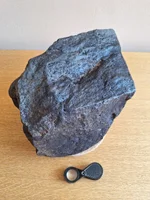
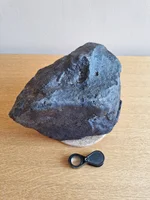
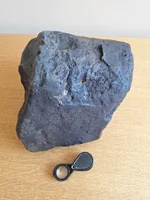
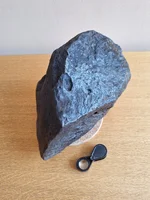
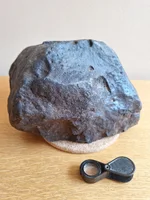
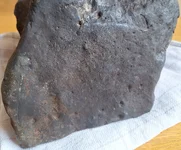
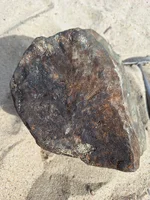
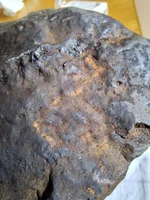
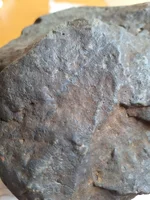
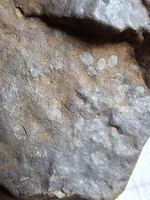
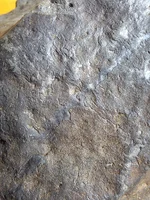
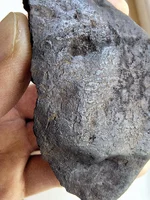
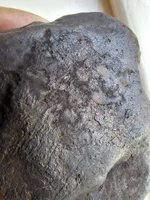
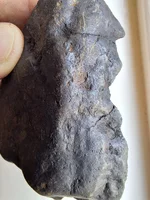
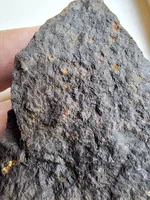
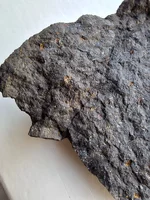
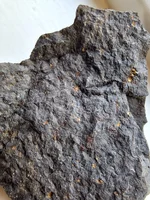
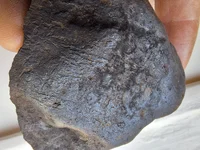
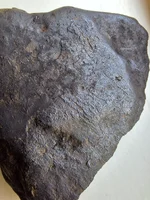
Has this stone got fusion crust?

rockcollect

Full Member
Joined
May 2, 2026
Messages
196
Reaction score
185
Golden Thread
0
Location
Lent
Detector(s) used
none
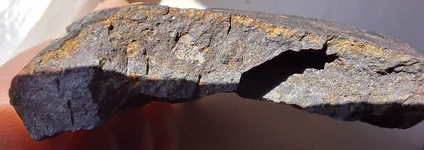
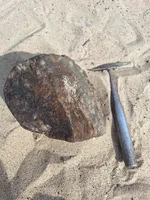
Dug this rock out of the ground and it has a brown/black crust on it. Could it be fusion crust?
 

Attachments

  • 20260617_095550.webp
    20260617_095550.webp
    3.5 MB · Views: 91
  • 20260617_131743.webp
    20260617_131743.webp
    1.7 MB · Views: 42
  • 20260617_131806.webp
    20260617_131806.webp
    1.7 MB · Views: 39
  • 20260617_131826.webp
    20260617_131826.webp
    1.5 MB · Views: 44
  • 20260617_131854.webp
    20260617_131854.webp
    1.7 MB · Views: 37
  • 20260617_132122.webp
    20260617_132122.webp
    1.6 MB · Views: 40
  • 20260617_122907.webp
    20260617_122907.webp
    1.2 MB · Views: 35
  • 20260617_122933.webp
    20260617_122933.webp
    1.6 MB · Views: 43
  • 20260617_095555.webp
    20260617_095555.webp
    2.2 MB · Views: 35
Last edited:
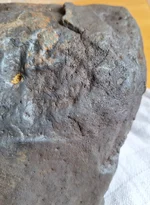
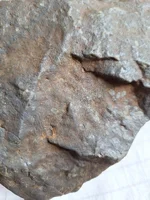
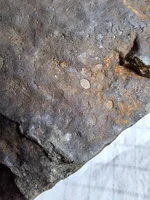
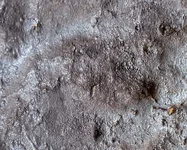
here some closeups, defently covered with a crust all over.
 

Attachments

  • 20260617_171132.webp
    20260617_171132.webp
    871.4 KB · Views: 36
  • 20260617_170936.webp
    20260617_170936.webp
    1.7 MB · Views: 37
  • 20260617_170944.webp
    20260617_170944.webp
    1.9 MB · Views: 37
  • 20260617_171016.webp
    20260617_171016.webp
    1.2 MB · Views: 32
  • 20260617_171029.webp
    20260617_171029.webp
    1.4 MB · Views: 31
  • 20260617_171115.webp
    20260617_171115.webp
    1.8 MB · Views: 45
I'm certainly no expert, but if that rock came through the atmosphere I
believe those corners would have been burned off during entry.
 
Last edited:
Stony meteorites frequently detonate in the atmosphere from the shock of re-entry and come down as a shower. Providing it doesn't happen too high up, the resultant pieces may not have rounded edges from ablation. Sometimes, the fragments may have distinctly different primary and secondary fusion crusts: primary on the original surfaces of the meteoroid, and secondary on the newly-created surfaces after detonation.

For the stone posted, I'm not seeing any convincing fusion crust, nor any convincing diagnostics for a meteorite, Crusts on terrestrial rocks are frequently no more than weathering rinds of a different colour and physical appearance to unweathered interior of the original rock.
 
Stony meteorites frequently detonate in the atmosphere from the shock of re-entry and come down as a shower. Providing it doesn't happen too high up, the resultant pieces may not have rounded edges from ablation. Sometimes, the fragments may have distinctly different primary and secondary fusion crusts: primary on the original surfaces of the meteoroid, and secondary on the newly-created surfaces after detonation.

For the stone posted, I'm not seeing any convincing fusion crust, nor any convincing diagnostics for a meteorite, Crusts on terrestrial rocks are frequently no more than weathering rinds of a different colour and physical appearance to unweathered interior of the original rock.
thanks for the explenation, but does a weathering rind have texture and smell like iron because it does have that on my rock. it's too bad a can´t photograph very closeup it would be amazing to see. and what about the strange round openings in the crust, what creates that? here is a closeup of one of the areas of the crust notice the spherical bits.
 

Attachments

  • 20260617_131941.webp
    20260617_131941.webp
    405.1 KB · Views: 32
Last edited:
Weathering often creates textural effects on the surface of rocks due to the differential resistance of their component minerals. Flaking, pitting, or an ‘orange-peel’ appearance is often seen.

If you can ‘smell iron’ that’s probably exactly what it is… or rather the oxides and hydroxides arising from weathering of iron-based minerals.

The cavities you can see will either be residual vesicles, or voids left behind by less-resistant mineral inclusions eroding away, which can include spheroidal inclusions.

Vesicles in meteorites are only rarely seen as interior features. On the exterior, they’re only a little more common but generally confined to those meteorites having a ‘glassy’ fusion crust.
 
Weathering often creates textural effects on the surface of rocks due to the differential resistance of their component minerals. Flaking, pitting, or an ‘orange-peel’ appearance is often seen.

If you can ‘smell iron’ that’s probably exactly what it is… or rather the oxides and hydroxides arising from weathering of iron-based minerals.

The cavities you can see will either be residual vesicles, or voids left behind by less-resistant mineral inclusions eroding away, which can include spheroidal inclusions.

Vesicles in meteorites are only rarely seen as interior features. On the exterior, they’re only a little more common but generally confined to those meteorites having a ‘glassy’ fusion crust.
Dear Red Coat,
I have tested the particles of the crust with a magnet and they stick to it. What does that mean?
 
Dear Red Coat,
I have tested the particles of the crust with a magnet and they stick to it. What does that mean?

It means the particles contain ferromagnetic oxides (or native iron, which is unlikely). In volcanic rocks, those are usually magnetite or titanomagnetite. Weathering can both destroy existing ferromagnetic minerals and create new ones, so exterior particles in a weathering rind may be either less strongly or more strongly attracted than the parent rock.
 
It means the particles contain ferromagnetic oxides (or native iron, which is unlikely). In volcanic rocks, those are usually magnetite or titanomagnetite. Weathering can both destroy existing ferromagnetic minerals and create new ones, so exterior particles in a weathering rind may be either less strongly or more strongly attracted than the parent rock.
i hope i did wright by calling jou a winner, but you give great inf everytime and i learn allot.
 
It means the particles contain ferromagnetic oxides (or native iron, which is unlikely). In volcanic rocks, those are usually magnetite or titanomagnetite. Weathering can both destroy existing ferromagnetic minerals and create new ones, so exterior particles in a weathering rind may be either less strongly or more strongly attracted than the parent rock.
hello Red Coat, i was able to remove a piece of the stone and here are some photo of the fragment. The fragment and the particles from inside the stone are atracted to a magnet. What do you think?
 

Attachments

  • 20260619_095504.webp
    20260619_095504.webp
    1.3 MB · Views: 24
  • 20260619_095520.webp
    20260619_095520.webp
    979 KB · Views: 22
  • 20260619_095543.webp
    20260619_095543.webp
    942 KB · Views: 28
  • 20260619_095606.webp
    20260619_095606.webp
    1.2 MB · Views: 26
  • 20260619_095422.webp
    20260619_095422.webp
    1.2 MB · Views: 28
  • 20260619_095434.webp
    20260619_095434.webp
    994.7 KB · Views: 28
  • 20260619_095950.webp
    20260619_095950.webp
    1,023.8 KB · Views: 27
  • 20260619_100310.webp
    20260619_100310.webp
    884.6 KB · Views: 24
  • 20260619_100505.webp
    20260619_100505.webp
    1 MB · Views: 26
photo boundary crust
 

Attachments

  • 20260619_142102.webp
    20260619_142102.webp
    330.9 KB · Views: 30
Hi @rockcollect

There comes a point when pictures and superficial observations reach the limits of identification and only chemical and other expert petrological analyses can take us further. My feeling is that we are at that point.

However, I will continue to say that I don’t see anything which is inconsistent with a weathered basaltic rock. Note the orange spots, which are typical of localised aqueous alteration of iron minerals such as magnetite. Commonly seen in rocks from the basalt family.

Spots.webp


Just to reiterate, basalts in particular are commonly attracted to a magnet because they frequently contain magnetite or titanomagnetite as a component mineral. That property can be lost by alteration through weathering and groundwater penetration, meaning that either the weathering rind or the interior matrix (or both) may become less magnetic (or not, as the case may be). Magnetite usually weathers to hematite, and hematite then usually weathers to goethite, siderite or limonite. Those are the processes that typically result in yellow/orange/brown spots of hydrated oxides. Depending on conditions, alteration to sulphides such as pyrite may also occur. None of those are strongly magnetic, but geothite, siderite and limonite may exhibit extremely weak attraction that’s barely noticeable using standard magnets.

The reverse is also possible. So, non-magnetic hematite can be altered to magnetite by reduction rather than oxidation, but that usually only happens at depth in high temperature geological zones.

Alo, I see some ridges or striations in an alignment which is typical of magmatic flow. It’s difficult to tell from your picture if they’re indented or raised but, if the former, glacial scarring on bedrock can produce similar features.

RIdges.webp


I know that you’re eager to learn, so here’s a little background information about magnetism in rocks.

There are only three naturally-occurring ferromagnetic metals: iron, nickel, and cobalt. While pure nickel and cobalt are strongly ferromagnetic, only iron can retain that property when alloyed with other metals or converted to compounds. Nickel for example generally loses its ferromagnetism when alloyed, or converted to compounds. Most nickel compounds are paramagnetic rather than ferromagnetic (that is, they only exhibit magnetic properties when exposed to an external magnetic field, and lose those properties if removed from that field.)

Native iron of course strongly responds to magnets, but it’s a rare material on Earth (except in arriving meteorites) and almost exclusively confined to particular localities in the far northern hemisphere. As already said, the most common iron minerals that are attracted to a magnet are magnetite and titanomagnetite. Maghemite is also strongly attracted, but is far less common. Anything else will only exhibit very weak attraction or none at all.

There will be a test next Tuesday.
 
One other thing to note is that fusion crusts on meteorites are very thin... typically 0.1 to 1mm and very rarely exceeding 2mm.
Hi Redcoat, well the most important thing is that photographs can be very misleading as i notice. But that's oke. the orange spots are some sort of crystaline olivine made up of cris cros elongeted cystals and the have been weathered yes. And in your last comment those are scratches but the stone has no tell tail signes of being moved by a glatier. I will keep this stone because i have seen very interesting things in it. And maybe some day i can let it be tested, thanks for all the explenation. But like most of the stones i find it will be a basalt likely.
 
Last edited:
Hi @rockcollect

There comes a point when pictures and superficial observations reach the limits of identification and only chemical and other expert petrological analyses can take us further. My feeling is that we are at that point.

However, I will continue to say that I don’t see anything which is inconsistent with a weathered basaltic rock. Note the orange spots, which are typical of localised aqueous alteration of iron minerals such as magnetite. Commonly seen in rocks from the basalt family.

View attachment 2257286

Just to reiterate, basalts in particular are commonly attracted to a magnet because they frequently contain magnetite or titanomagnetite as a component mineral. That property can be lost by alteration through weathering and groundwater penetration, meaning that either the weathering rind or the interior matrix (or both) may become less magnetic (or not, as the case may be). Magnetite usually weathers to hematite, and hematite then usually weathers to goethite, siderite or limonite. Those are the processes that typically result in yellow/orange/brown spots of hydrated oxides. Depending on conditions, alteration to sulphides such as pyrite may also occur. None of those are strongly magnetic, but geothite, siderite and limonite may exhibit extremely weak attraction that’s barely noticeable using standard magnets.

The reverse is also possible. So, non-magnetic hematite can be altered to magnetite by reduction rather than oxidation, but that usually only happens at depth in high temperature geological zones.

Alo, I see some ridges or striations in an alignment which is typical of magmatic flow. It’s difficult to tell from your picture if they’re indented or raised but, if the former, glacial scarring on bedrock can produce similar features.

View attachment 2257287

I know that you’re eager to learn, so here’s a little background information about magnetism in rocks.

There are only three naturally-occurring ferromagnetic metals: iron, nickel, and cobalt. While pure nickel and cobalt are strongly ferromagnetic, only iron can retain that property when alloyed with other metals or converted to compounds. Nickel for example generally loses its ferromagnetism when alloyed, or converted to compounds. Most nickel compounds are paramagnetic rather than ferromagnetic (that is, they only exhibit magnetic properties when exposed to an external magnetic field, and lose those properties if removed from that field.)

Native iron of course strongly responds to magnets, but it’s a rare material on Earth (except in arriving meteorites) and almost exclusively confined to particular localities in the far northern hemisphere. As already said, the most common iron minerals that are attracted to a magnet are magnetite and titanomagnetite. Maghemite is also strongly attracted, but is far less common. Anything else will only exhibit very weak attraction or none at all.

There will be a test next Tuesday.
P.S. what do you mean by there will be a test next tuesday?
 

Users who are viewing this thread

Back
Top Bottom