What's new

Help in authentication

treasureldy

Jr. Member
Joined
Jul 21, 2003
Messages
33
Reaction score
13
Golden Thread
0
Location
Colorado
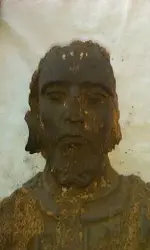
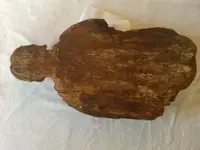
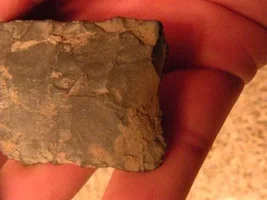
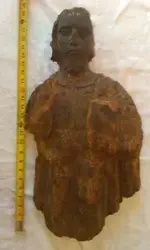
Needing guidance as to an institution or professional testing facility that can assist with the authentication of an unusual shipwreck artifact... once authenticated it will be donated to a museum. It is NOT for sale..... any guidance would be truly appreciated.
I have attached a picture..... once again thank you.
 

Attachments

  • 50BDFDB6-FDD0-4257-8D36-5E8C7076DE9E.webp
    50BDFDB6-FDD0-4257-8D36-5E8C7076DE9E.webp
    5.9 KB · Views: 683
Needing guidance as to an institution or professional testing facility that can assist with the authentication of an unusual shipwreck artifact... once authenticated it will be donated to a museum. It is NOT for sale..... any guidance would be truly appreciated.
I have attached a picture..... once again thank you.

You will probably have to provide more information for meaningful responses. In addition to what @Alexandre asked, it would be helpful to tell us where it was found, under what circumstances, what you believe it to be, etc. It doesn't have to be GPS precision, but the world is pretty big, and where you found it could have an effect on authentication. And to that end, when you use the term "authentication" there is an implication that you know what it is, who made it, what it's worth, etc. Saying that "it will be donated to a museum" also implies that a museum currently wants it. If the above it true, I would suggest enlisting the aid of the museum to which it will be donated. Museums are specialists in authenticating artifacts, or having them authenticated. Having the curating museum do the authenticating also has the added benefit of the authentication being done by someone they already trust.
 
Looks like a figurehead.
 
We need more information, context, and the history of the find to guide you in the right direction........
 
Piece is carved of wood.
My acquisition was through a purchase. The sellers grandfather (Great?) found the piece partially exposed in the sand of a small island in the 20s-30s. It had been in their family’s possession since the original finding. The business in which the item was sold is no longer in existence. I travel a good deal and enjoy history. My friend ( a now retired deputy sheriff) was present when I purchased the piece.
I have studied and collected antiques for over 30 years.... as well, I have the heart of a treasure hunter. (I’m sure most on this site can relate).
I believe it’s date of origin could be 1650s-1750s. (Best guess without proper testing).
The piece appears to have been designed to hang on a wall /post... perhaps in a small chapel of a large vessel? Spanish? French?
I have a museum that I will be donating the piece to once I have it Authenticated but I’m hitting brick walls. The museums reputable archeologist is aware of more particulars regarding the place of discovery etc.
I attempted to have the piece tested by Beta Lab Services of Miami and was told it must be submitted by a museum or archeologist. I spoke with one Jay Brouchard. I forwarded that info to the museums archeologist.... and have not heard back.
I attempted to get in touch with a leading entomologist specializing in beetles by the name of Ted MaCrae to no avail. He currently works for a private corporation and I am not sure he has even received my messages.
I’ve even written a letter to the Art Museum of St Louis ( exquisite museum btw)..... to no avail.
I am Covering the costs of analysis !!
My issue is that I have many other projects going on and time is a factor for me.
This piece is quite possibly a significant part of shipwreck history/American history and has no business in the a private collection where only a privileged few may view it.
It may very well inspire a child to become an historian, archeologist or even a true treasure hunter.
so once again...... any guidance would be greatly appreciated.
 
And according to the director of the museum.... yes..... they want it once authenticated. Hi
 
Check with the University of Colorado History Dept. I'm assuming it's a Spanish religious artifact. You are beginning to experience what I went thru when I found a 1715 fleet artifact. A lot of "experts" are not willing to volunteer free information. I don't know if they fear being wrong or are looking for compensation or are not interested if it doesn't provide them something to publish and make money.

After a lot of research you will become the expert on that artifact and you will find the experts are more than willing to listen to you describe your research to them.
 
and that's how the system works, went through the same with a Mayan jade pectoral

good luck (find a sponsor ??)
 
I remember now contact Donna Pierce the curator of Spanish Colonial Art at the Denver Art Museum.

Its one of the most comprehensive of its kind in the US and one of the best in the world.
 
I can certify that it looks like a digital image of some object apparently 26" in length from this end. Back to you.
 
The piece appears to have been designed to hang on a wall /post... perhaps in a small chapel of a large vessel?

Nothing hangs on the wall of a small vessel, unless it's in a small lake.

Not much help, I know........
 
I have a museum that I will be donating the piece to once I have it Authenticated but I’m hitting brick walls. The museums reputable archeologist is aware of more particulars regarding the place of discovery etc.
I attempted to have the piece tested by Beta Lab Services of Miami and was told it must be submitted by a museum or archeologist. I spoke with one Jay Brouchard. I forwarded that info to the museums archeologist.... and have not heard back.

Based on the information you provided, it certainly sounds like you have done all the right things. You've definitely provided significantly more information than a lot of people do in these forums when they want help from members. Being that you are willing to pay for the authentication, there is no reason why a museum that is already interested in the artifact won't take the step of submitting it for analysis. A well worded letter to the head of the museum, laying out what you have in detail might be worthwhile. Send an actual printed letter by post, and to increase the chances of a response, send it certified with return receipt requested. People are more likely to respond to correspondence when they have to sign for it, and you have the benefit of knowing exactly when it was delivered, and who signed for it. Another way to go about it would be to set up an physical appointment with the museum director and/or curator. If they agree, carefully package the artifact and take it to them so they can see it up close. A picture is worth a thousand words, but actually seeing something is priceless.
 
Doesnt the Smithsonian provide authentication?
 
Doesnt the Smithsonian provide authentication?

I haven't really had a refusal so far with things I've brought to museums.
 

Users who are viewing this thread

Back
Top Bottom