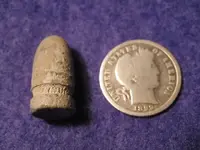
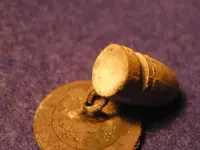
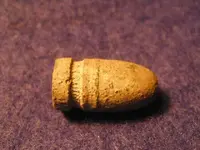
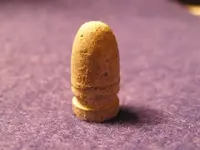
Good point on the impact of soil chemistry on lead. That is where an understanding of the surrounding environment and history come in to "exact" a date.
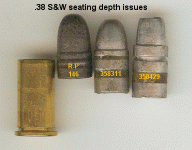
I have helped with dating shot, musket balls and bullets found during digs along the Eastern Seaboard and also out West. The lead oxidation is surely more pronounced in certain areas. I noticed significant oxidation depths in lead bullets from the deep south.
A scientist I know even looked into the varying quality of the lead that was poured during the making of objects. However, lead was lead, so to speak. Variations came with contamination, displaying more as artifacts in the lead, which were fairly definable as pits or even non-lead intrusions (sand and such). The lead itself still oxidized the same on the unaffected surface.
The variances in oxidation from different geographical areas, while notable, only made it harder to home in on exact ages. What might be termed general oldness (to within, say, a few decades) could still be estimated by oxidation alone. That's when the other evidences -- locale, contemporaneous artifacts, etc. -- allowed for far more exacting determinations, in the case of battles, down to weeks and days.
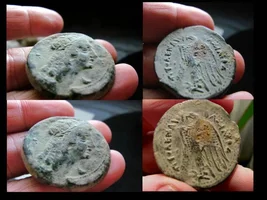
By the by, unlike many other hard and soft metals, lead offers a very low electrolytic flow capacity. That means that unlike other buried metal objects (iron, silver, copper) it's oxidation is seldom if ever ameliorated or even impacted by the electrical flow of other nearby metal objects. Also, lead does not conduct the electrolytic flow found in all soils. The electricity that perpetually surges through soil often inflicts devastating impacts on buried metals, as all public works authorities know as they try to maintain sewer systems.
Many a detectorist simply blames chemicals in the soil for ruined coins and buttons when it it just as much the impact of the electricity surging through the soil -- albeit it enhanced by certain resident chemicals. Add moisture-holding soils to the mix and you have an electrolytic set-up that can eat through inch-thick steel.


 Hope my description of the bullet helps. Many thanks Dean