What's new

How to dig with minimal damage

Johncoho

Silver Member
Joined
Feb 14, 2014
Messages
2,862
Reaction score
7,292
Golden Thread
0
Location
Martinsburg, Pa. in the summer and Apache Junction
Detector(s) used
Whites Spectrum XLT, Garrett AT Pro, Macro pinpointer, Garrett carrot pinpointer,
Lesch digger, Nel Tornado coil for ATPro, Garret ATMax with Nel Tornado coil
Primary Interest:
All Treasure Hunting
I have been detecting for about 40 plus years and my question is what is the best way to dig a target with minimal damage to a lawn? I have tried to keep my plugs as small as possible and I have also tried to make them larger thinking that maybe there will be more dirt and the grass will not turn brown, but it doesn't seem to matter. I know that when it is wet you will have minimal damage and when it is extremely dry its best to avoid private yards/lawns. I guess the perfect way would be to carry a watering can and saturate your plug when you are done, but that isn't practical. Any thoughts?
 
I've worked with a crew installing 60+ pallets of sod. I've dug plugs, flaps, slits, and also messes. Plugs and flaps might turn brown, but they always recover from shock if dug to the bottom of the roots, like 5 inches or more. 5 inches of soil plus thatch and grass.

I prefer to cut a slit not quite 'C' shaped by slicing it down beyond target depth, then raising the soil. Pinpoint accuracy is a must to avoid drop cloths and all that. I'm cutting with an inch or less to the target. 3I've never seen it brown with this method except for the hottest, driest weeks of summer. Even then it's very minimal browning. Primarily at the hinge points where the roots tear.

Works great for me. Your soil conditions play a major factor though.
 
Deft Tones is right on.
the width of my "C"-shaped flap or "Trapdoor" of sod, depends on the granularity of the soil (if it falls apart upon tilting the flap - make the next one wider).
But, generally my digs are narrow plastic trowel-width...little, vertical mole holes...! Generally my coins are near surface, so often I use a coin probe, with even less disturbance to the grass.
Hand-held pinpointers are a must!
 
I have tried a screwdriver without taking out a plug, to cut a 2 or 3 inch slice, then used a small garden tool to dig out the dirt and the target and that also seems to work really well. I appreciate your advice and input and will try your method too. Thank you. I know when a plug is cut and pulled, if it does turn brown, it will eventually turn green again with some rain and a little time
I've worked with a crew installing 60+ pallets of sod. I've dug plugs, flaps, slits, and also messes. Plugs and flaps might turn brown, but they always recover from shock if dug to the bottom of the roots, like 5 inches or more. 5 inches of soil plus thatch and grass.

I prefer to cut a slit not quite 'C' shaped by slicing it down beyond target depth, then raising the soil. Pinpoint accuracy is a must to avoid drop cloths and all that. I'm cutting with an inch or less to the target. 3I've never seen it brown with this method except for the hottest, driest weeks of summer. Even then it's very minimal browning. Primarily at the hinge points where the roots tear.

Works great for me. Your soil conditions play a major factor though.
 
I also use a Macro pinpointer and make sure I really pinpoint the target before I do any digging. I will try the method you and Deft Tones use and see how that works. I also always use a drop cloth for any dirt removed from a hole. I have also had critters come around after I am finished and redig some of my plugs out which makes it look like I did a sloppy job. I think this is mostly skunks looking for grubs.
Deft Tones is right on.
the width of my "C"-shaped flap or "Trapdoor" of sod, depends on the granularity of the soil (if it falls apart upon tilting the flap - make the next one wider).
But, generally my digs are narrow plastic trowel-width...little, vertical mole holes...! Generally my coins are near surface, so often I use a coin probe, with even less disturbance to the grass.
Hand-held pinpointers are a must!
 
I hope we get many more replies to this post as it only helps our image as being careful and caring when we have permission to M.D.
I have been detecting for about 40 plus years and my question is what is the best way to dig a target with minimal damage to a lawn? I have tried to keep my plugs as small as possible and I have also tried to make them larger thinking that maybe there will be more dirt and the grass will not turn brown, but it doesn't seem to matter. I know that when it is wet you will have minimal damage and when it is extremely dry its best to avoid private yards/lawns. I guess the perfect way would be to carry a watering can and saturate your plug when you are done, but that isn't practical. Any thoughts?
 
I have tried a screwdriver without taking out a plug, to cut a 2 or 3 inch slice, then used a small garden tool to dig out the dirt and the target and that also seems to work really well. I appreciate your advice and input and will try your method too. Thank you. I know when a plug is cut and pulled, if it does turn brown, it will eventually turn green again with some rain and a little time

Good, and the use of the drop cloth or just leaving the dirt in my trowel, while I finish recovering my shallow target.
And, as with ALL"excavations", I tamp the dirt back into the hole, making sure near zero air pockets remain, "shoe-horn" the lid closed,
and MASH or pound the flap of grass (and neighboring edge), as-hard-as-possible - fluff-up the grass - and, PRESTO, no one will ever know you were there!
Any loose debris like pine needles can be returned, and arraigned in a natural order - for full-effect ("looks") =)
These little digs will never get suck-up into lawnmowers - the lawn keeps on living.
Really, I've had two grounds-keepers, (and ONE Parks and Recreation Supervisor), at three separate hunts, actually watch me and my detecting buddy recover
targets, and RESTORE the dig site. Those guys then gave us thumbs up :thumbsup: on our digging techniques, and written permission to hunt their parks.
So, it can be done.
GL+HH
~eye
 
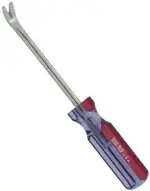
When a target is more shallow, 3" or less, I like to use a tack puller to reach under the target and pop it out that way = minimal soil destruction.

index.webp
 
Unless of course, you lose it.:laughing7:

Duh.... Gotta get another!

I used one for years, only lost it during my absence from the hobby. I'd looked all over for another and found that one on Amazon. Five bucks, but ten bucks delivered, and I didn't mind.

NOW I mind! Gotta get another, maybe I'll find one locally.
 
Last edited:
I pop out stuff with a screwdriver sometimes too. It's a great way to damage a good item, levering it out of the ground.

I think bringing along a little stiff bristled broom is a good idea, brush away the dirt from around the hole and it disappears pretty well. Also I toss a handful of the dirt away so my plug doesn't protrude as that's a sure way for it to get pulled out or kicked out etc.
 
To minimize damage, I avoid sports fields and schools during July and August. I hit them in late September or October, when it's cooler and it rains on a regular basis.

I spend most of my time in the woods during the dry, hot weather. That's when I find lots of horseshoes and ax heads and not much else.
 

Users who are viewing this thread

Latest Discussions

Back
Top Bottom