What's new

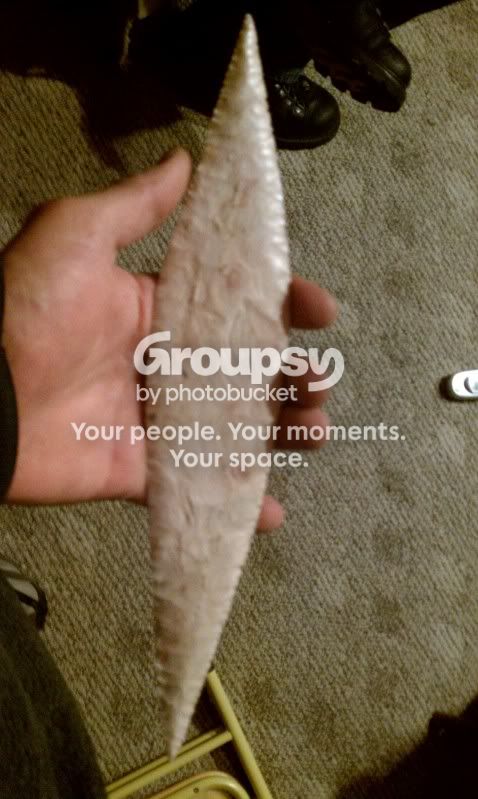
huge bipointed knife !!!!!!!

trevmma

Bronze Member
Joined
May 23, 2006
Messages
1,122
Reaction score
683
Golden Thread
0
Detector(s) used
whites 1000
Primary Interest:
All Treasure Hunting
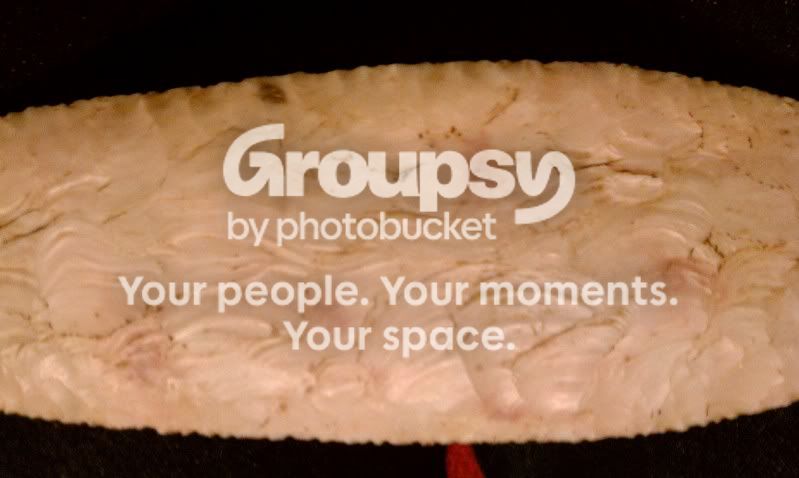
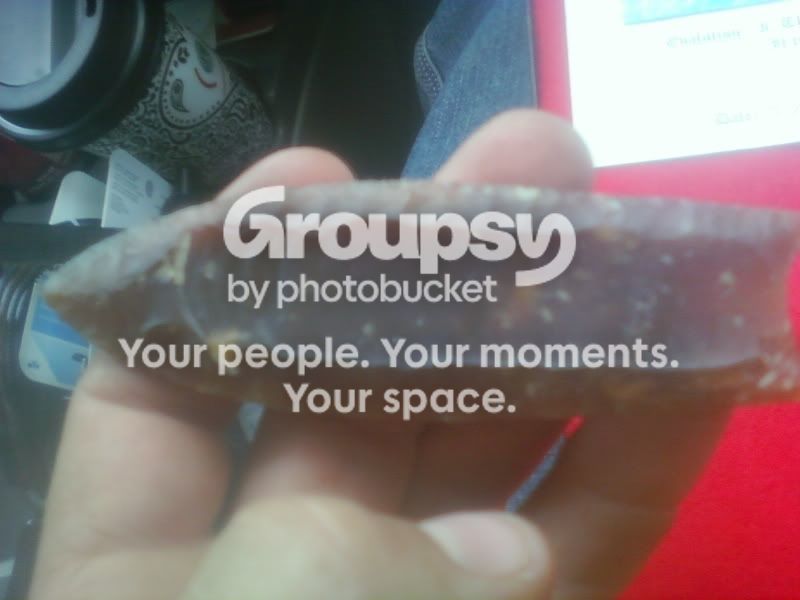
this is from a buddy of mine who has had many awesome peices go through his hands. its about 11inches, it has mineral deposits on it but i think its insane to be real being this nice,i have seen them though,.he has been collecting for over 40 years. thats all i know about it, maybe someone will know the ink marks thanks.
IMAG0585.jpg

IMAG0584.jpg

IMAG0582.jpg

IMAG0581.jpg
 
Upvote 0
Trev- I would admire from a distance....JMO

Chuck
 
Like you said- "its insane to be real being this nice". Ummm, I think I know what you mean? :laughing9:
 
I do not see any history on this piece other than the tatoo!! JMO
 
Jeez louize !! That is positively stunning. I can't even imagine what went through the finders head when he saw it. Assuming it was found in the normal way. A good amount of that pristine stuff came from mounds early in the 1900's. It sure is fine though. Thanks for showing. Lone Star
 
Where did your buddy acquire this piece? Did he buy it or is he claiming it a personal find.

St Clair county is where the Cahokia Mounds are, but I've seen a lot of pictures of Cahokia pieces and I've never seen that one. The #21 probably refers to Mound 21.

I'd like to hear Matt Rowes thoughts on this piece before I say anything but I do have my doubts.
 
SRV said:
Where did your buddy acquire this piece? Did he buy it or is he claiming it a personal find.

St Clair county is where the Cahokia Mounds are, but I've seen a lot of pictures of Cahokia pieces and I've never seen that one. The #21 probably refers to Mound 21.

I'd like to hear Matt Rowes thoughts on this piece before I say anything but I do have my doubts.

I have personally seen some genuine pieces that looked that nice, but they came from old Missouri collections that were in the families for many years......There are many, many nice museum quality pieces that came out of the Cahokia Mounds area, and some are in private hands.......
 
Sorry bud but that's a reproduction. It's a slab sawed and knapped out piece that's probably supposed to resemble a Caddo friendship blade or maybe a Ramey knife. However, it's not a particularly good representation of either one.

Hippy
 
Im not saying its real, but i dont think its a ghost. He has aquired it through his family who were also collectors, its tricky in person. It has many good mineral deposit looking things i cant scratch off. He is one of those people who has every antique possible, family were all traders.
 
Treasure_Hunter said:
I have personally seen some genuine pieces that looked that nice, but they came from old Missouri collections that were in the families for many years......There are many, many nice museum quality pieces that came out of the Cahokia Mounds area, and some are in private hands.......

Looking "that good" has nothing to do with it, what everyone is questioning is how it's made. It looks like the knapper couldn't make up their mind whether they wanted to make a Ramey, Harahey, or a large Caddoan blade. I especially like the edgework...it's reminiscent of someone trying to clean up a slab edge :D
 
Neanderthal said:
Treasure_Hunter said:
I have personally seen some genuine pieces that looked that nice, but they came from old Missouri collections that were in the families for many years......There are many, many nice museum quality pieces that came out of the Cahokia Mounds area, and some are in private hands.......

Looking "that good" has nothing to do with it, what everyone is questioning is how it's made. It looks like the knapper couldn't make up their mind whether they wanted to make a Ramey, Harahey, or a large Caddoan blade. I especially like the edgework...it's reminiscent of someone trying to clean up a slab edge :D

I was not judging if it is real or not real, all I was saying is I have seen museum quality pieces in private hands in Missouri....I lived in Mo for over 20 years, met a lot of collectors in St Louis and in Central Mo, they were farmers and they had collections that were handed down from grandfather to father to son, the sons usually had possession when I saw them so the pieces were in collections that were quite old as far as the age of the collections went.

I have also seen a lot of nice pieces that were fake using acid to try to to fake the patina...
 
Treasure_Hunter said:
Neanderthal said:
Treasure_Hunter said:
I have personally seen some genuine pieces that looked that nice, but they came from old Missouri collections that were in the families for many years......There are many, many nice museum quality pieces that came out of the Cahokia Mounds area, and some are in private hands.......

Looking "that good" has nothing to do with it, what everyone is questioning is how it's made. It looks like the knapper couldn't make up their mind whether they wanted to make a Ramey, Harahey, or a large Caddoan blade. I especially like the edgework...it's reminiscent of someone trying to clean up a slab edge :D

I was not judging if it is real or not real, all I was saying is I have seen museum quality pieces in private hands in Missouri....I lived in Mo for over 20 years, met a lot of collectors in St Louis and in Central Mo, they were farmers and they had collections that were handed down from grandfather to father to son, the sons usually had possession when I saw them so the pieces were in collections that were quite old as far as the age of the collections went.

I have also seen a lot of nice pieces that were fake using acid to try to to fake the patina...

So basically all you are saying is there are nice relics found in Missouri, and it has nothing to do with this piece. That I can agree with. I've examined a lot of Missouri relics....a whole lot.

As far as "museum quality" goes, most people have no idea what that actually entails. It has not a thing to do with how nice they are.....but that's a whole other topic.
 
Neanderthal said:
Treasure_Hunter said:
Neanderthal said:
Treasure_Hunter said:
I have personally seen some genuine pieces that looked that nice, but they came from old Missouri collections that were in the families for many years......There are many, many nice museum quality pieces that came out of the Cahokia Mounds area, and some are in private hands.......

Looking "that good" has nothing to do with it, what everyone is questioning is how it's made. It looks like the knapper couldn't make up their mind whether they wanted to make a Ramey, Harahey, or a large Caddoan blade. I especially like the edgework...it's reminiscent of someone trying to clean up a slab edge :D

I was not judging if it is real or not real, all I was saying is I have seen museum quality pieces in private hands in Missouri....I lived in Mo for over 20 years, met a lot of collectors in St Louis and in Central Mo, they were farmers and they had collections that were handed down from grandfather to father to son, the sons usually had possession when I saw them so the pieces were in collections that were quite old as far as the age of the collections went.

I have also seen a lot of nice pieces that were fake using acid to try to to fake the patina...

So basically all you are saying is there are nice relics found in Missouri, and it has nothing to do with this piece. That I can agree with. I've examined a lot of Missouri relics....a whole lot.

As far as "museum quality" goes, most people have no idea what that actually entails. It has not a thing to do with how nice they are.....but that's a whole other topic.

I am saying I have seen nice, large, authentic, ceremonial pieces in private hands in Missouri that are perfect in every aspect..... I did not pass any judgement on the piece one way or the other.......
 
Treasure_Hunter said:
I am saying I have seen nice, large, authentic, ceremonial pieces in private hands in Missouri that are perfect in every aspect..... I did not pass any judgement on the piece one way or the other.......

Please describe to me what a "ceremonial" relic will look like, that way I'll know if I should run across one.
 
i dont think its real he has some other peices like this . yhat are just to good. they all look good but i would not buy them, i was just curious if someone had seen it before.
img1290272363459.jpg

img1290272363720.jpg
 
i dont believe half of the stuff in the whos who books is real or at auctions either, i depend on buying artifacts that only have mineral deposits on them that cant be scratched off no matter what, lol.
 
trevmma said:
i dont think its real he has some other peices like this . yhat are just to good. they all look good but i would not buy them, i was just curious if someone had seen it before.

Trev, I never discount a piece because it looks too good. I've sure seen some outstanding mind-blowing relics that were 100% legitimate.

LOL...butttttttt..with that said, you do have to raise some eyebrows sometimes when looking at other attributes. Pictures don't always tell the full story, but sometimes they do tell enough....sometimes.

I think everyone should own some modern reproductions, especially if they plan on purchasing any relics. They are great learning tools. A person simply can't differentiate bad from good unless they are intimately familiar with both.

P.S. many artificial deposits cannot be removed with your fingers.
 
Neanderthal said:
Treasure_Hunter said:
I am saying I have seen nice, large, authentic, ceremonial pieces in private hands in Missouri that are perfect in every aspect..... I did not pass any judgement on the piece one way or the other.......

Please describe to me what a "ceremonial" relic will look like, that way I'll know if I should run across one.

I am sure you already know what a ceremonial piece looks like, not sure what the problem is, did I step on "your turf" or something...... :icon_scratch:

You're in OK, I am sure you have been or can visit the Gilcrease Museum in Tulsa, it has some of the best artwork and one of the best Indian artifact collections. Illinois State Museum in Springfield IL, Univ of Mo. in Columbia, Mo, Favell Museum in Oregon, Crazy Horse Memorial in South Dakota's Black Hills, Mesa Verde CO all have great collections, as well as Cody, WY where there is the Firearms Museum which has world's largest and most important collections of American and European arms dating all the way back to the 16Th century and also has a very extensive Plains Indian Museum, all of these have fantastic collections including some nice ceremonial pieces.....I enjoyed touring them and anyone who loves Indian artifacts will love them also......

I have been lucky enough or blessed to have had the ability to travel extensively for weeks at a time camping in the west during my lifetime, as I enjoy camping and seeing America and especially the American west. I have been to every National Park west of the Mississippi river and camped in most all of them except for Carlsbad Caverns NM that I have yet to visit, and while I traveled, since I have always been fascinated by the American Indians ever since I was a kid, I visited as many of the Indian museums as I could that were anywhere near me during my travels and there were a lot of them...Visited several of the Indian Reservations in my travels which also has some very nice artifact displays....

I have toured most of Monument Valley Az where John Wayne's and the great John Ford's Calvary movies were filmed, and where at anytime you almost expect to see mounted Apache or Comanche Indians riding over the rise, and could almost see The Duke.... I have been all over Utah where there are Pictographs in so many places, as you hike they seem to be everywhere. Utah is amazing, anyone who has ever been there will never forget it.....

I have visited Custer Battlefield, Little Bighorn National Monument 4 different times, sitting on top of Last stand hill and watching the sunset while trying to imagine what Custer and even more so what the average 7Th Calvary soldier felt as thousands of Sioux and Cheyenne warriors swarmed up the hill as they closed in on them... I will admit it is also a little eerie sitting there as the sun sets, the winds make strange howling or moaning sounds that makes you wonder, maybe it's not always the wind your hearing.... Who knows……
 
I'm not good at tip-toeing around online sentiments or giving pats on the back. If I come across as brash and hurtful - I do apologize. I am not a good teacher and have never professed to be. I rarely post because when I do I usually end up having to make 10 other posts for clarification. That's my standard disclaimer for when people get their feelings hurt anyways.

No, I don't know what ceremonial "looks" like and I don't think anyone else does either. It's not a look, it's a particular function in which something was utilized. The word "ceremonial" bothers me when people use it so loosely. If collectors can't easily identify a form or it looks too bawdy or large then they will slap the C word on it. Often times it's just lazy to use it, a cop out. The Native Americans made all kinds of large exotic fine pieces, but unless they are found in a context that would give it a definite association it's really hard to call something ceremonial.

I have indeed been to Gilcrease, many times. It's a wonderful museum full of great items, as you said. They have some world-class relics in the downstairs artifact display area.....and a ton of modern reproductions mixed in with them. The amount of fakes they have on display there is great, as with many other museums. If you are going to the museum to see ultra-kewl relics without regards to authenticity or accuracy then you've gone to the right place. For educational purposes...ehhh...not so much. Unfortunately the same can be said for many similar institutions.

I too love going to museums and have been to many. In fact, I work for one. I'm familiar with what "museum quality" really means. I used to think it meant something else. At one time (like most people), I thought it meant that it was the best specimen, rare, fine, etc. It really doesn't. In order for a museum to be able to keep their doors open, they have to cater to the public...all types of people. They have to catch and hold their interest. The items must intrigue the people enough to make them ask questions and want more, they have to be stimulating. If every person through the museum doors was a collector who already knew about artifacts then things would be different..but they aren't. The vast majority of patrons know very little about points. The points that mean a lot to us as collectors mean nothing to them, they need a visual stimulation.

There is no such thing as a museum quality Clovis, Folsom, Agate Basin, etc. The majority of people who walk through the doors don't give a rat's arse about those types..unless they are a collector and have previous knowledge of them. They are plain forms and there is nothing striking about them. We have display cases full of some of the best Clovis points you will ever see and most visitors will blow right past them. The same goes for many other point types that collectors would think are premium. In fact, one of the most recognizable blades ever found is on display at the museum - the Sweetwater Biface. However, to the flint-novices, it's simply just a big, thin stone. We do make sure that these special items are mentioned with display signs as well as part of an audio tour. But, if it wasn't for that, the museum patrons would rush on by without paying any heed.

So, what items ARE museum quality? As stated above, it's the unusual items. The delicate, colorful pieces seem to glean the most attention. Exotic forms like Toyah, Cahokia, Eastgate, and Agee always draw comments. Large hardstone grooved axes always make people intrigued. For larger points, Hopewell (Snyders Affinis) seem to draw the most attention. The one question most frequently asked in the museum is "where did they get the beads"? Especially in the historic section...but also prehistoric as well. Even though there are signs explaining them and it's on the audio wands, that still gets asked almost daily.

Out of all of the stone artifacts in the museum, there is one type that garners the most attention. It draws more curiosity and questions than any other form...by far. It doesn't matter how common or fine they are, they seem to be the ultimate "museum quality" relic. Would you or anyone care to guess what it is?
 

Users who are viewing this thread

Back
Top Bottom