I'm not good at tip-toeing around online sentiments or giving pats on the back. If I come across as brash and hurtful - I do apologize. I am not a good teacher and have never professed to be. I rarely post because when I do I usually end up having to make 10 other posts for clarification. That's my standard disclaimer for when people get their feelings hurt anyways.
No, I don't know what ceremonial "looks" like and I don't think anyone else does either. It's not a look, it's a particular function in which something was utilized. The word "ceremonial" bothers me when people use it so loosely. If collectors can't easily identify a form or it looks too bawdy or large then they will slap the C word on it. Often times it's just lazy to use it, a cop out. The Native Americans made all kinds of large exotic fine pieces, but unless they are found in a context that would give it a definite association it's really hard to call something ceremonial.
I have indeed been to Gilcrease, many times. It's a wonderful museum full of great items, as you said. They have some world-class relics in the downstairs artifact display area.....and a ton of modern reproductions mixed in with them. The amount of fakes they have on display there is great, as with many other museums. If you are going to the museum to see ultra-kewl relics without regards to authenticity or accuracy then you've gone to the right place. For educational purposes...ehhh...not so much. Unfortunately the same can be said for many similar institutions.
I too love going to museums and have been to many. In fact, I work for one. I'm familiar with what "museum quality" really means. I used to think it meant something else. At one time (like most people), I thought it meant that it was the best specimen, rare, fine, etc. It really doesn't. In order for a museum to be able to keep their doors open, they have to cater to the public...all types of people. They have to catch and hold their interest. The items must intrigue the people enough to make them ask questions and want more, they have to be stimulating. If every person through the museum doors was a collector who already knew about artifacts then things would be different..but they aren't. The vast majority of patrons know very little about points. The points that mean a lot to us as collectors mean nothing to them, they need a visual stimulation.
There is no such thing as a museum quality Clovis, Folsom, Agate Basin, etc. The majority of people who walk through the doors don't give a rat's arse about those types..unless they are a collector and have previous knowledge of them. They are plain forms and there is nothing striking about them. We have display cases full of some of the best Clovis points you will ever see and most visitors will blow right past them. The same goes for many other point types that collectors would think are premium. In fact, one of the most recognizable blades ever found is on display at the museum - the Sweetwater Biface. However, to the flint-novices, it's simply just a big, thin stone. We do make sure that these special items are mentioned with display signs as well as part of an audio tour. But, if it wasn't for that, the museum patrons would rush on by without paying any heed.
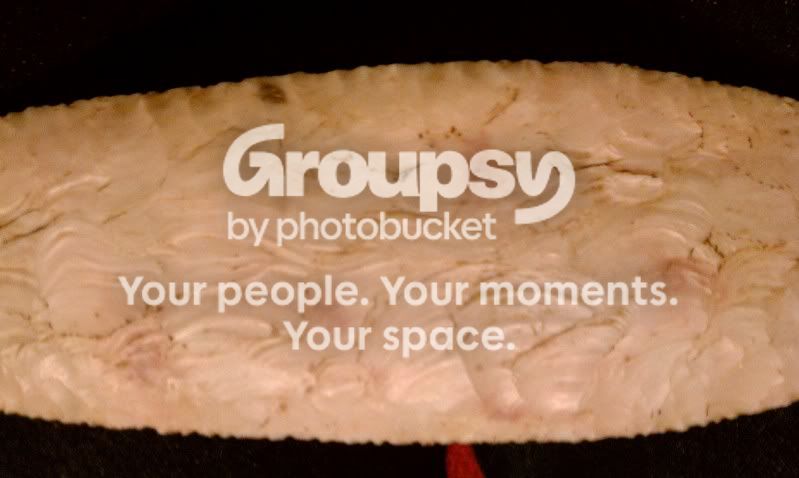
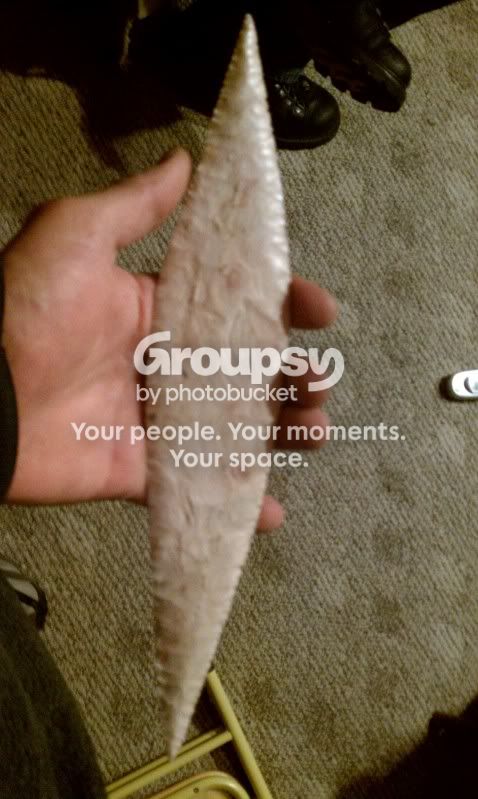
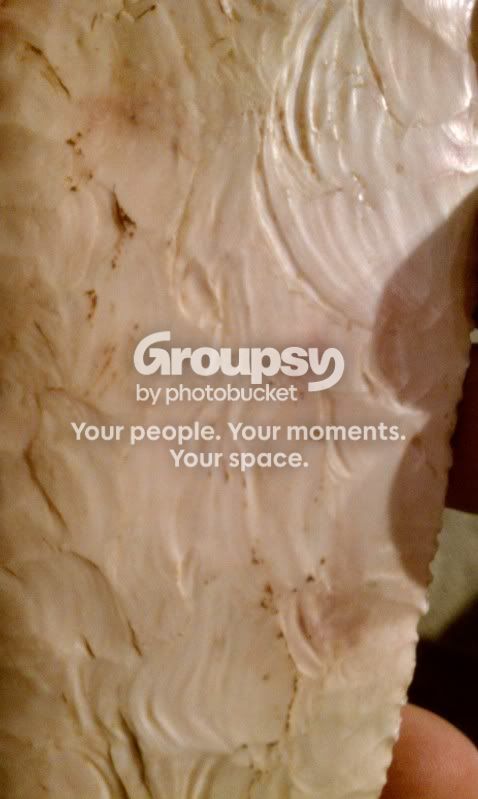
So, what items ARE museum quality? As stated above, it's the unusual items. The delicate, colorful pieces seem to glean the most attention. Exotic forms like Toyah, Cahokia, Eastgate, and Agee always draw comments. Large hardstone grooved axes always make people intrigued. For larger points, Hopewell (Snyders Affinis) seem to draw the most attention. The one question most frequently asked in the museum is "where did they get the beads"? Especially in the historic section...but also prehistoric as well. Even though there are signs explaining them and it's on the audio wands, that still gets asked almost daily.
Out of all of the stone artifacts in the museum, there is one type that garners the most attention. It draws more curiosity and questions than any other form...by far. It doesn't matter how common or fine they are, they seem to be the ultimate "museum quality" relic. Would you or anyone care to guess what it is?








 lol
lol

















