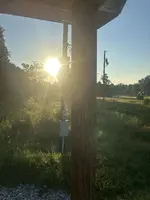
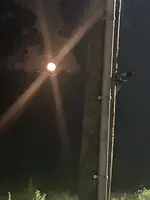
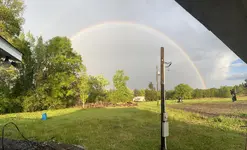
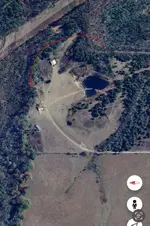
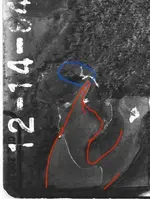
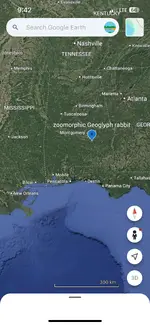
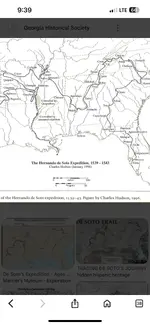
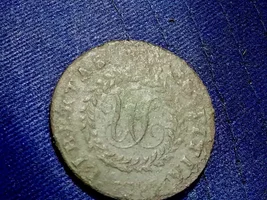
"I've made a discovery that I believe fundamentally rewrites a crucial part of the Hernando de Soto expedition's history, specifically the location and meaning of Rodrigo Ranjel's 'Lake of the Rabbit.' My work centers around a monumental 45-acre zoomorphic geoglyph in Alabama, undeniably resembling a rabbit, situated next to a significant body of water—a find that simply cannot be ignored. For me, this geoglyph is the 'Lake of the Rabbit' that Ranjel mentioned. It's not a lake shaped like a rabbit; it's a colossal earthwork of a rabbit right there by the water, a visual landmark so striking and unmistakable that the Spanish would have easily associated the name 'Rabbit' with this very location, likely through indigenous guides. This location, I firmly believe, sits within the historical boundaries of Chief Tuscaloosa’s domain, long before the Mabila battle. But my discovery goes far beyond just locating a historical site. What truly brings this to life is the convergence of ancient indigenous practices and natural phenomena I've meticulously documented: First, the Celestial Alignments: I've observed and documented how this massive rabbit geoglyph aligns with key celestial events. This isn't just a random earthwork; it's a sophisticated, pre-Columbian astronomical instrument. It suggests that the indigenous people who built it used it as a sacred calendar, orienting it to solstices, equinoxes, or other significant celestial markers. This transforms the 'rabbit' from a mere image into a powerful conduit connecting Earth and sky, a 'living' calendar that structured their lives and ceremonies. Then, there are the Natural Phenomena: I've personally witnessed and documented how lightning repeatedly strikes near or directly on this geoglyph, and how rainbows frequently arch directly over its head. For me, these aren't just coincidences; they’re profoundly symbolic. In many indigenous belief systems, lightning and rainbows are direct manifestations of divine power or spirit beings. The recurring presence of these awe-inspiring events over the rabbit effigy would have imbued this site with immense spiritual power, marking it as a truly sacred place, divinely endorsed and connected to the spiritual realm. This reinforces why such a place would be monumentalized and hold such deep significance for the people who created it. Finally, the Artifacts I’ve Found: The artifacts I've recovered from the site and its vicinity are crucial. They provide the tangible archaeological evidence to anchor this discovery in time. These artifacts, once properly dated and analyzed, will help confirm the pre-Columbian origins of the geoglyph and potentially reveal insights into the daily lives, ceremonial practices, and, critically, any potential interactions with early European explorers, specifically the De Soto expedition. What all of this means together, for me, is a profound re-interpretation: This isn't just about finding a name from a 16th-century Spanish chronicle. It's about uncovering a monumental, spiritually charged, and astronomically sophisticated indigenous landscape that De Soto's expedition almost certainly encountered and named based on its most striking feature. It challenges the conventional narrative of the expedition's early route, making a landing closer to Tallahassee or further west in Florida, and an earlier passage into Alabama, far more plausible to reach this significant site by July 1539. My discovery transforms the 'Lake of the Rabbit' from a vague geographical reference into a vibrant, ancient sacred space, where indigenous identity, cosmic understanding, and divine energy converged, offering an entirely new lens through which to view a pivotal moment in American history."