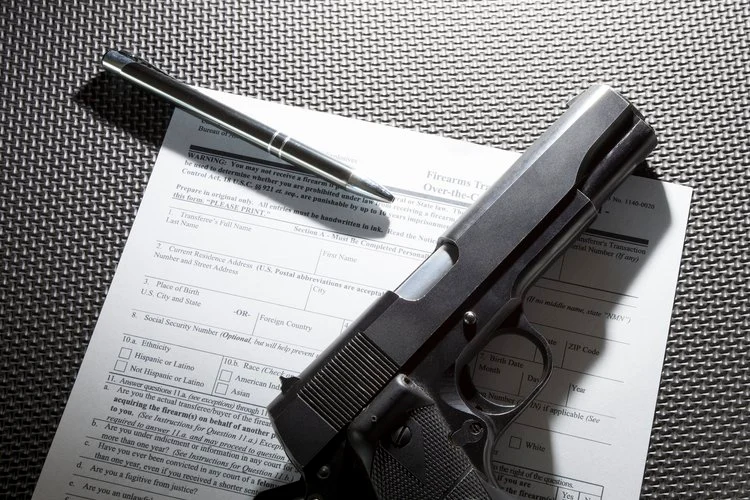
In Florida, I can give or sell a firearm to a family member, friend or stranger as long as they are a resident of the state and reached the proper age, 18 for long guns or 21 for pistols, and are not forbidden to own.
Florida State Requirements for Purchasing Firearms
While Florida follows federal law regarding gun purchases, it also has its
own laws. The state does not require a person to have a permit for firearm purchases, but does require dealers to do background checks on buyers.
This is not required of private sellers. Additional requirements to purchase a gun in Florida include:
- Purchaser must be at least 21 years of age, but 18-year-olds can buy long guns as long as they are a law enforcement or correctional officer.
- Person purchasing a handgun must live in the state of Florida. They can buy long guns in other states as long as the sale follows the laws in that state.
- Legal permanent resident aliens living in Florida can purchase a firearm, but they must show an alien registration number. Nonresident aliens temporarily in Florida must show a border crossing number, known as an I-94, with a valid exception document.
- There is a three-day waiting period, excluding weekends and state holidays, between purchasing and delivering any firearm. Counties and municipalities can enact local ordinances that lengthen the waiting period for up to five days.
The state does not limit the number of guns that can be transferred in one transaction. It considers the transaction complete once the buyer fills out and signs
A.T.F. Form 4473. Additional transfers require separate background checks, no matter when they occur, even if it has been only a few minutes from the last transaction.
Federal Gun Laws and the Transfer of Firearms
According to
Title 18 U.S.C. 922(a)(3),
an unlicensed or non-dealer can transfer guns to another unlicensed or non-dealer if they reside in the same state, but it is illegal for them to transport or receive a firearm from a seller living in another state. A private seller cannot sell or deliver a gun to a purchaser who does not live in their state.
In addition, Title 18 states that it is illegal for a private seller to sell a gun to a private buyer if they have reason to believe that an individual cannot possess or receive it under federal or state laws. If private buyers and sellers breach these requirements, the transaction is illegal, and both parties can face severe legal repercussions.
Florida allows individuals to transfer, buy, sell and gift a firearm to another person, but they must follow state and federal laws when doing so. While the state does not require a permit for firearm purchases, it does require dealers to do background checks. Private sellers, however, are exempt.

legalbeagle.com
ATF website
"What recordkeeping procedures should be followed when two unlicensed individuals want to engage in a firearms transaction?
When a transaction takes place between unlicensed persons who reside in the same state, the
Gun Control Act (GCA) does not require any record keeping. An unlicensed person may sell a firearm to another unlicensed person in their state of residence and, similarly, an unlicensed person may buy a firearm from another unlicensed person who resides in the same state. It is not necessary under federal law for a federal firearms licensee (FFL) to assist in the sale or transfer when the buyer and seller are “same–state” residents.
There may be state or local laws or regulations that govern this type of transaction. Contact the
office of your State Attorney General for information regarding any such requirements."
When a transaction takes place between unlicensed persons who reside in the same state, the Gun Control Act (GCA) does not require any record keeping. An unlicensed person may sell a firearm to another unlicensed person in their state of residence and, similarly, an unlicensed person may buy a...

www.atf.gov


 But it's Rusted Bad Ill have to look for it .