What's new

melted rock

rockpassion

Hero Member
Joined
Oct 5, 2024
Messages
540
Reaction score
605
Golden Thread
0
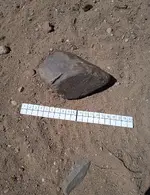
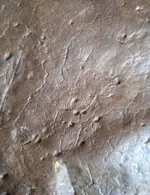
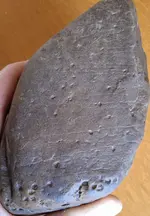
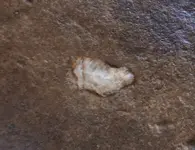
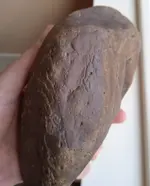
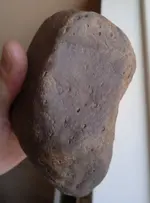
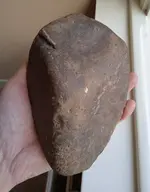
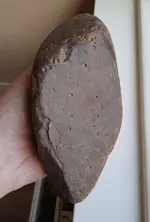
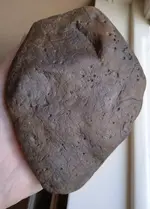
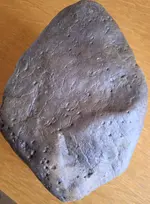
I have found this melted rock in a pile of yellow sand that was dug out during roadconstructions in Nijmegen-east the Netherlands. The sand has been deposited by glaciers in ancient times. Inside the holes and the cracks there is a thin black melt layer. And it seems to be a breccia. What could it be?
 

Attachments

  • IMG_20250515_140226.webp
    IMG_20250515_140226.webp
    345.3 KB · Views: 187
  • IMG_20250510_115659.webp
    IMG_20250510_115659.webp
    975.7 KB · Views: 91
  • IMG_20250515_140234.webp
    IMG_20250515_140234.webp
    339.9 KB · Views: 98
  • IMG_20250515_140246.webp
    IMG_20250515_140246.webp
    292.7 KB · Views: 92
I have found this melted rock in a pile of yellow sand that was dug out during roadconstructions in Nijmegen-east the Netherlands. The sand has been deposited by glaciers in ancient times. Inside the holes and the cracks there is a thin black melt layer. And it seems to be a breccia. What could it be?
Yes, that is unique.

"Nijmegen-east the Netherlands". That is a famous place her in the U.S., from WW2.
 
and the cracks are on all sides of the rock. there are white/brown inclusions which are not quartz but feldspar i think.
 

Attachments

  • IMG_20250515_140344.webp
    IMG_20250515_140344.webp
    414.2 KB · Views: 79
  • IMG_20250515_140450.webp
    IMG_20250515_140450.webp
    269.9 KB · Views: 80
Yes it is very unique and thanks to the USA for liberating us during that time.
Oh, well thank you.

It wasn't me, but many of our grandfathers.
We call them the greatest generation.

Everyone in the world had to pitch in on that one.
And we think we live in crazy times.
Imagine what they had to go through.
 
Don't cut it!

Some people are calling similar rocks meteorites on the web.
https://www.etsy.com/listing/1043845269/1130-gm-genuine-meteorite-iron-olivine

If no one response. I would contact the European Space Agency.
They may be able to identify it.
Actually cutting a meteorite only increases it value, I’m told. It can then be verifiably determined to be a space rock. Instead of 1, now you have 2. Plus you can send a smaller sample to be identified rather than the whole rock. Chances, statistically speaking, are very low.
 
Don't cut it!

Some people are calling similar rocks meteorites on the web.
https://www.etsy.com/listing/1043845269/1130-gm-genuine-meteorite-iron-olivine

If no one response. I would contact the European Space Agency.
They may be able to identify it.
thanks for the info, and if the rock is what i think it is i will think twice cutting it. if i would cutt it, it is also the question do you see more than before the cutting. By the way the rock from the link is a normal basalt sold as a fake meteorite.
 
After looking at my rock very closely and comparing it with the lunar meteorite database of washington university. I have strong indications that my rock has to be a lunar meteorite. It is a breccia it has melt features and remnant fusion crust though not visible on the photo's. Would anyone tell me if i got u lunar meteorite if it was one or would that be kept quit because of the rarity and impossiblility? Love to hear from the hardcore meteorite hunters or dealers who have seen their fair share of lunar metorites and have held them in their hands. An individual i mean not a slice.
 

Attachments

  • IMG_20250525_183246.webp
    IMG_20250525_183246.webp
    114.2 KB · Views: 67
  • IMG_20250525_183241.webp
    IMG_20250525_183241.webp
    160.4 KB · Views: 66
  • IMG_20250525_183227_1.webp
    IMG_20250525_183227_1.webp
    207.3 KB · Views: 67
  • IMG_20250525_183220_1.webp
    IMG_20250525_183220_1.webp
    224.9 KB · Views: 66
  • IMG_20250525_183212_1.webp
    IMG_20250525_183212_1.webp
    244.8 KB · Views: 79
Take it to geology department of a college, they will identify it for you quickly.
if a meteorite hunter in africa can find meteorites by eye some of less than 20 grams how can it be that meteorite collectors can't indentify a melted 2 kilo rock like mine. Just saying. very odd. All of the meteorites in the nomencleture have been found by eye so why saying you can't indentify a meteorite by just looking at the features. ?????. I am very curious what opinions will be if my ICP test has been done on my big black mystery stone and shows measurements that proof meteoritic origin. Will there still be deny?? just saying , strange world meteoritics.
 
if a meteorite hunter in africa can find meteorites by eye some of less than 20 grams how can it be that meteorite collectors can't indentify a melted 2 kilo rock like mine. Just saying. very odd. All of the meteorites in the nomencleture have been found by eye so why saying you can't indentify a meteorite by just looking at the features. ?????. I am very curious what opinions will be if my ICP test has been done on my big black mystery stone and shows measurements that proof meteoritic origin. Will there still be deny?? just saying , strange world meteoritics.

My personal opinion is that you're not taking in much learning from the comments that have been added to many of your posts.

There are a number of classes of meteorite that can be readily identified by visual appearance alone with a high degree of certainty but those are relatively few in number. Stony achondrites including those of Lunar or Martian origin most definitely do not fall into that category. The simple reason for that is because they have a geological origin and mineralogy which is very similar to the conditions under which many Earth rocks were formed.

You referenced meteorite finds in Africa as having been identified "by eye", but what you have not understood is that these are almost always desert finds. From sandy deserts. In those kinds of areas which are usually relatively devoid of rocks, there is a very high probability that small, isolated, odd-looking stones laying in the sand will turn out to be meteorites. Sometimes they have fusion crusts which increases the probability further and also makes them stand out against the light-coloured sandy environment.

Meteorite in situ.webp


Even then, it takes specialised testing to confirm them and they don't get entered into the MetSoc database without submission of such results from a competent laboratory with relevant expertise.

If your ICP test results are consistent with meteoritic origin and inconsistent with terrestrial origin then of course there is no justification for dismissing a claim that your rock is a meteorite. The only caution would be that it takes an expert in meteoritics to interpret the results, and laboratories able to undertake such tests typically do not have the expertise for interpretation... and neither do you.

I understand why you would want to continue to pursue that approach if you are able to get the tests performed for free, but I have suggested a number of times that a specialist laboratory (the best I know of is New England Meteoritical Services) will give you a definitive and indisputable answer, as well as a typology, from a 10g specimen at a cost of $30 (plus postage if outside the USA).

I'm sure you will continue to argue as before that you're unwilling to risk losing any of your specimen in the post because of your belief that you have something of extraordinary value. I will continue to say that's a poor argument, given that: the risk of loss is small in the overall scheme of things; 10g is only a tiny fraction of what you have (0.5% in this case); and that the value of a rock that is only suspected as a meteorite remains at zero without an expert assessment to confirm the suspicion.
 
Last edited:
Don't the air bubbles rule this out as being a meteorite?

Certainly considerably less likely for what is already an unlikely possibility. I don't believe the rock to be meteoritic, but @rockpassion ain't going to be convinced without more conclusive evidence.
 
My personal opinion is that you're not taking in much learning from the comments that have been added to many of your posts.

There are a number of classes of meteorite that can be readily identified by visual appearance alone with a high degree of certainty but those are relatively few in number. Stony achondrites including those of Lunar or Martian origin most definitely do not fall into that category. The simple reason for that is because they have a geological origin and mineralogy which is very similar to the conditions under which many Earth rocks were formed.

You referenced meteorite finds in Arfrica as having been identified "by eye", but what you have not understood is that these are almost always desert finds. From sandy deserts. In those kinds of areas which are usually relatively devoid of rocks, there is a very high probability that small, isolated, odd-looking stones laying in the sand will turn out to be meteorites. Sometimes they have fusion crusts which increases the probability further and also makes them stand out against the light-coloured sandy environment.

View attachment 2210105

Even then, it takes specialised testing to confirm them and they don't get entered into the MetSoc database without submission of such results from a competent laboratory with relevant expertise.

If your ICP test results are consistent with meteoritic origin and inconsistent with terrestrial origin then of course there is no justification for dismissing a claim that your rock is a meteorite. The only caution would be that it takes an expert in meteoritics to interpret the results, and laboratories able to undertake such tests typically do not have the expertise for interpretation... and neither do you.

I understand why you would want to continue to pursue that approach if you are able to get the tests performed for free, but I have suggested a number of times that a specialist laboratory (the best I know of is New England Meteoritical Services) will give you a definitive and indisputable answer, as well as a typology, from a 10g specimen at a cost of $30 (plus postage if outside the USA).

I'm sure you will continue to argue as before that you're unwilling to risk losing any of your specimen in the post because of your belief that you have something of extraordinary value. I will continue to say that's a poor argument, given that: the risk of loss is small in the overall scheme of things; 10g is only a tiny fraction of what you have (0.5% in this case); and that the value of a rock that is only suspected as a meteorite remains at zero without an expert assessment to confirm the suspicion.
Dear Red coat, i understand what you are saying but also note there are desserts with allot of rock in it and still the meteorite hunters can pick out the meteorites by eye. And about the test subject, a ICP and x-ray test is the best way to go according the website of Washington university. And don't you worry about getting the sesults translated into usable data. Got that already covered. If you are as active looking at earth rock and meteorite and know what they look like and knowing which earth rocks are looking like meteorite you will eventuly find something. I can pick an odd rock out of a large pile of rocks and got a good eye. i have put litery blood sweat and tears into this exploration and have been doing so for 40 years so i know my rocks all though it no may look like that.
 
Last edited:
Don't the air bubbles rule this out as being a meteorite?
i depents on the airbubbles them selves, air bubbels on lunars are different that airbubbles on basalt. And if the airbubbles are produced by reentering the atmosphere they usualy have melted interiours. As my rock has, but can't photograph it to small. But i know that finding a lunar is a long shot 1 in a miljon % change maybe.
 

Users who are viewing this thread

Back
Top Bottom