lucky1777
Bronze Member
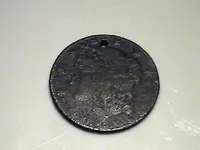
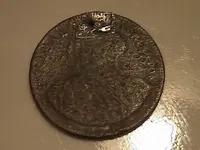
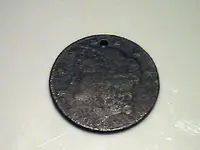
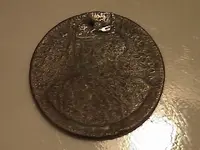
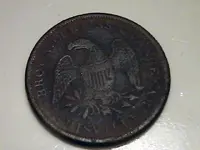
Finally got a chance to hit the bean field where an old sod house once stood. There is a lot of pottery pieces so I figured I was close. After finding a bunch of old nails and half a horseshoe, I got a good signal. When I first seen her I was thinking large cent. But then I seen the back. Here's some info on the Washington token courtesy of PBK and Daniel in AK.
It's a game counter— a type of token used like a poker chip— and dates from the mid 1800's. It was made in Germany, almost certainly in Nuremberg, and the maker likely was the firm of Lauer.
The Liberty head was modeled on U.S. gold coins of the period, and the lettering beneath it is COMP. S. MARKE — an abbreviation of Compositions Spiel Marke. (Spiel Marke is German for "play money.")
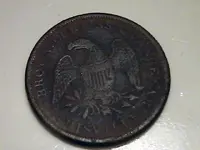
There are several varieties of this token, all with the same "General Washington" obverse. Other reverses include American eagles, the New York City Hall, and Spiel Marke within a wreath.
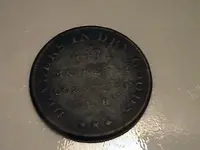
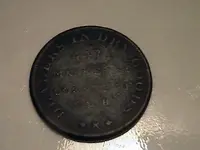
The other is a Louisville Kentucky token. Here is some information on it courtesy of Idahotokens.
This one is listed in Rulau's United States Tokens book and Miller's Storecards book. Rulau says, "...were wholesale and retail dealers in dry goods, appearing in the 1845 city directory. The partners were James D. Brown, the principal (who boarded at the Louisville House in 1845), S. W. Curtiss and John A. Vance. In 1845 Curtiss boarded at the Exchange Hotel and Vance at the Franklin Hotel, according to the directory. (Were all three bachelors who disliked sharing their off-hours with each other?). The firm disappears by the time of the 1865 directory. James D. Brown had been in business for himself 1836-38 as a draper and tailor on the east side of Wall St., between Main and Water. At that time his residence is listed at Hancock & Clay (with parents?). Later, 1842-43, he was in business as Brown & Ormsby, merchants, southeast corner Market and 4th."
Rulau shows values ranging from $15 in Very Good to $60 in uncirculated. This is part of the general grouping of tokens called "US Merchant Tokens, 1845-1860" They were a combination of advertising and substitute for the government-issued large cents which often disappeared from circulation due to hoarding and/or the value of metal was higher than the face value. That is kind of like the situation today where it costs the Mint well over a cent to get a cent made, even though they took most of the copper out.
Thanks to these guys for taking the time to find some information on these finds..
Attachments
Upvote
0