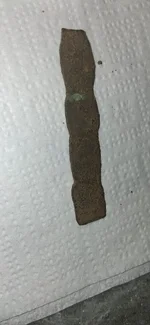
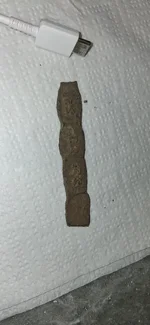
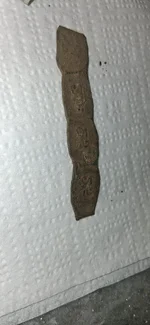
GROK Says:
This looks like leftover scrap from a metal-casting process (a sprue, runner, or gating-system remnant) rather than a finished tool or object that was ever used on its own.
realorrepro.com
Molten metal was poured into a mold through channels. After the desired parts solidified, the extra metal that filled those channels was broken or cut off. What you have is that leftover bar—the lumpy, segmented shape is typical of metal that cooled inside irregular sand or investment channels, sometimes feeding several small cavities at once. The squared-off left end is consistent with it having been snipped or broken from a larger tree or pour.
castingsource.com
The brown rust-like surface plus isolated green spots points to a copper alloy (bronze or brass) that has developed both iron-oxide-style staining and classic copper-carbonate/patina corrosion. The stamped “32.52” (and possible letters on the second segment) is most likely a foundry heat/batch number or simple identification mark applied while the metal was still soft.
garagewelding.com
These pieces were almost never kept as finished goods; they were normally tossed back into the furnace and remelted. Finds like this turn up around old foundries, blacksmith shops, jewelry studios, or even Bronze Age sites, though the decimal marking makes a 19th–20th-century industrial or small-shop origin more probable.A quick magnet test would confirm the alloy family (non-magnetic = copper-based; magnetic = iron/steel). If you want a more precise ID, an XRF scan or simply weighing it and measuring the segments would help narrow the date and workshop.