I have a close friend that has been hunting and collecting arrow heads and the like for many years, and is a storehouse of knowledge when it comes to this subject. I showed him your pictures, and he said it could very well be a scraper, skinning, cutting type tool that shows alot of erosion, some stone being of softer material than others. And that brings us to the second fact. Tribes of some regions were just not blessed with the quality of stone materials for chipping as were others. For instance, up here in Western Washington where he hunts, tools made of local stone were inferior at best and didn't have the nice sharp chipping qualities of others, as is the case of your find. Hense came the age old game of bartering. Tribes with inferior stone tools traded with tribes of others areas who did have quality materials, trading items such as dried salmon and other goods that inland tribes didn't have. He said he can look at a stone tool and have a pretty good idea of where the tool was originally made. For instance he found a very rare intact club, called a manslayer, along a local river that he knows was made in or around what is now the Dakotas. Infact out of the hundreds and hundreds of arrow and spear heads, bird points and other stone tools he has on display, he said though found locally, most were not originally from this area. Anyway, hoped this helped.


 I don't think it is flint, but I am not sure of that either. Thank you for looking
  Paul
Paul 
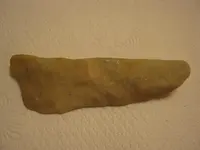
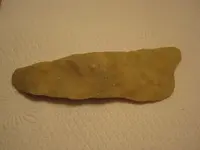
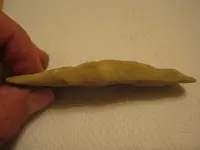
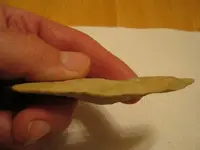
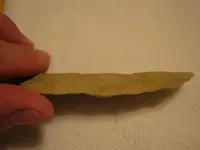
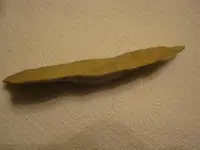
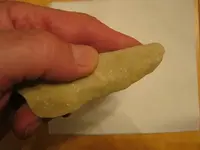


 Ill hold on to it for now as a possibility. I wonder, if it was a tool like a scraper, It looks like it was used by a left hander. That would explain one side looking as if it were worked more than the other. Thanks and Happy Easter

















