rockpassion
Hero Member
- #1
Thread Owner


thank you"Ecce panis angelorum" is a Latin phrase meaning "Behold the bread of angels," referring to the Eucharist in Catholic theology. Originating from St. Thomas Aquinas’s 13th-century Lauda Sion sequence for Corpus Christi, it highlights the belief that the consecrated bread is the true food of pilgrims.
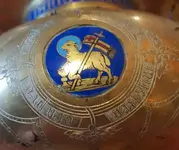
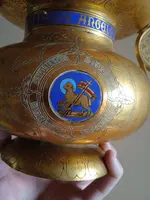
The lamb holding a flag, known as the Agnus Dei (Latin for "Lamb of God"), is a prominent Christian symbol representing Jesus Christ's sacrifice, resurrection, and victory over sin and death. It typically features a lamb (often with a halo) holding a cross-shaped staff with a white banner and red cross.
Source AI
Don in SoCal

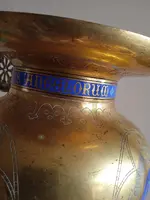
oke thanks, pretty fancy one, it says on it , ??
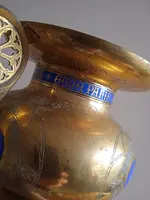
Ecce panis angelorum
"Ecce panis angelorum" is a Latin phrase meaning "Behold the bread of angels," referring to the Eucharist in Catholic theology. Originating from St. Thomas Aquinas’s 13th-century Lauda Sion sequence for Corpus Christi, it highlights the belief that the consecrated bread is the true food of pilgrims.
The lamb holding a flag, known as the Agnus Dei (Latin for "Lamb of God"), is a prominent Christian symbol representing Jesus Christ's sacrifice, resurrection, and victory over sin and death. It typically features a lamb (often with a halo) holding a cross-shaped staff with a white banner and red cross.
Source AI
Don in SoCal
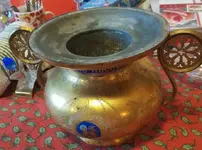
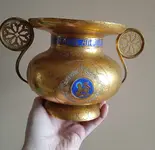
o cool, can´t find anything on the net like it. the only things that pops up via google photo search are silver gilt pieces like a chalice . i will recieve it thuesday i think. would you like to seen more photo's then of all the inscriptions?In that case, it might be that what you have is not an incense pot, but a liturgical ‘pyx’ or ‘custode’. Such containers are used in Christian services to hold the ‘communion host’ (small unleavened circular wafers made from wheat flour and water, or a larger one broken into pieces) consecrated by a priest during mass, symbolising the bread shared at the Last Supper and the body of Christ. As well as being vessels from which the Eucharist is distributed to a congregation, they are also used to transport it to those who are sick or homebound.
The only word I could reliably make out from your pictures seems to be “mystica”. If the preceding word is “rosa”, then “Rosa Mystica” (mystical rose) is the poetic devotional title for the Virgin Mary, most usually (but not exclusively) in Catholic circles.
o cool, can´t find anything on the net like it. the only things that pops up via google photo search are silver gilt pieces like a chalice . i will recieve it thuesday i think. would you like to seen more photo's then of all the inscriptions?
Unfortunately, I was the victim of a scammer, so the item was never shipped. If I do receive it, I'll let you know.Yes, I'd love to see all the inscriptions. Thanks.

In that case, it might be that what you have is not an incense pot, but a liturgical ‘pyx’ or ‘custode’. Such containers are used in Christian services to hold the ‘communion host’ (small unleavened circular wafers made from wheat flour and water, or a larger one broken into pieces) consecrated by a priest during mass, symbolising the bread shared at the Last Supper and the body of Christ. As well as being vessels from which the Eucharist is distributed to a congregation, they are also used to transport it to those who are sick or homebound.
The only word I could reliably make out from your pictures seems to be “mystica”. If the preceding word is “rosa”, then “Rosa Mystica” (mystical rose) is the poetic devotional title for the Virgin Mary, most usually (but not exclusively) in Catholic circles.
Transubstansiation anyone?😆In that case, it might be that what you have is not an incense pot, but a liturgical ‘pyx’ or ‘custode’. Such containers are used in Christian services to hold the ‘communion host’ (small unleavened circular wafers made from wheat flour and water, or a larger one broken into pieces) consecrated by a priest during mass, symbolising the bread shared at the Last Supper and the body of Christ. As well as being vessels from which the Eucharist is distributed to a congregation, they are also used to transport it to those who are sick or homebound.
The only word I could reliably make out from your pictures seems to be “mystica”. If the preceding word is “rosa”, then “Rosa Mystica” (mystical rose) is the poetic devotional title for the Virgin Mary, most usually (but not exclusively) in Catholic circles.
wow i got lucky and the vessel has been shiped and i will recieve it tommorow. Will make some great photos.In that case, it might be that what you have is not an incense pot, but a liturgical ‘pyx’ or ‘custode’. Such containers are used in Christian services to hold the ‘communion host’ (small unleavened circular wafers made from wheat flour and water, or a larger one broken into pieces) consecrated by a priest during mass, symbolising the bread shared at the Last Supper and the body of Christ. As well as being vessels from which the Eucharist is distributed to a congregation, they are also used to transport it to those who are sick or homebound.
The only word I could reliably make out from your pictures seems to be “mystica”. If the preceding word is “rosa”, then “Rosa Mystica” (mystical rose) is the poetic devotional title for the Virgin Mary, most usually (but not exclusively) in Catholic circles.
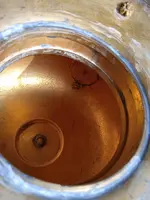
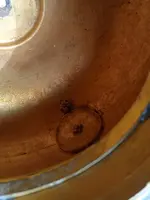
No residue found and no odor, but looks like it held a liquid??Thanks for the additional pictures. As I suspected, the word before “mystica" is “rosa”, with the phrase being the devotional name for the Virgin Mary. In full, it reads “ora pro nobis rosa mystica”, meaning “pray for us, mystical rose [Virgin Mary],"
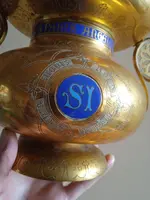
Not sure what the ‘SI’ enamelled monogram is for, but my guess would be it’s for the Society of Jesus, expressed in Latin as “Societas Iesu”. It’s a Jesuit religious order Founded by St. Ignatius of Loyola in 1534, and the largest male religious order in the Catholic Church. Known particularly for its missionary and educational work.
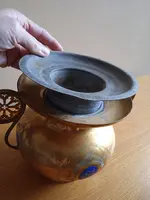
None of that takes us any closer to the exact purpose of the urn, but I would think the insert you’re now showing is consistent with it being an incense pot. Does the insert have any tell-tale residue inside, or any remnant odour
i believe it is like mackaydon said an container for the hostie's. ecce panis angelorum, behold the bread of angels.Thanks for the additional pictures. As I suspected, the word before “mystica" is “rosa”, with the phrase being the devotional name for the Virgin Mary. In full, it reads “ora pro nobis [not novis] rosa mystica”, meaning “pray for us, mystical rose [Virgin Mary],"
Not sure what the ‘SI’ enamelled monogram is for, but my guess would be it’s for the Society of Jesus, expressed in Latin as “Societas Iesu”. It’s a Jesuit religious order Founded by St. Ignatius of Loyola in 1534, and the largest male religious order in the Catholic Church. Known particularly for its missionary and educational work.
None of that takes us any closer to the exact purpose of the urn, but I would think the insert you’re now showing is consistent with it being an incense pot. Does the insert have any tell-tale residue inside, or any remnant odour?