What's new

Rocks or artifacts?

gotjack

Tenderfoot
Joined
Dec 2, 2009
Messages
8
Reaction score
0
Golden Thread
0
Location
Owasso Oklahoma
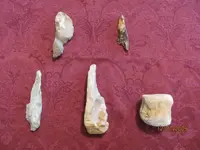
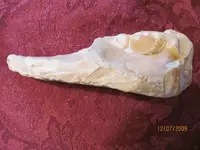
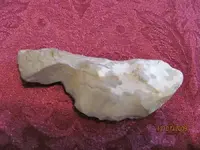
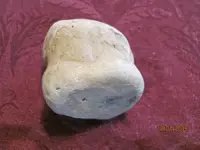
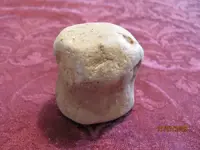
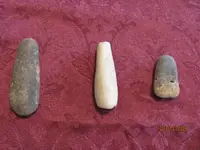
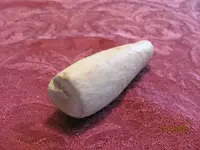
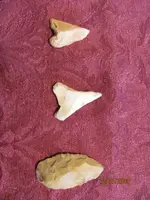
Hi Im new to the forum and artifact hunting, I hope its all right for me to post and ask questions here on the forum. All of these were found in creek beds around the Branson MO area. Thanks for any help!
 

Attachments

  • IMG_0126_resize.webp
    IMG_0126_resize.webp
    59.3 KB · Views: 949
  • IMG_0127_resize.webp
    IMG_0127_resize.webp
    61.2 KB · Views: 946
  • IMG_0129_resize.webp
    IMG_0129_resize.webp
    74 KB · Views: 929
  • IMG_0130_resize.webp
    IMG_0130_resize.webp
    29.5 KB · Views: 925
  • IMG_0131_resize.webp
    IMG_0131_resize.webp
    36.4 KB · Views: 920
  • IMG_0136_resize.webp
    IMG_0136_resize.webp
    70 KB · Views: 919
  • IMG_0138_resize.webp
    IMG_0138_resize.webp
    48.1 KB · Views: 902
  • IMG_0139_resize.webp
    IMG_0139_resize.webp
    130.4 KB · Views: 916
Upvote 0
A little hammerstone, some flake/blade knives and possibly some stones in the process of being made into celts, plummets &c. Artifacts.
 
Thanks uniface! I know there not much but I was exctied when I found them, now I know Im on the right track. Which one is the hammer stone? And what is the white stone in the middle. Thanks
 
It's my opinion that only one rock is a positive artifact and that would be the one in the last pic. at the bottom. I would call that a blade or knife. jmo, Harry
 
While unitas is right, the only easily identifiable artifact is the blade in the last picture, I'm seeing another in the piece top left of the first picture...Looking at the closeup, I see some secondary flaking on the edges, possibly a killsite tool. I agree with uniface about the possible plummet, tho.
 
As Unitas stated, I too believe that the only artifact you have there is the small knife / biface in the bottom of the last pic.
 
gotjack : the bottom right one in the first picture is the one I meant (little hammerstone). The rest of the chert pieces pretty obviously didn't make themselves. If somebody wants to believe that the creek made them, they're welcome to, I guess. They well may be debitage (waste flakes from making something else) but I suspect they were used (utilised flakes) from looking at them.

Good going & keep up the good work. :icon_thumleft:
 
Well thanks for all the replys I welcome them all as I am new to hunting artifacts. I cant wait to get out there and look for more!
 
Gotjack, I just saw your location. You are VERY close to me, I live in Pryor. I would be happy to look at your artifacts in person sometime, but I'm pretty confident in my first assessment of them. Take care and happy hunting.
 
Neanderthal said:
Gotjack, I just saw your location. You are VERY close to me, I live in Pryor. I would be happy to look at your artifacts in person sometime, but I'm pretty confident in my first assessment of them. Take care and happy hunting.

That was nice. Looks like you are in a spot that will give you more. Keep bringing everything home. Good luck.
TnMtns
 
I agree with the rest ,on the only artifact is the blade in the last pic. Your about 3 hours from me or Id look at them also, but I am pretty sure everyone is right on this. Good luck. John
 
The differences of opinion aren't really about your artifacts (or, non-artifacts), gotjack. As usual, they're over the definition of "artifact." And while it might be tedious to keep raising this point, I think it is at least equally useful to do so, for if the wind always blows from the same direction, the trees grow crooked.

To one way of looking at it, a chert "artifact" essentially means "biface." (A biface is a piece with both sides flaked, and usually recognisable as at least once having been a point or a knife). Only in cases where a repeating form (like prismatic blades) or fairly extensive edge re-touching are involved (such as on scrapers or gravers) are non-bifaces recognised as "artifacts."

This is more or less a carry-over from the way archaeologists viewed the picture 50 years ago. Everything then that wasn't a biface or a flake tool was dismissed as just "debitage" -- the chips and chunks left over from making "artifacts."

It has since dawned on people that not only were these "waste flakes" used (often without further modification) as tools in many cases, but with some peoples, far from a re-supply source and being frugal with what they had with them, (what was once written off as) "debitage" comprised most of their actual tool kits. Everything that could be recycled was recycled -- down to smashing exhausted tools to use the splinters as gravers and borers.

So whether your pieces were, in fact, used as tools or not, from this perspective, they could have been and, at any rate, they were deliberately produced. Making them, broadly speaking, "artifacts" (things made by people).

Choose your perspective, and your conclusion follows.
 
uniface said:
The differences of opinion aren't really about your artifacts (or, non-artifacts)

So whether your pieces were, in fact, used as tools or not, from this perspective, they could have been and, at any rate, they were deliberately produced. Making them, broadly speaking, "artifacts" (things made by people).

Incorrect. I think if you would get out of Pennsylvania and come to the Ozarks (or even most places east of the Mississipppi), your perspective on "artifacts" may really change. The items he is showing (to me at least) show absolutely no signs of human modification. They show incidental damage that is common where you find good quality lithic materials. His pieces were not "things made by people", they are things made by nature.

Even the "micro flaking" that you think you see along the edge, sorry guy, that appears all natural and commonplace for the area.
 
Neanderthal said:
uniface said:
The differences of opinion aren't really about your artifacts (or, non-artifacts)

So whether your pieces were, in fact, used as tools or not, from this perspective, they could have been and, at any rate, they were deliberately produced. Making them, broadly speaking, "artifacts" (things made by people).

Incorrect. I think if you would get out of Pennsylvania and come to the Ozarks (or even most places east of the Mississipppi), your perspective on "artifacts" may really change. The items he is showing (to me at least) show absolutely no signs of human modification. They show incidental damage that is common where you find good quality lithic materials. His pieces were not "things made by people", they are things made by nature.

Even the "micro flaking" that you think you see along the edge, sorry guy, that appears all natural and commonplace for the area.


Neanderthal raises a good "point". In central and south Texas, we have large amounts of flint and chert. Creeks, rivers, freeze/thaw, and even the Texas sun can fracture this lithic material to look similar to flake tools. I think you need to weigh the context of where you found something before assigning whether it was produced by people. Your case is stronger for "artifact" if it was found in site debris.

John
 
Hi gotjack, I'm new to this hobby, too. I'm in Missouri, about 4 hours NE of you, and I find the same kind of items here. Are they artifacts? I don't know. But the learning and the hunting are so much fun that you'll be addicted in no time. Good luck on your hunts!
 
Bluesy i am all ready addicted LOL. Thank you everyone for the replies and the opinions, I can definitely learn from all of them.
 
I agree with Neanderthal. Mo creeks are loaded with flakes like that I guess from freeze fractures and fire.
 

Users who are viewing this thread

Back
Top Bottom