"Well sure, anyone can pick out the cherries from 60,000 specimens".
Y'know, this is what you hear -- A LOT!
Yet, not one single debunker has come forward showing another natural-geofact site where this is true. Consider all of the natural flint/chert outcrops in the entire world the debunkers have to chose from. And yet, after 40 years of Calico lithics -- and you would think that the debunkers would have been looking -- there has been no other candidate that has ever yielded the kinds of "geofacts" that the debunkers so easily and so glibly claim are just normal wear and tear you find at any chert source/outcrop. In fact, there are plenty of great geofacts in the Calico collection itself; some are natural, weathered spalls that you would swear were actually blades unless you are familiar with the signatures of fracture mechanics. And, there are indeed actual blades in the collection as well. It is complex and in many ways the subtleties can be confusing. Our job right now is to put the collection on some type of friendly footing that will allow in depth analysis in the years to come.
It is great that the idea of geofacts is posited as a hypothesis, but to rest on that hypothesis as "proof" of geofact-ness is not only bad science, but whoever does it is pretty much an air-head because that is all a hypothesis is -- air, i.e. an idea, a test, something imagined that has to be tested, something you can do on your couch. Yet not one single other chert or flint resource has been found in the Old or New World with anything close to the type of variability you find at Calico. I mean, you mention that for the debunkers, the fact that there are only 26 images may imply that we have only cherry picked the best, that the rest of the "things" pulled out of hill are all hokie and not worth publishing because they sour the case of artifact-hood. That could be an argument, I suppose.
Given most debunkers like to criticize at a distance and don't bother even looking through the boxes themselves, we hope to remedy that situation through a series of extensive photographic examinations. For example, what about 26 graver specimens, all with isolation flakes (small notches) that help isolate the graver element -- these are small notches on either side of the graver element -- a very common practice in the world of graver-dom. Thing is, we could probably double or quadruple the number of "alleged" gravers we have based on the presence of these double-notched isolation features alone. This is true for other delicate features on a number of different artifact types, such as reamers and denticulates. Once we get through the basic classification stage, this will be a top priority.

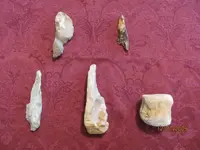 IMG_0126_resize.webp59.3 KB · Views: 949
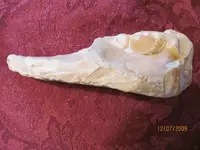 IMG_0127_resize.webp61.2 KB · Views: 946
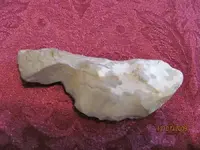 IMG_0129_resize.webp74 KB · Views: 929
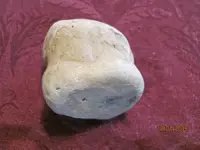 IMG_0130_resize.webp29.5 KB · Views: 925
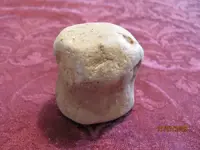 IMG_0131_resize.webp36.4 KB · Views: 920
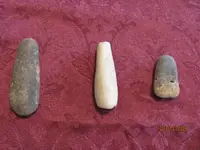 IMG_0136_resize.webp70 KB · Views: 919
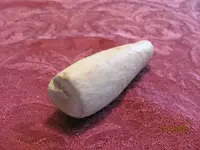 IMG_0138_resize.webp48.1 KB · Views: 902
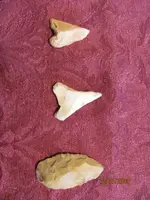 IMG_0139_resize.webp130.4 KB · Views: 916


 (although I figured that out already from the link that has all pictures of drills.)