What's new

shocked Quartz find

rockcollect

Full Member
Joined
May 2, 2026
Messages
196
Reaction score
185
Golden Thread
0
Location
Lent
Detector(s) used
none
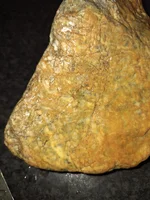
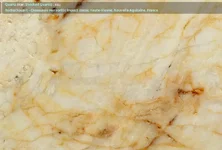
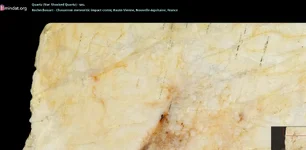
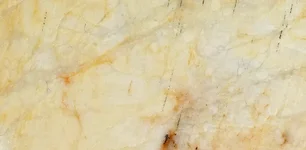
I have found an unusual piece of quartz with allot of translucent veins running criss cross in it. After some googling i found out it is a piece of shocked quartz. Could it be from the Ries crater area and transported by the river Waal to lent? See the two photo's of my rock and the examples of shocked Quartz from mindat.
 

Attachments

  • 1.webp
    1.webp
    1.7 MB · Views: 65
  • 20260713_173721.webp
    20260713_173721.webp
    1.5 MB · Views: 25
  • Screenshot 2026-07-13 at 17-56-53 .webp
    Screenshot 2026-07-13 at 17-56-53 .webp
    100 KB · Views: 19
  • Screenshot 2026-07-13 at 18-09-52 .webp
    Screenshot 2026-07-13 at 18-09-52 .webp
    127 KB · Views: 24
Last edited:
The main rivers in the Nördlinger Ries crater area of Germany are the Wörnitz and the Eger.

The Wörnitz flows south to the Danube, across Central and Eastern Europe into the Black Sea in Romania and Ukraine. The Eger flows east to the Elbe river which empties into the North Sea off the coast of Germany, over 150km from the Dutch border and about 500km from Lent.

Although the river Waal is a major branch of the Rhine, the nearest the Rhine comes to the Ries crater is over 200km to the west.

The furthest that heavy ejecta is known to have been thrown from the crater is about 180km, although tiny fragments and dust were carried much further. Microscopic shocked quartz grains have been found in soil at Geldrop-Aalsterhut in the Netherlands, a little south of Lent.

I'm also not seeing the planar deformation features diagnostic for intense-pressure-shocked quartz in your specimen.
 
Last edited:
The main rivers in the Nördlinger Ries crater area of Germany are the Wörnitz and the Eger.

The Wörnitz flows south to the Danube, across Central and Eastern Europe into the Black Sea in Romania and Ukraine. The Eger flows east to the Elbe river which empties into the North Sea off the coast of Germany, over 150km from the Dutch border and about 500km from Lent.

Although the river Waal is a major branch of the Rhine, the nearest the Rhine comes to the Ries crater is over 200km to the east.

The furthest that heavy ejecta is known to have been thrown from the crater is about 180km, although tiny fragments and dust were carried much further. Microscopic shocked quartz grains have been found in soil at Geldrop-Aalsterhut in the Netherlands, a little south of Lent.

I'm also not seeing the planar deformation features diagnostic for intense-pressure-shocked quartz in your specimen.
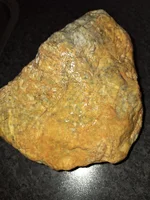
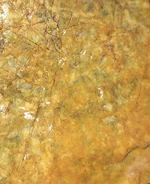
ok, look at the translucent veins in both the photo of my piece and the one from mindat they match up. same pattern form. zoom in my photo of my rock and you will see all the translucent veins. Or does quartz also have translucent veins naturaly?
 

Attachments

  • 20260713_173831.webp
    20260713_173831.webp
    385.3 KB · Views: 27
  • Screenshot 2026-07-13 at 18-09-52 .webp
    Screenshot 2026-07-13 at 18-09-52 .webp
    64.3 KB · Views: 22
ok, look at the translucent veins in both the photo of my piece and the one from mindat they match up. same pattern form. zoom in my photo of my rock and you will see all the translucent veins. Or does quartz also have translucent veins naturaly?

Yes, of course quartz can commonly have natural translucent veins. Most frequently seen in what is called ‘crackle quartz’. This specimen (my collection) has been infused with blue dye to show them more clearly:

Crackle Quartz.webp


The diagnostic for shocked quartz from intense pressure is the presence of planar deformation features (PDFs), or shock lamellae running along the planes inside the crystal. Like this:

Suvasvesi_shocked_quartz.webp

[Picture by Martin Schmieder, Creative Commons License: https://creativecommons.org/licenses/by/3.0/deed.en]

The pictures in the mindat gallery are not particularly useful for comparison at a macro-level since, although these linear features may be visible to the naked eye, they’re usually only visible through a petrographic microscope as criss-crossed parallel lines spaced between 2 and 10 microns apart.
 

Users who are viewing this thread

Back
Top Bottom