What's new

Tell me what you know about toned coins.

dossier

Full Member
Joined
Aug 23, 2011
Messages
233
Reaction score
1
Golden Thread
0
Location
PA
Detector(s) used
Fisher F2, Hands
Primary Interest:
All Treasure Hunting
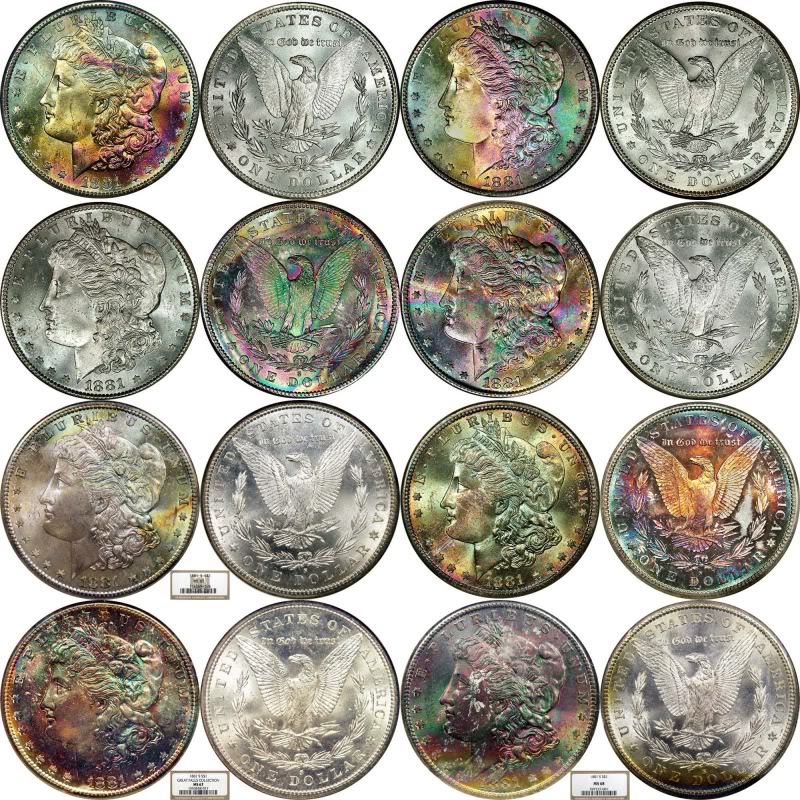
I've come across a few toned halves, some with more iridescent colors than others. It's not like looking into a rainbow like an 1881-S morgan, but still something. What makes some toning more preferred? Do those tones only appear on known 'toned' coins? I was reading A lot of the morgans are toned like that. But only the gem proofs? Are non-proofs that are toned even worth holding on to? Personally I think they're cooler than missing an FG or something you have to concentrate on to even notice.

I'm talking about coins like these for example:
Zc2Qy.jpg
 
Upvote 0

My favorite coin is a toned peace dollar. i think its all about preference.
 
A Banana Peel, Brown paper bag and two days...... :icon_thumright: :icon_thumleft:
 
Yep, toning is a chemical reaction because silver (along with copper) is chemically reactive. The reason why you see a lot of nice toning in older proof sets is because they were usually stored in acidic paper/cardboard which over many years toned them. Toning is an interesting subject because there are ways to artificially tone a coin which can be detected by NGC/PCGS and they are supposed to mark it or not slab it if it has artificial toning (whether they do or not is a matter of debate). Personally, if I find a coin with great eye appeal and toning, I really don't care /how/ the toning got there, as long as the coin is genuine and the toning looks nice, it only adds to the value in my book, other collectors would disagree however.
 
I know that if you are good with chemicals and a blowtorch, you can duplicate the natural toning process, and there are people that will "ooh and ahh" and pay many more times than the coin is worth.
 
Many Morgan dollars have dramatic rainbow toning because they were stored, uncirculated, in bags made of sulfur-containing fabric, in bank, government vaults or basement hoards for many decades. Older proof sets sometimes tone because of the packaging they're stored in in combination with the storage environment. Likewise with coins in certain older albums, or stored in paper rolls (sometimes explicitly called "album toning" or "end roll toning").

Coin doctors will intentionally tone coins rapidly using heat, chemicals, etc. in order to garner better sale prices from people with more sense than money. It can also be used to conceal that a coin has been cleaned or has other problems. This can usually be distinguished by an experienced eye from the type of toning that takes decades to occur.
 

Users who are viewing this thread

Back
Top Bottom