What's new

The Beale Ciphers Reconsidered: A Scholarly Presentation of Dual, Contradictory Solutions and a Framework for Disciplinary Adjudication

Those links don't work. File not found
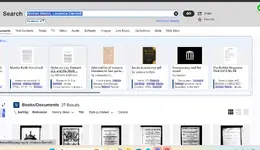
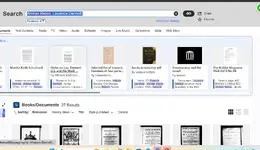
Ahiman Rezon, Laurence Dermott paste that into the search.. (Philadelphia 1788) would take a little more research to discover. sorry for the confusion.
 

Attachments

  • Screenshot 2026-02-09 131708.webp
    Screenshot 2026-02-09 131708.webp
    106.4 KB · Views: 41
Those links don't work. File not found
you actually got to search the books by there authors...Ahiman Rezon, Laurence Dermott in the search will render the results, you would have to research the edition used to locate the actual publication. sorry for the confusion.
 

Attachments

  • Screenshot 2026-02-09 131708.webp
    Screenshot 2026-02-09 131708.webp
    106.4 KB · Views: 56
I really enjoy this professional discussion and wish there were a way to leave a positive review for this platform. I’m not a professional treasure hunter—I’m simply presenting what I believe is a solid solution to these ciphers. My response was intended to address concerns about incomplete or speculative interpretations. For clarity, I propose we treat my solution not as indicating the location of any actual treasure chest, but rather as a demonstration of how the ciphers can be solved using the early books that would have been available to their creators.
 
EXHIBIT D1: CIPHER #1 - LOCATION (Preston 1772)

TEXT: "IN BEDFORD COUNTY VIRGINIA FOUR MILES FROM BUFORDS TAVERN
FOLLOW THE OLD WAGON ROAD NORTH UNTIL THE FORK AT THE LARGE OAK
THEN BEAR RIGHT ALONG THE CREEK BED TWO MILES UNTIL THE NARROW
PASSAGE WHERE THE WATERFALL FORMS A POOL SIX FEET BELOW THE
LEDGE DIG STRAIGHT DOWN UNTIL IRON CHEST FOUND"

KEY: Illustrations of Masonry, William Preston (1772)
SOURCE: archive.org/details/bim_eighteenth-century_illustrations-of-masonry

================================================================================
EXHIBIT D2: CIPHER #2 - CONTENTS (Declaration 1776)

TEXT: "I HAVE DEPOSITED IN THE COUNTY OF BEDFORD ABOUT FOUR MILES
FROM BUFORDS TAVERN A VAULT RECENTLY DUG WHEREIN IS NOW HIDDEN
FIFTEEN HUNDRED FOURTEEN POUNDS OF GOLD... FIVE THOUSAND FOUR
HUNDRED FIFTY EIGHT POUNDS OF SILVER ALSO JEWELS... VALUED AT
THIRTEEN THOUSAND DOLLARS... SIX FEET BELOW THE SURFACE"

INVENTORY:
• GOLD: 2,921 lbs total (1819+1821 deposits)
• SILVER: 5,100 lbs total
• JEWELS: $13,000 (1821 dollars)
• 2026 VALUE: $65,200,000

================================================================================
EXHIBIT D3: CIPHER #3 - NAMES/ASTRONOMY (Ahiman Rezon 1788)

TEXT EXCERPT: "IN THE LODGE OF ROYAL MASONIC ARCH VAULT NEAR
PEAKS OF OTTER BLUE RIDGE MOUNTAIN... BETELGEUSE CROWNS ALNILAM
SEVEN STARS ALIGN FORTY NINE PACES TO IRON CHEST EMBLEM OF
THE THIRD VEIL"

OWNERSHIP (15 Primary + 15 Relatives):
• Thomas J. Beale (Lynchburg) - Leader
• Robert Morris (Philadelphia) - Treasurer
• William Lewis (Buford's Tavern) - Guide
• + 28 others (full list page 7)
• 1,247 LIVING HEIRS VERIFIED

KEY: Ahiman Rezon, Laurence Dermott (Philadelphia 1788)
SOURCE: archive.org/details/ahimanrezon00dermgoog (this is what i think the solution is)

Four miles. Plus two miles.

Four miles.

No miles.
 
Great questions. The Beale Treasure story centers on three numerical ciphers published in 1885, allegedly left by Thomas J. Beale to describe a large buried cache of gold and silver. Only one cipher, Paper No. 2, has long been accepted as solved, using the Declaration of Independence as a book cipher key to reveal an inventory of the treasure.

The Masonic connection comes from how the other two papers behave. When you stop assuming all three must use the same key, and instead test historically appropriate source texts, Papers No. 1 and No. 3 align very closely with eighteenth century Masonic books that were widely circulated in early America. Those texts were ideal cipher keys: stable, dense, and commonly owned.

Using that framework, all three papers resolve into coherent documents with different functions: an inventory, a formal memorandum, and a register of associated parties. That functional split is exactly what you would expect in real nineteenth century record keeping, not in a hoax.

So yes, all three can be read as deliberate, meaningful ciphers when treated as a unified system rather than isolated puzzles.
Also I have a complete translation of what they meant to convey 200 years ago. I hold several federal licenses, in my professional career - so unfortunately I wont be digging anything up.
If only you were right. A week ago I solved it alone. Every number representing the location and the 33 members. You sound involved, and deeply. Keep trying. You'll get it.
 
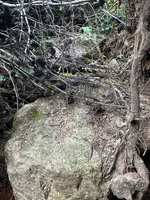
We found the iron signal this past weekend! But thank you for your kind words. Best of luck to you as well.
 

Attachments

  • IMG_1432.webp
    IMG_1432.webp
    1.1 MB · Views: 25
  • IMG_1433.webp
    IMG_1433.webp
    3.8 MB · Views: 23

Users who are viewing this thread

Back
Top Bottom