- Joined
- Feb 3, 2009
- Messages
- 52,120
- Reaction score
- 206,550
- Golden Thread
- 1
- Location
- Eastern Ontario Canada
- 🥇 Banner finds
- 1
- Detector(s) used
- Deus, Deus 2, Minelab 3030, E-Trac,
- Primary Interest:
- Relic Hunting
- #1
Thread Owner
Oh boy, how I could use a couple of those around.
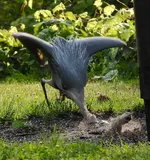
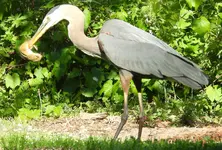
Thanks for the info, never knew that about the parasites.Great pics of an uncommon predation. Somehow, a bird taking a mammal seems like it is feeding out of phylogenetic order. But not so much as a carnivorous plant - something that really doesn't know its place and its behavior could be called "too big for its britches".
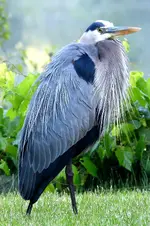
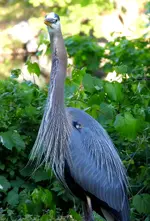
I see the GBHs all the time in the shallow water feeding on small fish. They are definitive hosts for a number of nasty parasites and their wading - and defecating in the water, allows the life stages of the parasites to be taken up by the next host and thus continue the complex life cycles of the parasites. I don't know what happens to the parasite eggs in the feces dropped on land rather than in water. Many of these life cycles are still being discovered.
Many years ago, a saw a locally famous environmental writer lauded for his (successful) efforts to get the GBH on the state license plates. I took him out on a research study and on the way, congratulated him on getting such a definitive host for parasites portrayed on the license plate. I suggested a motto - "spreading parasites". The plates were available for an extra $15 or 20 and no, I did not get one.
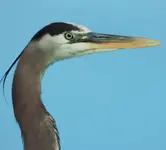
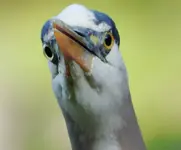
But they are elegant and photogenic.

Thanks for the info, never knew that about the parasites.
I have theory on the Chipmunks and territory that they have around the feeder.
Take out 10, the next in line take over, and so on, and so on.
The GBH wasn't working this morning, 4 Chipmunks were having breakfast.![]()
If you've ever filleted a fish and found bright red nematodes encysted in the flesh or mesentery, a great blue heron was one of several hosts necessary for it. I think that's the most obvious parasitic roundworm.
We live one county away from chipmunks. Their habitat requirements must be very specific or we have something here they cannot tolerate. I grew up around lots of chipmunks. When I'd see one knocked unconscious by a car passing over it, I would pick it up and put it in a pocket until it woke up. As much as I handled these and other wild creatures, I'm amazed none ever bit me.
Do you think it could be retrained to eat tree rats? If so, I could sure use a couple.