- Joined
- Apr 24, 2010
- Messages
- 13,022
- Reaction score
- 28,187
- Golden Thread
- 1
- Location
- Upper Canada 🇨🇦
- 🥇 Banner finds
- 1
- Detector(s) used
- XP Deus, Lesche Piranha 35 Shovel & 'Garrett Carrot'
- Primary Interest:
- Relic Hunting
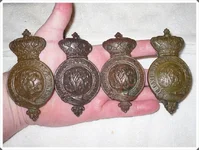
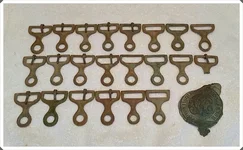
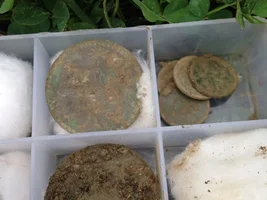
I took this week off to do some detecting before the fields in my area are planted. I regularly visit 8 to 12 sites each year, and this is one I first detected in 2013. These are the results from my hunts on Monday and Tuesday. I’ve also included before-and-after restoration photos of the rosette. I found a 1917 Canadian Dime, an interesting Brass Horse Rosette and several British Military Knapsack Buckles made by the S. Isaac, Campbell & Company. I should also mention, that to-date I've found over 400 of these British Buckles in this field over the past 13 years.
S. Isaac, Campbell & Company of London began as a boot manufacturer for the British military. It later became one of the largest suppliers of arms and military goods to the Confederacy during much of the American Civil War. Before the war, the firm held major British government contracts, but a corruption scandal ended its ability to do business with the government. After losing those contracts, the company supplied British militia and then turned to the Confederacy, which soon became its biggest customer. Confederate purchases in Britain were handled mainly by Major Caleb Huse and his associate, Major James Bulloch, who served as purchasing agents and diplomats. In the end, the Confederacy’s large unpaid debt to Isaac, Campbell & Company was a major factor in the firm’s downfall.
The Wade Whimsies Green Frog was an eyeball find. This is a tiny collectible porcelain figurine made by Wade Ceramics in England and was originally included as a promotional prize in boxes of Red Rose Tea. These hand-glazed miniatures typically measure about 1.5 to 2 inches and often depict animals, nursery rhyme characters, and whimsical everyday objects. Produced mainly in the 1960s and 1970s, Wade Pottery England created well over 100 different figurines for Red Rose Tea over the years.
Thanks very much for looking,
Dave


S. Isaac, Campbell & Company of London began as a boot manufacturer for the British military. It later became one of the largest suppliers of arms and military goods to the Confederacy during much of the American Civil War. Before the war, the firm held major British government contracts, but a corruption scandal ended its ability to do business with the government. After losing those contracts, the company supplied British militia and then turned to the Confederacy, which soon became its biggest customer. Confederate purchases in Britain were handled mainly by Major Caleb Huse and his associate, Major James Bulloch, who served as purchasing agents and diplomats. In the end, the Confederacy’s large unpaid debt to Isaac, Campbell & Company was a major factor in the firm’s downfall.
The Wade Whimsies Green Frog was an eyeball find. This is a tiny collectible porcelain figurine made by Wade Ceramics in England and was originally included as a promotional prize in boxes of Red Rose Tea. These hand-glazed miniatures typically measure about 1.5 to 2 inches and often depict animals, nursery rhyme characters, and whimsical everyday objects. Produced mainly in the 1960s and 1970s, Wade Pottery England created well over 100 different figurines for Red Rose Tea over the years.
Thanks very much for looking,
Dave
Upvote
21