Beige
Jr. Member
After doing some research I made my way along the Wisconsin River on public land to an early 1800s homestead. For those of you that aren't familiar with metal detecting in WI, its fairly difficult to find good sites dating back that far. Anyway, I arrived at the general location of this site and started my hunt to find remnants of the homestead. I found the usual 8,000 shotgun caps, bullets, and bullet casings you normally find on public wooded land. As I wandered and swung I stumbled upon a crumbling foundation. I detected around it for hours finding nothing but "newer" round wire style nails and other trash. I thought, "How am I not finding square nails at such an old homestead?!" It was so close to where I had marked the homestead on OnX that I thought it just had to be it. I called it a night and decided that I'd head back the next day to scope it out some more.
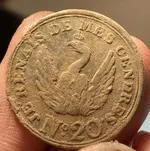
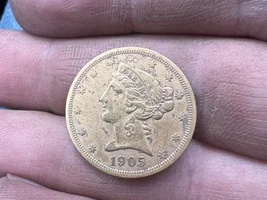
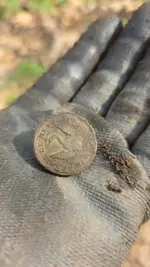
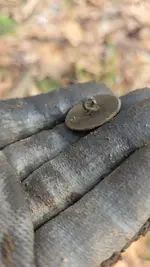
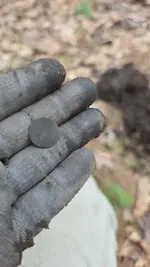
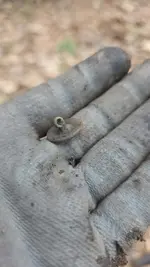
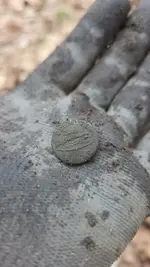
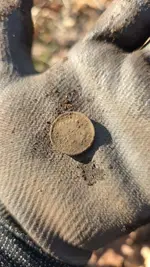
Twenty hours later I returned. I wandered away from the crumbling foundation in hopes of finding a straggler coin left behind by, who knows how many, detectorists before me. Was about 100 yards away from the foundation when i got a solid 64 on the manticore and bam got a crusty indianhead cent. I couldnt tell if the date was 1907 or 1867 (still cant tell) but either way it got the blood flowing. Now motivated I started digging every single low tone which equated to...you guessed it, more bullet casings and shotgun shell caps. I was about ready to call it a day and also about ready to scratch this site off my list when I decided I'd go detect a small strip of land between the river and a public trail somewhat near where I found the indianhead penny. Got a screaming 74 signal which turned out to be the burner of an old lantern. Made my way around a big oak tree and got a low 23-24 signal at 4" and thought "What the hell, I might as well dig my 8230th bullet casing today." I got down, cut my plug, flipped it over and stuck my pin pointer in the plug assuming the bullet casing was going to be in it just like most of them were....huh, nothing. Stuck the pinpointer in the middle of the hole and it started going off but it was still a little ways down. Now im somewhat hopeful it might be something not ammo related. Carefully dug one more scoop out of the hole and plopped the dirt down and there it was. The edge of a flat round disc. I picked it up and immediately saw a flaming bird on the face of a beautiful flat button. I sat there on my knees trying to figure out what the words on the button said. "Je Renais De Mes Cendres" which translates to "I Rise From My Ashes." After doing a quick search on the smartphone I found a lovely comment by "Voriax" in a thread on the "Friendly Metal Detecting Forum" that dives into its history.
I did also find a plain flat button, an oshkosh company button, and the actual cellar of the original homestead (which i didnt spot until I was on my knees digging a target) 10 feet away from the Haitian military button.
Voriax states:
"The history of the button starts with Henry Christophe, king of Haiti in 1807. For 12 years prior to Christophe’s kingship, Haitian slaves revolted against their European masters and defeated the English, Spanish and French. In 1802 the French anchored 225 ships in the harbor with 60,000 troops to put down the revolt.
The Haitians were greatly outmanned and out gunned, but defeated the French, and by 1803 the French army was spent. Thomas Jefferson quickly took advantage of Napoleon and a French army in desperate need of cash, and convinced him to sell the Louisiana territory for 15 million dollars. Known as the Louisiana Purchase.
Christophe reigned as king until 1820 when he became ill, and was too weak to put down a coup. He committed suicide that same year. The phoenix was Christophe's coat of arms. All of his troops were outfitted with uniform buttons and buckles with this phoenix design. The numbers at the bottom of the buttons denoted the regiment number. The buttons are numbered 1-30 with 11-13, 15-19 and 21-24 being skipped. One theory is they were skipped intentionally to fool enemies into believing the army was larger than it really was.
Much of the accepted theory on the Phoenix Buttons can be accredited to Emory Strong, who was a button collector and amateur archaeologist from the Portland Oregon area
The disc style buttons came in 3 sizes: 17, 25 and 26mm, and were made of polished brass. They were a 1 piece die stamped brass buttons with a soldered back loop. The ball variety came in two sizes; 13 and 17mm and were made of copper with a silver gliding.
After 1820 the After Christophe’s death the history of the Phoenix Button becomes cloudy. The button maker or makers apparently sold the undelivered buttons to a trading company bound for the West Coast of the United States. Very little information is available about the manufacturer. The only buttons with back marks are the ball variety, and all are marked "BUSHBY LONDON." No records have been found on this English company, so whether they were the only maker is unclear.
Nathaniel Wyeth a trader was in the process of setting up a trading post on Sauvies Island near present day Portland, Oregon. It is generally accepted that he was the one that the buttons were sold to in England.
One of the ships believed to be carrying the buttons made a stop in Hawaii, and one of the buttons was found in Hawaii several years ago.
Almost all of the buttons made their way to Wyeth's trading post. Here, they were believed to be traded to the Indians. The Indians in turn traded with other tribes, and eventually the buttons made their way up and down the West Coast. The buttons have been found at period sites from Alaska to Southern California. Of the 10 or so buttons that have been reported east of the Rocky Mountains, 3 have come from Virginia."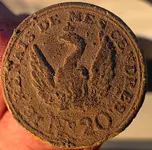
Twenty hours later I returned. I wandered away from the crumbling foundation in hopes of finding a straggler coin left behind by, who knows how many, detectorists before me. Was about 100 yards away from the foundation when i got a solid 64 on the manticore and bam got a crusty indianhead cent. I couldnt tell if the date was 1907 or 1867 (still cant tell) but either way it got the blood flowing. Now motivated I started digging every single low tone which equated to...you guessed it, more bullet casings and shotgun shell caps. I was about ready to call it a day and also about ready to scratch this site off my list when I decided I'd go detect a small strip of land between the river and a public trail somewhat near where I found the indianhead penny. Got a screaming 74 signal which turned out to be the burner of an old lantern. Made my way around a big oak tree and got a low 23-24 signal at 4" and thought "What the hell, I might as well dig my 8230th bullet casing today." I got down, cut my plug, flipped it over and stuck my pin pointer in the plug assuming the bullet casing was going to be in it just like most of them were....huh, nothing. Stuck the pinpointer in the middle of the hole and it started going off but it was still a little ways down. Now im somewhat hopeful it might be something not ammo related. Carefully dug one more scoop out of the hole and plopped the dirt down and there it was. The edge of a flat round disc. I picked it up and immediately saw a flaming bird on the face of a beautiful flat button. I sat there on my knees trying to figure out what the words on the button said. "Je Renais De Mes Cendres" which translates to "I Rise From My Ashes." After doing a quick search on the smartphone I found a lovely comment by "Voriax" in a thread on the "Friendly Metal Detecting Forum" that dives into its history.
I did also find a plain flat button, an oshkosh company button, and the actual cellar of the original homestead (which i didnt spot until I was on my knees digging a target) 10 feet away from the Haitian military button.
Voriax states:
"The history of the button starts with Henry Christophe, king of Haiti in 1807. For 12 years prior to Christophe’s kingship, Haitian slaves revolted against their European masters and defeated the English, Spanish and French. In 1802 the French anchored 225 ships in the harbor with 60,000 troops to put down the revolt.
The Haitians were greatly outmanned and out gunned, but defeated the French, and by 1803 the French army was spent. Thomas Jefferson quickly took advantage of Napoleon and a French army in desperate need of cash, and convinced him to sell the Louisiana territory for 15 million dollars. Known as the Louisiana Purchase.
Christophe reigned as king until 1820 when he became ill, and was too weak to put down a coup. He committed suicide that same year. The phoenix was Christophe's coat of arms. All of his troops were outfitted with uniform buttons and buckles with this phoenix design. The numbers at the bottom of the buttons denoted the regiment number. The buttons are numbered 1-30 with 11-13, 15-19 and 21-24 being skipped. One theory is they were skipped intentionally to fool enemies into believing the army was larger than it really was.
Much of the accepted theory on the Phoenix Buttons can be accredited to Emory Strong, who was a button collector and amateur archaeologist from the Portland Oregon area
The disc style buttons came in 3 sizes: 17, 25 and 26mm, and were made of polished brass. They were a 1 piece die stamped brass buttons with a soldered back loop. The ball variety came in two sizes; 13 and 17mm and were made of copper with a silver gliding.
After 1820 the After Christophe’s death the history of the Phoenix Button becomes cloudy. The button maker or makers apparently sold the undelivered buttons to a trading company bound for the West Coast of the United States. Very little information is available about the manufacturer. The only buttons with back marks are the ball variety, and all are marked "BUSHBY LONDON." No records have been found on this English company, so whether they were the only maker is unclear.
Nathaniel Wyeth a trader was in the process of setting up a trading post on Sauvies Island near present day Portland, Oregon. It is generally accepted that he was the one that the buttons were sold to in England.
One of the ships believed to be carrying the buttons made a stop in Hawaii, and one of the buttons was found in Hawaii several years ago.
Almost all of the buttons made their way to Wyeth's trading post. Here, they were believed to be traded to the Indians. The Indians in turn traded with other tribes, and eventually the buttons made their way up and down the West Coast. The buttons have been found at period sites from Alaska to Southern California. Of the 10 or so buttons that have been reported east of the Rocky Mountains, 3 have come from Virginia."
Attachments
-
 Messenger_creation_8297165B-4F8A-41A0-929D-3C0675F27539.webp95.6 KB · Views: 148
 -
 Messenger_creation_C1571410-34C4-4698-805A-33E9B11482C9.webp117.3 KB · Views: 110
 -
 Messenger_creation_BC1E8F92-EBA6-4A91-A11C-7DC98B766AC2.webp71 KB · Views: 95
 -
 Messenger_creation_4FD4DE49-A9BE-40FB-B00E-E39D631E3968.webp74.5 KB · Views: 85
 -
 Messenger_creation_1BDC3214-3347-4195-B5FA-7805B2EF04B0.webp80.7 KB · Views: 94
 -
 Messenger_creation_BB246D26-DF84-4E3E-926A-4F14999F4F7F.webp146.1 KB · Views: 109
Last edited:
Upvote
25