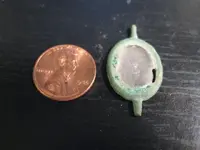
The small brass object you found does have the characteristics of a pocketwatch winding key (with the "business" part of it broken off). It is most probably from sometime in the early or middle 1800s, because keywound pocketwatches were superceded by the stemwinding type in the latter 1800s.
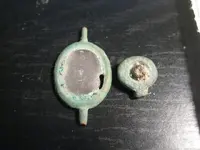
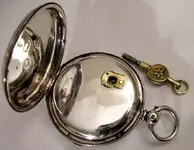
It's possible that the second part is broken off from the main body of the winding-key ...but I can't be certain about that. Here's a photo showing an example of the type of key you you found. There are MANY variations of pocketwatch winding-keys.
The reason I'm uncertain that the two pieces you found were originally a single object is that the "stub" on the second piece is wider than either of the stubs on the first piece. Seems like the stub-width should be the same, if one was broken off from another.
Just a small point of edification here. In almost all cases, the stub, or "business end" of these watch winders were made of iron. Compared to brass, iron held up without being warped or reamed out in the process of winding the watch day after day for years. These small, thin iron pieces were affected by the elements and ground action, and so seldom survive. You may see a little rust spot on the brass at the end of the larger of the two nubs.