What's new

weathered nakhlite?

rockpassion

Hero Member
Joined
Oct 5, 2024
Messages
540
Reaction score
605
Golden Thread
0
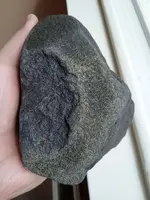
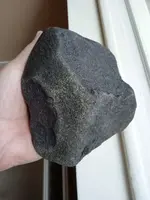
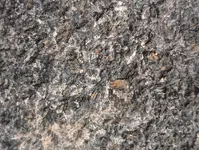
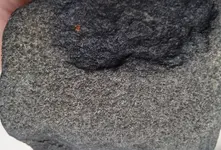
Could a weathered nakhlite look like this? And i know you can't indentify a meteorite from a photo but i am curious.
 

Attachments

  • IMG_20250605_153134_1.webp
    IMG_20250605_153134_1.webp
    543.4 KB · Views: 144
  • IMG_20250605_153127.webp
    IMG_20250605_153127.webp
    375.2 KB · Views: 66
Last edited:
I would rephrase your question from "IS is this what a weathered nakhlite looks like?" to "COULD a weathered Nakhlite look like this?"

The answer then is "Possibly, yes."

Then the additional question you didn't ask is: "Could an ordinary weathered terrestrial igneous rock look like this?"

The answer to that is "Definitely, yes."
 
I would rephrase your question from "IS is this what a weathered nakhlite looks like?" to "COULD a weathered Nakhlite look like this?"

The answer then is "Possibly, yes."

Then the additional question you didn't ask is: "Could an ordinary weathered terrestrial igneous rock look like this?"

The answer to that is "Definitely, yes."
Thanks, that is what i wanted to know.
 

Attachments

  • 66.webp
    66.webp
    437.9 KB · Views: 80
  • 67.webp
    67.webp
    482.8 KB · Views: 68
Thanks, that is what i wanted to know.

But you should also know that there are only 31 confirmed Nakhlites in the MetSoc database, dropping to 27 if you exclude specimens which are paired with one another.

Of those, only two or three could be said to have a superficial resemblance to the rock you posted. Most of the remainder have a distinct dark green matrix, or black/grey/brown with a greenish hue, or green crystals within a darker matrix. The majority have at least some residual fusion crust.
 
But you should also know that there are only 31 confirmed Nakhlites in the MetSoc database, dropping to 27 if you exclude specimens which are paired with one another.

Of those, only two or three could be said to have a superficial resemblance to the rock you posted. Most of the remainder have a distinct dark green matrix, or black/grey/brown with a greenish hue, or green crystals within a darker matrix. The majority have at least some residual fusion crust.
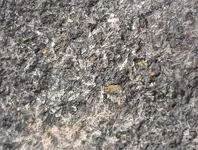
oke, do you mean by most of the remainder the nakhlites? because the description you gave of the composition matches exactly with my rock. black, green, brown and white crystals in a complex matrix. Outside weatherd crust is lighter than the darker intern matrix but i bet if i would cut it, it would also show the black, green , brown and white crystals. I think i will hang on this rock for now and maybe get it tested in the future. But first the ball must get rolling with my first ICP Test on the large black breccia rock. If that proves meteoritic minerals then everything can go quite quickly.
 
oke, do you mean by most of the remainder the nakhlites? because the description you gave of the composition matches exactly with my rock. black, green, brown and white crystals in a complex matrix. Outside weatherd crust is lighter than the darker intern matrix but i bet if i would cut it, it would also show the black, green , brown and white crystals. I think i will hang on this rock for now and maybe get it tested in the future. But first the ball must get rolling with my first ICP Test on the large black breccia rock. If that proves meteoritic minerals then everything can go quite quickly.

Yes, I did mean "most of the remainder of Nakhlites" but the description also applies to a huge number of terrestrial igneous rocks, especially those rich in olivine.

Good luck with the ICP testing on the other rock and please keep us posted. Note that ICP is not a mineralogical test per se. It determines bulk elemental composition (and isotopic concentrations if the analysis goes that far) which then need expert comparison to known elemental compositions of meteoritic materials vs terrestrial possibilities.
 
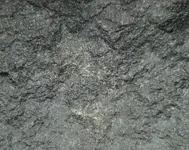
here some new photo's of the possible Nakhlite. And does anyone have a Nakhlite to compare or are they realy expensive and difficult to buy.
 

Attachments

  • IMG_20250610_145745_1.webp
    IMG_20250610_145745_1.webp
    534.3 KB · Views: 46
  • IMG_20250610_145858_1.webp
    IMG_20250610_145858_1.webp
    429.7 KB · Views: 43
  • IMG_20250610_145821_1.webp
    IMG_20250610_145821_1.webp
    440.7 KB · Views: 55
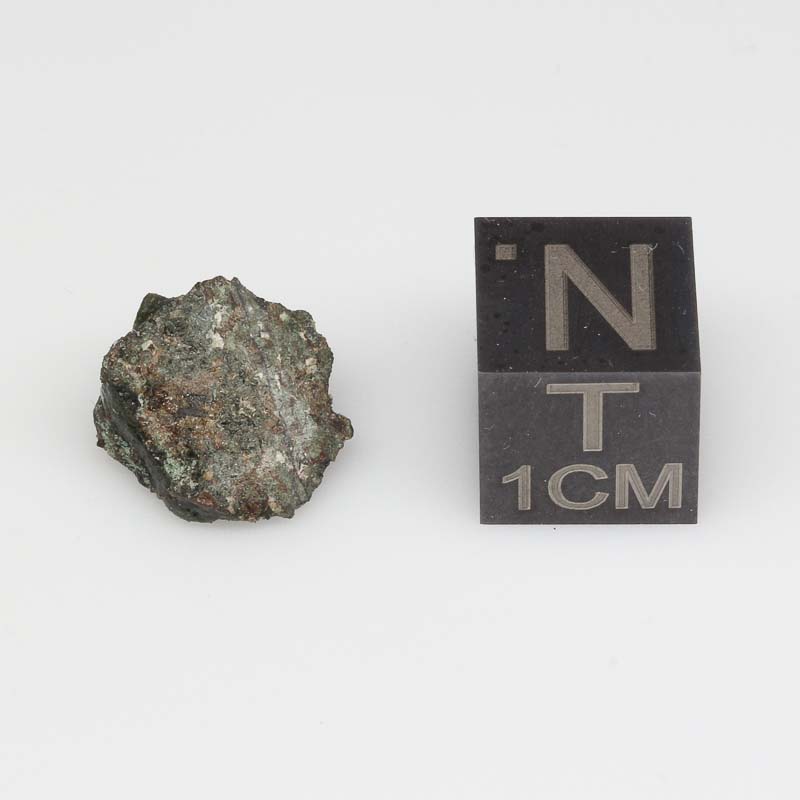
I already told you that Nakhlites are super-rare (see post #4). That means of course that they are also expensive. There’s a 1 gram end cut that sold for $1,275 here (although you will find cheaper examples):

Nakhlite.webp


I don’t think it can be said too many times that there is no way that, even an expert, could definitively identify a Nakhlite just by looking at photographs. They typically have a mineralogy which is visually similar to a whole host of much more common terrestrial igneous rocks. Have you not yet grasped that?

It seems to me that you want every rock you find that can’t be readily identified to be a meteorite… and usually want it to be a very rare type.
 
ok i understand and will leave it at that won't post anymore rocks. if i have an udate of the ICP and X-ray test i will post.
 
ok i understand and will leave it at that won't post anymore rocks. if i have an udate of the ICP and X-ray test i will post.

There's nothing wrong with posting pictures of rocks suspected to be meteoritic. You just need to manage your expectations about what can be said from pictures alone. Sometimes a specimen will exhibit features which strongly suggest it isn't meteoritic; sometimes it will exhibit features which suggest it might be worth progressing to laboratory testing; very occasionally it may exhibit features which are unmistakably meteoritic.

Of all the meteorite classes, stony achondrites are the ones which have the least indication either way from appearance alone.
 

Users who are viewing this thread

Latest Discussions

Back
Top Bottom