What's new

weathered mars meteorite?

rockpassion

Hero Member
Joined
Oct 5, 2024
Messages
540
Reaction score
605
Golden Thread
0
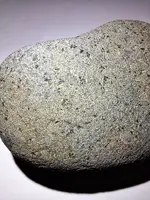
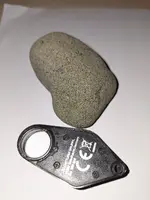
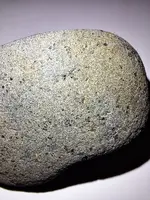
I know that you can only know if you have a mars meteorite by lab tests. But for sure someone has to have a weathered shergottite in their collection. And maybe they can indentify this sample.
 

Attachments

  • 1000009730.webp
    1000009730.webp
    1.3 MB · Views: 93
  • 1000009734.webp
    1000009734.webp
    1.4 MB · Views: 75
  • 1000009732.webp
    1000009732.webp
    1.6 MB · Views: 71
How would a meteorite get from Mars to here?
It looks like a regular rock.
When Mars is struck with large meteorites or meteors the impact kicks rocks into space and some find their way to earth.

Not an expert, but not seeing signs of meteorite....
 
this is an example of a weathered mars meteorite, does this have meteorite features? and if yes what are they? https://www.lunarrock.com/meteorites/martian/nwa6148.html

No, it doesn't exhibit distinctive meteoritic features, but you're completely missing the point. Probably the only reason NWA 6148 attracted attention and warranted further examination is that it was found in a relatively rock-free North West African desert as two stones that fitted together.

The point I was making is that unless a specimen exhibits at least some features characteristic of a meteorite (and/or is from a location where terrestrial rocks are sparse) then there's no particular justification for believing it might be a meteorite (let alone a Martian meteorite), and subjecting it to more extensive analysis.
 
Yours looks very little like those pictures. So, if a
large meteorite hit earth there could be smaller ones thrown out onto space as well? Probably not with our atmosphere. I think I read somewhere the Martian atmosphere is very thin.

General external, or even internal, appearances don't generally mean very much unless there are features which are characteristic of meteorites and/or expert analysis supports a non-terrestrial origin.

Yes, large meteorite impacts on Earth create additional ejecta which goes up and comes down again. It's not unusual for impacts to result in a strewn field of material from the original impactor in the vicinity of the impact. But impacts large enough to create ejecta that gets thrown out into space and come down again far from the impact would be sufficiently energetic that the material would be shattered or melted terrestrial rock and often admixed with vestigial fragments of the impactor. Such materials are usually classified as terrestrial ejecta or amorphous glass tektites.
 
No, it doesn't exhibit distinctive meteoritic features, but you're completely missing the point. Probably the only reason NWA 6148 attracted attention and warranted further examination is that it was found in a relatively rock-free North West African desert as two stones that fitted together.

The point I was making is that unless a specimen exhibits at least some features characteristic of a meteorite (and/or is from a location where terrestrial rocks are sparse) then there's no particular justification for believing it might be a meteorite (let alone a Martian meteorite), and subjecting it to more extensive analysis.
what are the meteorite caracteristiks for a weathered mars meteorite then? My stone feels very heavy and is 194 grams and 6 x 4,5 x 3,5 cm.
 
what are the meteorite caracteristiks for a weathered mars meteorite then? My stone feels very heavy and is 194 grams and 6 x 4,5 x 3,5 cm.

Martian meteorites are typically shades of grey, brown, greenish or black, with the most common colours being grey and khaki-grey. There may be green or greenish crystals of olivine or augite which are large enough to be easily seen with the naked eye. Heavy weathering can result in reddish tinges to the matrix.

Those are not diagnostic features though, since they’re shared by many terrestrial rocks of igneous origin. Neither is a rock being ‘heavy’ a diagnostic.

The features that might indicate a weathered rock warrants further investigation as a possible meteorite would be an overall shape indicative of atmospheric entry such as an ablation face, flight orientation, flow lines, regmaglypts and shock veins from stress or impact. Even heavily weathered specimens usually retain some vestigial traces of a dark fusion crust.

Without those indications, there are no reasonable grounds for presuming a rock might be a Martian meteorite unless the context of the find suggests that possibility.
 
Martian meteorites are typically shades of grey, brown, greenish or black, with the most common colours being grey and khaki-grey. There may be green or greenish crystals of olivine or augite which are large enough to be easily seen with the naked eye. Heavy weathering can result in reddish tinges to the matrix.

Those are not diagnostic features though, since they’re shared by many terrestrial rocks of igneous origin. Neither is a rock being ‘heavy’ a diagnostic.

The features that might indicate a weathered rock warrants further investigation as a possible meteorite would be an overall shape indicative of atmospheric entry such as an ablation face, flight orientation, flow lines, regmaglypts and shock veins from stress or impact. Even heavily weathered specimens usually retain some vestigial traces of a dark fusion crust.

Without those indications, there are no reasonable grounds for presuming a rock might be a Martian meteorite unless the context of the find suggests that possibility.
Thanks that is very clear. top explenation.
 
I am amazed & dumbfounded by the fact that "expert" analysis determines that any given rock came from "space" ... who went &obtained the 1st example? ... (rhetorical) ...
Mr. Gully Bill: ... "did this here rock come from Mars?..."
Mr. Space Rock Scientist: ..."No, our expert testing shows that it came somewhere from behind Uranus"...
 
Last edited:
...what do the Netherlands, Belgium, Switzerland, France, Italy, & Egypt have in common? ... in 1969, & a few years thereafter, NASA presented these countries "moon rocks" supposedly from the "Apollo missions"... Well, the "space rocks" all turned out to be (terrestrial) petrified wood ... OOPS...

this was very briefly mentioned in the media around 2009, & quickly dropped with no discussion or further investigation as to why this occurred ...
 
I am amazed & dumbfounded by the fact that "expert" analysis determines that any given rock came from "space" ... who went &obtained the 1st example? ... (rhetorical) ...
Mr. Gully Bill: ... "did this here rock come from Mars?..."
Mr. Space Rock Scientist: ..."No, our expert testing shows that it came somewhere from behind Uranus"...

There are multiple witness accounts of rocks falling from the sky throughout history. The oldest for which a physical specimen incontrovertibly linked to a witnessed impact still exists is the Ensisheim meteorite, which fell in a wheat field in France in 1492. A young boy saw it fall and a stone weighing 127kg was then recovered from a crater about a meter deep. Portions of it have been removed and lost over time, but an almost 54kg mass of it is on display in the Regency Museum in Ensisheim.

There are other, older, witnessed falls, but not with preserved and curated surviving specimens that have the same kind of provenance and provenience.

Of course in those days the scientific proof from the kinds of tests used today was unavailable, but a massive stone observed hurtling down from the sky and making a huge hole in the ground was regarded as convincing in 1492 to all but the most sceptical. Nowadays, we have sophisticated tests which can authoritatively determine whether specimens are extraterrestrial (notably isotopic analysis). In the case of meteorites from Mars it has even been possible to microprobe sample the gasses trapped in microscopic bubbles and match them to the composition of the Martian atmosphere.
 
...what do the Netherlands, Belgium, Switzerland, France, Italy, & Egypt have in common? ... in 1969, & a few years thereafter, NASA presented these countries "moon rocks" supposedly from the "Apollo missions"... Well, the "space rocks" all turned out to be (terrestrial) petrified wood ... OOPS...

this was very briefly mentioned in the media around 2009, & quickly dropped with no discussion or further investigation as to why this occurred ...

The stories you refer to are a mixture of unsubstantiated folklore, instances of fraud and deception by false representations, and theft of genuine specimens which were substituted by fakes. In some cases the stories have been hushed up out of embarrassment.

The ‘lunar’ specimen in the Rijksmuseum of the Netherlands which was established in 1992 to be a piece of petrified wood and probably from Arizona was poor judgement on the part of the museum. It came from the estate of Netherlands Prime Minister Willem Drees who had mistakenly labelled it as a moon rock after receiving it from an American diplomat from Arizona. He wanted to give the prime minister a ‘piece of Arizona’ as a souvenir gift. The museum put it on display as a moon rock without verifying it as authentic. Contrary to urban myth, the rock had never been in possession of NASA, and was not presented by them, nor by either Neil Armstrong or Buzz Aldrin as is sometimes falsely claimed.
 
Last edited:

Users who are viewing this thread

Back
Top Bottom