What's new

where do coins and jewlery go when they are lost in the ocean???

Zodiacdiverdave

Silver Member
Joined
Mar 18, 2011
Messages
2,766
Reaction score
1,374
Golden Thread
0
Location
The North Atlantic Ocean
Detector(s) used
XP Deus, AT Pro, Sea Hunter II, JW Fisher Proton Magnatometer, Shovel, Hammer and chisel
Primary Interest:
All Treasure Hunting
Do coins and rings usually stay put when lost in the ocean/beach or do the move around allot with the wave action? Are they washed up on shore or do the get pulled out to deeper water? Wher do you find the most goodies?
I plan on doing more water hunts this winter and would like to make the most out of the time I will have.
Thanks for any info,
ZDD
 
Upvote 0
Ive read that post a couple of times before OBN, good post and information. I noticed he did not touch on SURFACE making a difference as well. Heavy gold ring had no surface and are significantly heavier than sand. Most all targets sink to their own equal weight unless something stops them. There are a lot of variables to water hunting im finding that out. What he said made a lot of sense.

Dew
 
I believe most items in the water are moved by the wave action and tides. Similar weighted items are usually found in the same general area. An example is pennies and dimes may lie in one area while quarters and nickles lay in another. Heavier gold rings sink much deeper due to their specific gravity and the fact that they are not flat ( hole in center) and sink to much greater depths and stay there for longer periods of time. I do believe however that during very rough tides and wave action they do move and just like coins the accumulate in an area according to their density. An example is when there is a deep trough cut by the water action you will find several rings in it. One trough we found in one of the beaches several years ago produced 28 rings and another had 57. Sometimes in this cut you will also find several heavy fishing sinkers.
 
Les West Central Fl said:
I believe most items in the water are moved by the wave action and tides. Similar weighted items are usually found in the same general area. An example is pennies and dimes may lie in one area while quarters and nickles lay in another. Heavier gold rings sink much deeper due to their specific gravity and the fact that they are not flat ( hole in center) and sink to much greater depths and stay there for longer periods of time. I do believe however that during very rough tides and wave action they do move and just like coins the accumulate in an area according to their density. An example is when there is a deep trough cut by the water action you will find several rings in it. One trough we found in one of the beaches several years ago produced 28 rings and another had 57. Sometimes in this cut you will also find several heavy fishing sinkers.


Yep! I also agree! I've seen softball sized stones pitched into yards and parking lots from good storms and boulders the size of trash cans tossed around in very strong hurricane type storms! Gold, silver and coins....... I feel over time they begin to settle in certain parts of the beach! A pooling effect, however a great storm could break the pool and spread the treasure out and start the settling process all over again! After a storm I seem to find the goods everywhere especially in the cuts!!! Just a rookies opinion!!

Snt
 
I agree with the last few posts about it all goes down, and that it will get moved by big storms. I have seen the sand moved and a rock or clay bottom will have lead weights, older coins, and of course gold. When the storm is hard enough, it will scour out the rock and clay bottoms and move everything. I have also seen beaches with rocky (not solid rock like above, but baseball to dinner plate sized rocks) bottom mixed with sand. These will hold the gold too. They are harder to get the rocks up, but worth it. Some areas will have sand with no rock or hardpan, and that is how much of the West coast of Florida is. Or at least a hardpan that is too deep to hit. Remember Florida is a delta formed from the erosion of the Appalachian mountains, so there is no natural rock, it was all sand at one time, just sedimentary rock like sand stone, and coral that formed. Those places the gold most likely goes down and dissapears. If you look at topo maps of lots of shorelines, you can see dunes that are inland, often rows of old dunes going way inland. Much of the panhandle of Florida and lower West Coast has islands like this. So some areas the beaches change by adding sand and going seaward, or eroding away and moving inland and some they dont do much for centuries. You must watch and be aware of erosion and moving of the sand. The sand being moved away could happen at any time. That is the best thing, to find an area of a lot less sand and near a hard bottom. And yes, coins will move a lot, because they have a large surface area to weight ratio. Rings will sink quicker. You can often find copper sheathing from old ships in with shells on the shore, around where old ships have wrecked. You usually wouldnt find heavy pieces with shells. That is why you find pull tabs and aluminum can parts in with shells. The copper is heavy, but when in a thin sheet, acts light. Coins still feel heavy, but catch the water and resist sinking more than a compact ring.
 
The shell line that forms along the high tide mark on the beach has pennies in it, sometimes sitting on top of the shells. I never find rings or heavy items there. I have found rings along shell lines that were under water. In the water the hard bottom areas have the good tickets.
 
most seem to end up in the back of maxs pickup truck......
 
Fantastic info here, I find coins on ship wrecks but they are usually cemented to the bottom and need to be chiseled out. Finding them in the surf or on the beach is new to me. I am sure I stand a much better chance at finding coins and rings now then I did a week ago. Thanks to everyone who posted.
Oh, and bootyhoundpa, where can I find maxs pickup truck? :laughing9: :laughing9:
ZDD
 
hi zodiacdave..... maxs pickup truck is in virginia......he usually posts great beach hunting videos on this exact website....at the end of his videos he always shows all his finds laid out in the back of a pickup truck......if you have not seen any of his videos you should watch them...they are very entertaining and informative at the same time........ i hope the day comes when i have to use a hammer and chisel to break up piles of old coins--thats cool....
 
A long time ago when I was in highschool we went to the Texas coast to study waves,etc. and our teacher had us tie balloons on different pieces of junk and put them in the water and see what happens to them.Some stay put and some went out with the waves. :icon_scratch:
 
I would like to jump in on this discussion, when I started diving with a detector 18 years ago the shop I purchased it from gave me a trick to find deposits of gold rings in lakes and rivers. I was instructed to purchase 20 or so lead fishing weights that were the same weight as an average gold wedding band, at the time I weighed my own and used that as a starting point and bought several weights. Then tie a 10' leader of fishing line to the weight and on the opposite end tie a piece of red cloth like a little flag. Proceed to your intended site and toss them off shore from the beach into the wave action or off of a bridge for a river. I was instructed to come back the following day with my dive gear and see how many of the little flags were visible. This served two purposes, one it told me the depth to the hard pan/bedrock and if it was in range of a detector and two the little flags were sometimes close to each other thus identifying a low spot that they all worked towards. Sometimes there were no flags at all :( other times they were at depths out of the reach of a recreational detector and occasionally they were nice and shallow. Rivers can be seeded any time of the year but lake beaches need to be done after Labor day when most are closing down for the season. I would say that 50% of the time a coin or piece of jewelery was recovered in the same vicinity. Now when I dive I look for fishing weights in the hard pan gravels and I almost always find coins, usually silver ones and the occasional piece of jewelery, as it has to be lost in the first place to be recovered.

I hope this helped.
 
I would like to jump in on this discussion, when I started diving with a detector 18 years ago the shop I purchased it from gave me a trick to find deposits of gold rings in lakes and rivers. I was instructed to purchase 20 or so lead fishing weights that were the same weight as an average gold wedding band, at the time I weighed my own and used that as a starting point and bought several weights. Then tie a 10' leader of fishing line to the weight and on the opposite end tie a piece of red cloth like a little flag. Proceed to your intended site and toss them off shore from the beach into the wave action or off of a bridge for a river. I was instructed to come back the following day with my dive gear and see how many of the little flags were visible. This served two purposes, one it told me the depth to the hard pan/bedrock and if it was in range of a detector and two the little flags were sometimes close to each other thus identifying a low spot that they all worked towards. Sometimes there were no flags at all :( other times they were at depths out of the reach of a recreational detector and occasionally they were nice and shallow. Rivers can be seeded any time of the year but lake beaches need to be done after Labor day when most are closing down for the season. I would say that 50% of the time a coin or piece of jewelery was recovered in the same vicinity. Now when I dive I look for fishing weights in the hard pan gravels and I almost always find coins, usually silver ones and the occasional piece of jewelery, as it has to be lost in the first place to be recovered.

I hope this helped.
I am replying to a very old post you did on using fishing weights to see where treasure items gather in a lake. I am working on a similar problem but in a today Bay Area where there is wave action and tidal currents. Years ago my brother and I detected this site (can old amusement park) where many many old coins and lots of jewelry were removed. The site has over 100 years of activity dating as far back as late 1800's. A lot of stuff was below detector detection levels. About 20 years ago there were a lot of pilings there from an old steam ship dock. About a few years ago the left over pilings were cut off at the bottom level (level with the bottom) Now at low tide they are sticking out of the bottom about 2 feet. This means that the all the sand has moved. Now, it also means that all the goodies that were there are sitting on the bottom. The shell and clay hardback is about 6 inches below sand now well within detector range. However a search finds nothing. Got an ideas? I would like to hear them
 
Do coins and rings usually stay put when lost in the ocean/beach or do the move around allot with the wave action? Are they washed up on shore or do the get pulled out to deeper water? Wher do you find the most goodies?
I plan on doing more water hunts this winter and would like to make the most out of the time I will have.
Thanks for any info,
ZDD
I’ve posted about this previously because there always seemed to be a lot of debate about whether targets move or stay stationary. But I can tell you firsthand, with 100% certainty, that based on my personal experience, and the experience of several other well-respected hunters that rings/objects dropped in the ocean absolutely CAN & DO move and can move very long distances.

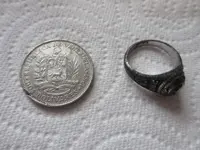
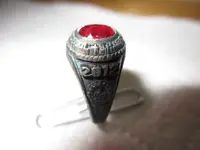
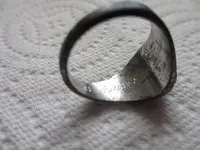
In my case, in 2012, I found a girl's HS ring that she had lost only a month or two before. When I met her and her mom to return the ring, she told me the beach she was on when she lost the ring. That beach is 10+ miles south of the beach where I found the ring. It had only been lost for 1-2 months, but looking at the ring, it looked like it had been through hell; it was all scratched up and pitted from being bounced around the sand for miles (see pics). Think of the ocean as a huge rock tumbler. If it had dropped straight down and was covered by sand and hadn't moved, it would have looked almost new, definitely not scratched and pitted like I found it.

But wait, there’s more, lol. Here are some additional hunters who confirm that objects dropped in the ocean do indeed move. I'm pasting a link for a Treasure Talk weekly treasure hunting report video you should watch. Mark Paddack is the representative for DE, MD, & VA, and would give a report on beach detecting conditions every week. On this video, Mark Paddack & another guy talk about finding rings in areas far away from where they were lost.

In Mark Paddack's case, he tried to find a ring for a guy who lost it at the OC Inlet right after the guy lost it but was unsuccessful. About 2-3 days later, Mark was talking to a buddy who actually found the ring Mark was looking for, but where he found the ring was 13 blocks north of where it was lost. If I recall, the other guy, Rick I think, mentions a story where a guy found a ring, got in touch with the guy who lost it, and turned out the guy lost the ring 50 years prior and 50 miles away from where it was found.

To hear Mark's story, fast forward the video to 17:30.
To hear Rick's story, also on the same video, fast forward to 1:29:18.


www.youtube.com/watch?v=2gRDtf8EqIU&t=5413s

Lastly, the Legend himself, Terry Shannon, also confirmed my previous theory (now proven fact), that objects do indeed move in the water. Watch this video of an interview that Merrill from Metal Detecting NYC did with Terry, while he was down in Florida representing XP at an event that Terry was also attending. Merrill was fortunate to be able to do an impromptu interview with Terry, and during the interview, Terry also confirms that objects do move in the ocean.

https://www.youtube.com/watch?v=1kSTNi5J51c&t=43s
 

Attachments

  • IMG_0467.webp
    IMG_0467.webp
    186.7 KB · Views: 52
  • IMG_0472.webp
    IMG_0472.webp
    67.6 KB · Views: 43
  • IMG_0489.webp
    IMG_0489.webp
    116.2 KB · Views: 23

Users who are viewing this thread

Latest Discussions

Back
Top Bottom