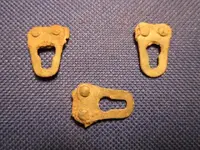
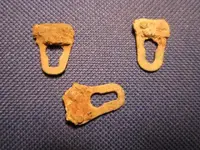
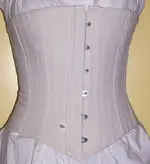
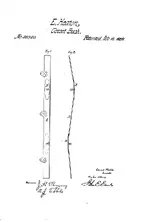
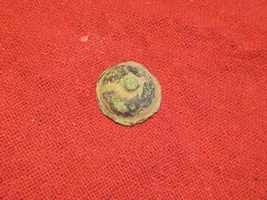
Yup, that's your eyes playing tricks. It's not remains of leather you're seeing, it's remains of iron. That would be the iron strip used to attach these fasteners to the corset and keep the shape of corset down the center. There two pictures of period corsets in this thread, two more in the links I provided, and many many more online that show this exact slot and stud fastening system. The iron strip can't be seen as it is sewn into the corset, but do a google search for "busk" and you can read all about it. On the other hand, I have never seen any image of any knapsack showing anything that remotely looks like this. If you can find me a picture of one, I would gladly conceed the point, but until then a knapsack is as valid a theory as a birdhouse - pure speculation. Corset hooks, on the other hand, have been demonstrated in both patent drawings and period examples from museums in this very thread.
Good post, Tony .. I have never seen them use in knapsack applications either.
That's Neat! ... But what is it? (
http://detectingsaxapahaw.blogspot.com/2011_12_01_archive.html )
One of the most common questions I received at the Saxapahaw Holiday Market was "How do you know what all of this stuff is?" It's a perfectly valid question - some of my favorite finds don't look like much unless you know the context of the original piece. For identification of dug relics, the internet is the greatest tool available, although there are also plenty of hard-copy reference books, too. Going to detecting club meetings such as
TRR in Raleigh and
ONSD in Greensbro are quite helpful, as there are always people there who know a lot more than I do. Perhaps the best way to identify relics, in my opinion, is by using any of the multitude of metal detecting internet forums. As I covered in my
second blog post here at DS, some finds are common to many different kinds of older sites. Reading forum posts from other relic hunters with pictures of their recovered objects is a great way to know what it is you're uncovering as you find it. I posted an example of this a few days ago, when a forum post helped me identify a mid-800's
parasol slide.
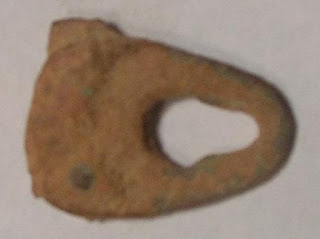
If you still don't know, many forum's have a "What is it?" or "ID Help" section. Here's an excellent example of how these collaborative spaces can help us identify some interesting older relics. A thread was started recently in the "Help to ID my finds" section of the
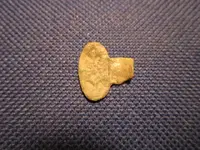
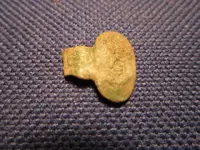
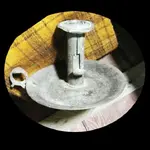
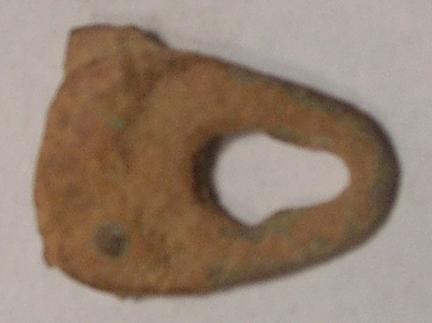
Friendly Metal Detecting Forum showing a small copper or copper alloy item, about 3/4" by 3/8". Comments provided some speculation about what it might be, but confirmed that this item has been found at late 1800's to turn of the century sites in a variety of locations. Above is an example that I found at an older home near Saxapahaw.
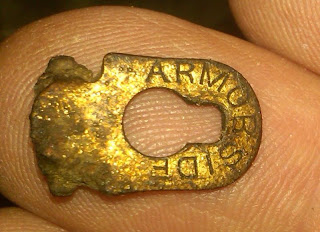
Another user posted a slightly more complete example - it turns out the brass piece was originally attached to a strip of iron. One more piece to the puzzle. The break in the case came when user
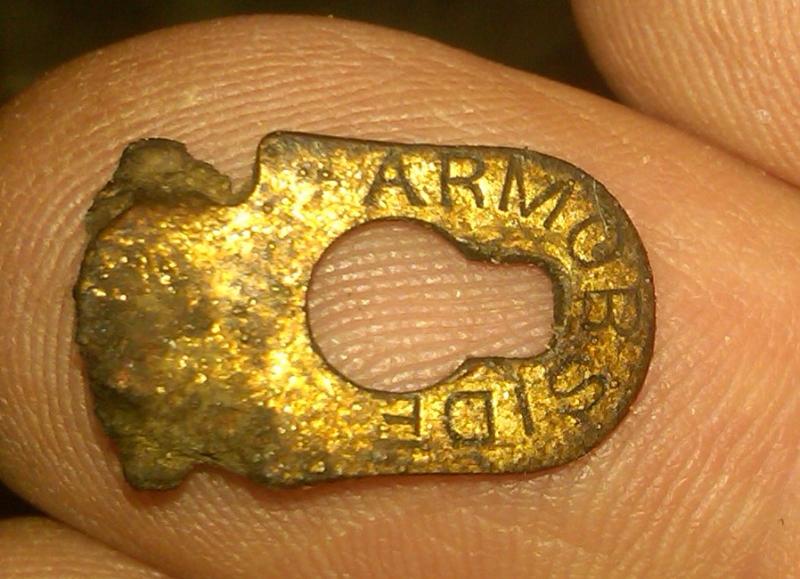
Cambria09 posted this example of the same item, but this time stamped with the word "Armorside". A google search for that term brought up a lot of interesting unrelated webpages, but one of them stood out.
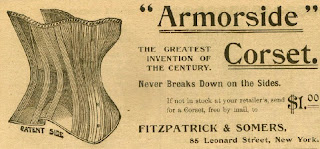
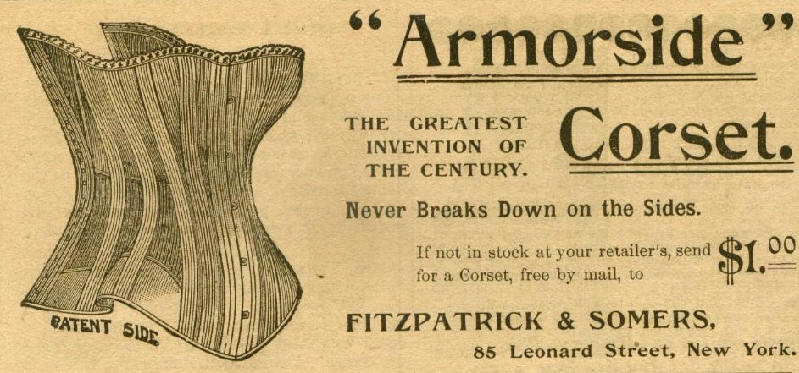
This is an
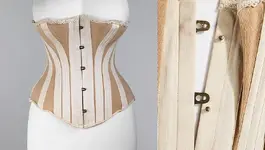
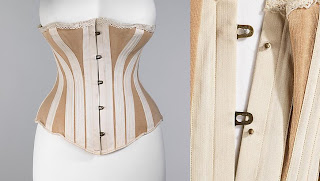
1895 advertisement for Armorside Corsets, which certainly fits the time-frame of our mystery item better than Jeeps, knights, or robots. Could this be it? Using that information to narrow down our search, I located this original corset, ca. 1885, from the
Metropolitan Museum of Art. As you can see, we have found our unknown brass piece in use.
Recovering old things is really only a third of this hobby. Researching where to find them and understanding what you have found are both integral to the enjoyment of metal detecting for historical relics. This little brass piece now has a place in my display among other late 1800's to turn of the century fashion accessories. Thanks for reading, I hope you enjoyed it, and God bless!