What's new

$40,000,000 wreck?

Darren in NC

Silver Member
Joined
Apr 1, 2004
Messages
2,904
Reaction score
1,965
Golden Thread
0
Detector(s) used
Tesoro Sand Shark, Homebuilt pulse loop
Primary Interest:
Shipwrecks
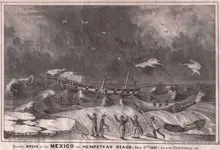
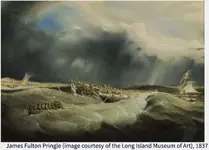
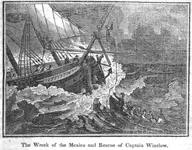
115 people were lost on the barque, Mexico, off Hempstead Beach in NY in 1837. Mostly Irish immigrants with all their worldly wealth were coming to America to begin a new life. After a long and perilous journey, they were rationing their provisions at this point. The distress flags were hoisted and the signal cannon fired as they approached New York Harbor off Sandy Hook. Sadly it was New Year's Eve, and all the pilots were “off for the night,” with not even one to help the numerous ships in the freezing weather. A storm came up, and the Mexico was blown back out to sea, only to wreck on “Hempstead Beach,” near modern day Jones' Inlet.

They were just a few hundred yards from shore in the surf, but little help could be offered from the crowd on the beach, due to conditions. Only eight people survived, including the captain (a controversial piece of the story), due to a local named Raynor Rock Smith, and his colleagues in a longboat. The rest of the poor souls were eventually frozen to various portions of the ship. Bodies that came ashore were stored in a barn at Lott's Barn, for identification. Some of the women and their children were completely frozen in embrace.

The Mexico quickly broke up in the surf, but she was never forgotten by the locals. The sheer tragedy spurred lawmakers to create policies for pilots, and led to the creation of the Life-Saving Service in the U.S.

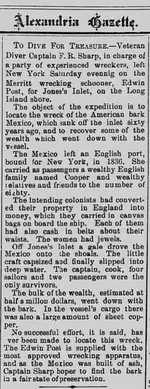
One enterprising outfit, Merritt's Wrecking, attempted to find the Mexico in 1896, claiming she was worth $500,000. I have no idea where that valuation comes from, but a few of the survivors were still living in the area. Half a million dollars was a tremendous sum of money at the turn of the century. Depending on the weight of metals and numismatic values, today's value would be in the tens of millions. Merritt's Wrecking found nothing.

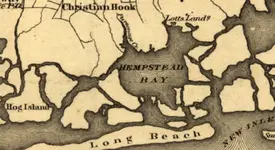
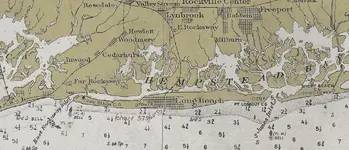
Where is the Mexico today? No one knows exactly. The name “Hempstead Beach” was not an official name for a local community. This entire area was known as “Hempstead South” at the time. The reference was likely a generic term for the beach on the Atlantic side of Hempstead Bay.
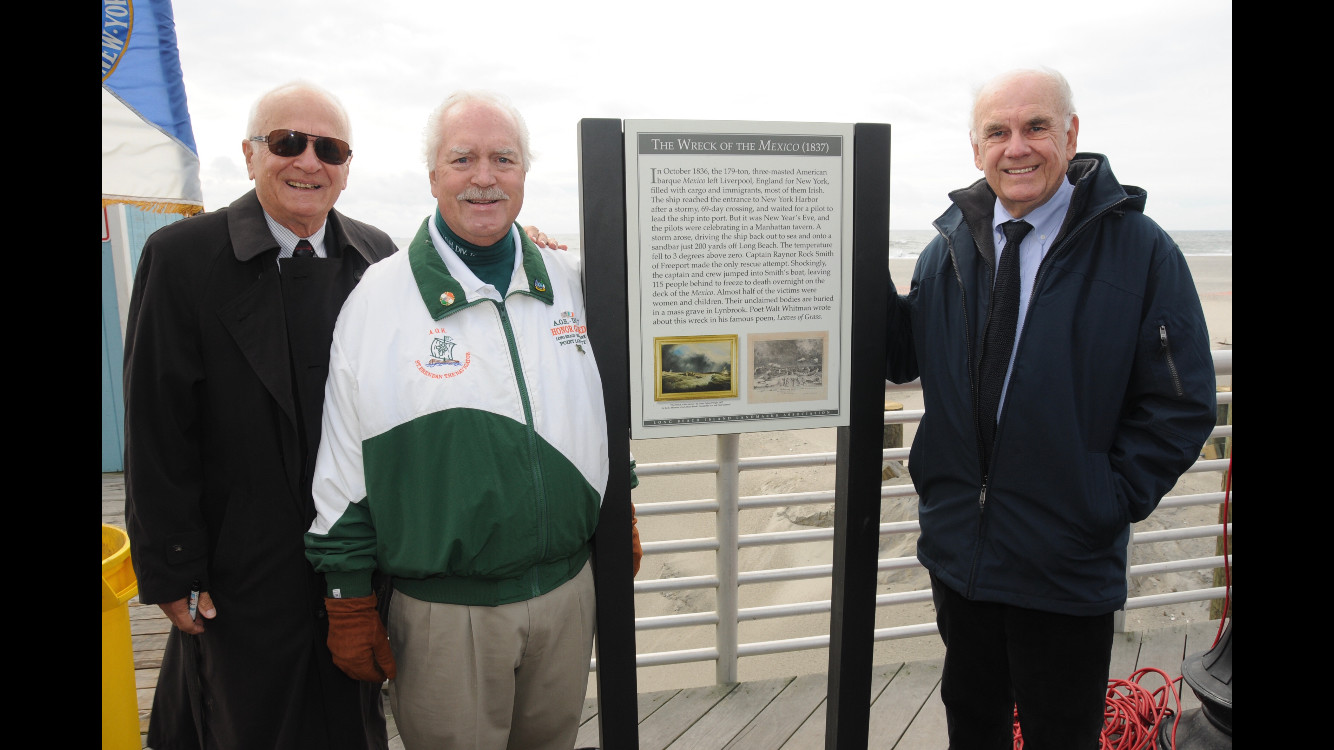

A memorial plaque was unveiled at a ceremony at the boardwalk at Lincoln Blvd in Long Beach, but it is likely that the wreck was further east from there. Some modern officials believe the wreck to be off Lido Beach, next to Point Lookout. A magnetometer survey was done in the late 90s related to the Corps of Engineers' Storm Reduction Project (beach renourishment). The Mexico was one of the targets of this survey, but nothing was found. Since she had a large cargo of iron, this is confusing.

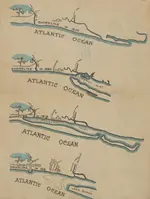
One of the reasons I believe The Mexico will be very difficult to find is due to the shore changes since 1837. The attached 4-map changes depicted at nearby Rockaway Beach goes to show how drastic the storms have changed the shorelines since the wreck happened. It's possible that the Mexico is under the beach itself, or even further out. Time will tell if the treasure and artifacts of the Mexico will be brought to light again.
 

Attachments

  • Alex article 1896.webp
    Alex article 1896.webp
    112.5 KB · Views: 150
  • Mexico illustration 2.webp
    Mexico illustration 2.webp
    102.6 KB · Views: 76
  • Mexico illustration 3.webp
    Mexico illustration 3.webp
    52.4 KB · Views: 71
  • Mexico illustration 1.webp
    Mexico illustration 1.webp
    224.2 KB · Views: 86
  • shoreline changes 1918.webp
    shoreline changes 1918.webp
    59.1 KB · Views: 77
  • map.webp
    map.webp
    87.8 KB · Views: 84
  • location and class of people.webp
    location and class of people.webp
    39.4 KB · Views: 81
  • chart.webp
    chart.webp
    127.8 KB · Views: 83
  • cargo.webp
    cargo.webp
    10.5 KB · Views: 76
Thanks for interesting bit of history and story !!!!!!

There is a mention of Mexico BK in Lloyd records of 1837.

Screenshot 2025-08-15 205049.webp


The Irish passenger in steerage would not have covered much wealth. Most was coming to America for indentured servitude. . But more wealthy English passengers could of been traveling with money for new life in America. There might be insurance claims in Archives at in the UK? If there was any insured commercial monies being transported.

Interesting hypothesis with shore line changes. The sands of time guards her secrets well.
 
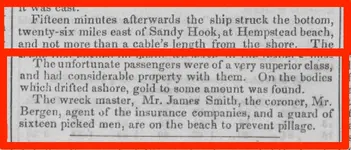
Crow, I'm not sure why you're dismissing the Irish wealth, and attributing it to the English. The reports of that day say it was mostly Irish passengers, and that two-thirds of them were wealthy. The attached newspaper account says they were of a "very superior class." There was so much wealth that multiple reports say they posted guards at the beach to protect the wealth that came ashore. While your assessment may apply in other circumstances, it simply wasn't the case in this one, thus my curiosity with this ship.
 
Last edited:
Crow, I'm not sure why you're dismissing the Irish wealth, and attributing it to the English. The reports of that day say it was mostly Irish passengers, and that two-thirds of them were wealthy. The attached newspaper account says they were of a "very superior class." There was so much wealth that multiple reports say they posted guards at the beach to protect the wealth that came ashore. While your assessment may apply in other circumstances, it simply wasn't the case in this one, thus my curiosity with this ship.
Sorry my apologies.

It a regional traditional Irish tongue in check gallows ironic humor joke.


Some Native Irish family's. don't see Anglo Irish family's as Irish. So they call them English. So in the case of clarity I should of said Anglo Irish instead of English, Your probably right for this ship in this case, Most likely Anglo Irish fleeing the brewing troubles in 1837. Anglo Irish was seen as the "better class of Irish " than the native Irish at the time.

Just to put in context of the time. Anglo Irish had all the land and wealth English appropriation of land in Ireland involved a systematic process of confiscating Irish-owned land and colonizing it with English and Scottish settlers, primarily during the 16th and 17th centuries. This process, known as the Plantations of Ireland, was a key component of English colonial rule and had a lasting impact on Irish society and land ownership. This pushed 90% of native Irish population into poverty and servitude. 'Known as Cromwell's curse' The Plantations resulted in the mass dispossession of Irish landowners and the displacement of native populations. Tenant farmers often paid rent in a combination of cash, portions of their harvest, or by providing labor on the the Anglo English landlord's land. It's important to note that the terms of these leases were not always dictated by market forces and could be coercive, meaning the tenant farmer was obligated to fulfill the terms set by the landlord. Most of the native Irish became tenants As the laborers were not paid in cash, they could not afford to buy the various other products being produced in Ireland such as meat, dairy and corn - all of which were being exported to Great Britain.

{ To put it in context its like the United States being invaded by china and for next two hundred years. you not allowed acquire land, you cannot leave your county. Not allowed to speak your own language but only Chinese and pushed into poverty as tenant farmers paying rent to Chinese. And you was so poor you was littoral starving to death to the pay rent as Chinese counted their money. ) So hence the evolution of gallows humor and a blatant disregard for authority.

Following a very cold summer there is widespread failure of the potato crop, as in 1836, leading to famine later in the year in 1837. In 1837, Ireland experienced significant unrest, particularly in the form of the "Tithe War" and related violence. This period was marked by social and political tensions, including disputes over religious tithes, crime, and conspiracy movements. Tithe War and Related Violence: The Tithe War involved the mostly Catholic peasantry's resistance to paying tithes to the Protestant Church of Ireland. This led to widespread unrest and violence, prompting the establishment of the Royal Irish Constabulary (RIC) to police rural areas. It was in this environment some Anglo Irish sought a better life in America. Just as many native Irish sought the freedom in America few years later. the potato famine came later the Irish diaspora exploded.

It was in this context some Anglo Irish left Ireland for a life in America. only meet tragedy almost near their desired destination. here is more some newspaper clips.

True Colonist Van Diemen's Land Political Despatch, and Agricultural and Commercial... (Hobart Town, Tas. : 1834 - 1844), Friday 21 July 1837, page 7

Screenshot 2025-08-16 132402.webp


Sydney Herald (NSW : 1831 - 1842), Monday 3 July 1837, page 6

Screenshot 2025-08-16 132816.webp


Great shipwreck story you have. and great research. Makes wonder what is still out there.

Crow
 
Thanks for the clarification, Crow. Yes, the Irish have quite the eclectic history, with influence from Anglos - especially after the Reformation. They have a strong influence from Celtics, and even germanic influence in their dialect. These things are not forgotten over the ravages of time.
 
The plight of my ancestors are not forgotten. I can trace my ancestry on fathers side to the 16th century. My roots are in county Kerry and county Cork. I researched all the way back. if it was not for their sacrifices and triumphs I would not exist. That goes for all of us from where ever we came from.. Even today I tell my kids the stories of where they came from who they were to explain to them why they here now today and those stories of their ancestors past to inspire them on their own journey into their future. When they think things are tough I remind them. it is nothing compared what your ancestors went through.

As you can see below is famine house a reminder of the great hunger that 1 million starved to death and millions fled in exile. This croft house had family of 12 living. They was tenant farmers pay rent to Anglo Irish landlords. most did not even live in Ireland. When the potato famine came it sent already people in poverty into starvation because their potato crops failed. They had no money to pay rent so they was evicted. no food, no money, no shelter, no welfare.

They are called famine cottages below. In Ireland you can see cottages in landscape everywhere. tragic reminder of those who starved to death.

Screenshot 2025-07-05 160429.webp


My ancestor survived out of the family of 12 nine did not. In Black 47 known as 'the horror' the worst of the famine there was bodies everywhere people starving to death on the sides of the roads dying of disease and exposure. They was forced to eat grass. seaweed slowly starving to death. My ancestor was forced to let her dead baby be eaten by the rest of the family. That is how desperate things became.

The Irish Potato Famine, also known as the Great Famine or The Hunger in my mother tongue An Gorta Mór was a period of mass starvation and disease in Ireland between 1845 and 1852. It was primarily caused by the failure of the potato crop, which a large portion of the Irish population relied on as a staple food. This led to widespread death from starvation and disease, as well as mass emigration. Some called the time of the walking dead.

That is why America got flooded with Irish in that time period. Not just America but Canada Australia, new Zealand and England anywhere. Most of ships they traveled on was called Coffin ships as half the passengers died on journey. And when they arrived no one wanted them there anyway. Today there powerful moment in Dublin to reminder to people of the An Gorta Mór a reminder burnt into soul of the Irish people and they descendants now living in many countries.

Screenshot 2025-08-16 233833.webp


So see how tragic these shipwrecks are with so many dreaming of future? Only to be tragically drown with sight of the promised land of opportunity. In Boston There IS AN EXCELLENT memorial of the famine But it also shows is triumph of those who survived in the new land.

Screenshot 2025-08-16 235026.webp


You can the powerful image of two figures looking forward into the future in hope. A third figure head turning back as eternal reminder of horror of their past at the other statues of hopelessness, death and despair.

Such is the stories you can find in these shipwrecks.


Crow
 
Last edited:
It is interesting to see the shore line changing so much over time. The actual shipwreck was there any salvage work done just after wreck? Any sale of items savaged after the shipwreck in local newspapers in 1838?

Here is picture of hero Raynor Rock Smith Hero Life Saver of the Wreck "Mexico" It night to see a face of person connected to disaster.

Screenshot 2025-08-17 211229.webp


Raynor Rock Smith was a famous wrecking master before the United States Life Saving Service was established, and was in charge at many ship disasters, the most notable being on January 2, 1837 when the ships “Bristol” and “Mexico,” both from Liverpool and carrying Irish emigrants, were stranded in heavy weather. All aboard the “Bristol”, to the number of eighty perished, and of the one hundred and sixteen on the “Mexico” all but eight were drowned or frozen to death. The “Bristol” was wrecked at the westerly end of Long Beach, opposite East Rockaway, and the barque "Mexico," 300 tons burden, came ashore at Long Beach on the more easterly part, opposite Christian Hook (Oceanside).

Still a reasonable area to search compared to many other shipwrecks. But as you can see there has been a lot of beach dynamics going over the last nearly 200 years. the site below is Bristol Shipwreck site

Screenshot 2025-08-17 203341.webp


Screenshot 2025-08-17 211933.webp


"Mexico," 300 tons burden, came ashore at Long Beach on the more easterly part, opposite Christian Hook (Oceanside ) Possible site search area below.


Screenshot 2025-08-17 213113.webp


Screenshot 2025-08-17 213309.webp


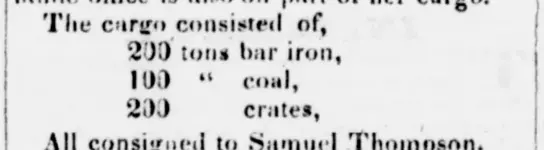
It is interesting to note the 1896 Alexander gazette newspaper claims there was large amount of Copper sheets on the shipwreck . that may of contributed to 500 thousand value given back then. The current price of copper is approximately $9,621.00 USD per ton. This price is for industrial metals and can fluctuate. copper prices was about $164 in years between 1840 and 1850. In 1896, the price of copper was around $0.11 per pound, according to a historical data source. This translates to roughly $220 per ton, considering there are 2,000 pounds in a US ton.

But interesting enough. the value not entirely belonging to just the cargo of copper alone. the 300 ton vessel could not physically carry 500000 dollars of copper. Based in 1896 figures.. A "300 ton bark" refers to a vessel with a maximum carrying capacity of 300 tons. Therefore, it can carry 300 tons of cargo. 300 ton of copper was 66000 in 1896 copper prices.

I suspect the newspaper article had a typo on figure 50000 dollars is perhaps a more realistic figure.


Crow
 
Last edited:
"I suspect the newspaper article had a typo on figure 50000 dollars is perhaps a more realistic figure."

Or, like many syndicates of the day, overinflated the value to raise money for the syndicate's venture. Some things never change.
 
Very interesting STORY :) I wish you the best of luck :) Please keep us posted

 
"I suspect the newspaper article had a typo on figure 50000 dollars is perhaps a more realistic figure."

Or, like many syndicates of the day, overinflated the value to raise money for the syndicate's venture. Some things never change.
I agree some things never change. But if working on the principle the 300 TON ship was carrying say for. example at today's prices of copper 9621 dollars per ton. x 250 tons = about 2.4 million

In 1837, copper processing in the UK was a significant industry, particularly in areas like Cornwall and Swansea. While large-scale mining was already underway, particularly in Cornwall, the industry was characterized by a mix of established techniques and emerging technologies. Smelting furnaces, though simplified from earlier designs, were still relatively primitive, and the process generated significant environmental concerns due to smoke and fumes. if the cargo was in sheets. most like they had been through the milling process in flat sheets. Many sheets was used in the printing industry. A ship going to new York most likely was copper sheets for the printing industry.

That is about 2.4 million in copper if it has not already been salvaged.at the time of the wreck or later in 1896. not counting any coins near the wreck site that would most likely be gold sovereigns. taking the time period and from Liverpool that ship came from any gold coins would of been. .William IV was King for seven years between 1830 and 1837, and was succeeded by one of the most famous British monarchs, Queen Victoria. William IV gold Sovereigns often bore the initials W.W. for engraver William Wyon. Due to the short reign and relatively low mintage numbers William IV Sovereigns are very collectable and typically sell above their metal value when in good condition. sell depending on condition 2390 dollars to 3810 dollars per coin.

Screenshot 2025-08-18 140918.webp


Screenshot 2025-08-18 141033.webp


The Devil is in detail as cost of recovery allowing from weather and other costs cannot exceed one ideally one quarter. for any salvage operation 25% backer doubles their return for risking their investment. 25% cost of recovery and 25% return to salvour out of 2.4 million. roughly 600 thousand investment and 600 thousand budget for recovery. Providing the shipwreck is located and sand is able to be shifted and copper sheets salvaged from the debris zone. Any coins found would be just be bonus. Even so there is very tight margins to work with.

Still thanks Darren for a very interesting thread. It got old Crow's bird brain ticking away.

Crow
 
Last edited:
Crow...
Not to add too much dream detail to your statement of... "sell depending on condition 2390 dollars to 3810 dollars per coin."... heh
There are some factors that would / could significantly increase that stated value...
One is a shipwreck attribution... this always puts a premium on coinage.
Value of these coins would increase on top of that being attributed to the shipwreck itself IF graded and attribution / designation is achieved.
But THEN there is a high possibility that many of those gold sovs are in uncirculated mint state.
Simply due to the fact of large "cash outs" prior to journey.
IF this is a factor and there are mint state unc's even in for 1837 sovs ... price of said sovs would be double stated amount.
Also.......
Any coins in a mint state PRior to 37 would increase significantly... like say a 36 in a ms64..... double again.
Your talking a coin that would fetch roughly $12,000... and thats without a shipwreck affiliation.
Then finally...
There are variations of these #'s.... for example....... IF any coins aboard were straight from the mint and untouched / uncirculated.... IOW's.. "Holy Grail type of stuff".
Beings.... for example...... MS64 in these is pretty much the best found of these... anything grading above this would be holy grail / wow factors.
SO>.. if say a hand full OR more of coins that would grade better than MS64 exist aboard...
Then you are talking about VERY serious.... serious money.

So... the totality of value could very well be substantially more simply due to numismatic values / collector values.

Just thought i would throw this / that out there.
 
Last edited:
Post edited slightly. :) (was early ya know)
 
Crow...
Not to add too much dream detail to your statement of... "sell depending on condition 2390 dollars to 3810 dollars per coin."... heh
There are some factors that would / could significantly increase that stated value...
One is a shipwreck attribution... this always puts a premium on coinage.
Value of these coins would increase on top of that being attributed to the shipwreck itself IF graded and attribution / designation is achieved.
But THEN there is a high possibility that many of those gold sovs are in uncirculated mint state.
Simply due to the fact of large "cash outs" prior to journey.
IF this is a factor and there are mint state unc's even in for 1837 sovs ... price of said sovs would be double stated amount.
Also.......
Any coins in a mint state PRior to 37 would increase significantly... like say a 36 in a ms64..... double again.
Your talking a coin that would fetch roughly $12,000... and thats without a shipwreck affiliation.
Then finally...
There are variations of these #'s.... for example....... IF any coins aboard were straight from the mint and untouched / uncirculated.... IOW's.. "Holy Grail type of stuff".
Beings.... for example...... MS64 in these is pretty much the best found of these... anything grading above this would be holy grail / wow factors.
SO>.. if say a hand full OR more of coins that would grade better than MS64 exist aboard...
Then you are talking about VERY serious.... serious money.

So... the totality of value could very well be substantially more simply due to numismatic values / collector values.

Just thought i would throw this / that out there.

Hello ARC that's good point! The way I see it the Copper sheets if still there pays for recovery and makes a small profit from the attempt. Any coins found are just the bonus icing on the cake. A mag might help find at least the anchors that may help find debris field. With underwater metal detectors. Providing the site is still in original surf impact zone. Otherwise as Darren alluded to could be under the present beach. some beaches are fluid as erosion strips beaches away over time as coastline constantly change. ideally the best time to research is after winter storms where sand is being stripped away. Darren would have more local knowledge of sand movement along the coast. Wind and tides.

Does the gulf stream have any effect on that part of the coast?


Crow
 
  • Like
Reactions: ARC
Does the gulf stream have any effect on that part of the coast?
If you are asking me about "my" coast which is the West Coast of Florida...
Yes... to some degree.

The east coast of the U.S. is currently about to experience some erosion in the next few days as Hurricane Erin is about to skirt the U.S. starting here off of Florida.

two_atl_7d0.webp
 
Last edited:
I don't live in the NY/NJ area, but I would love to visit Long Beach, where this event happened. The gulf stream's impact pretty much ends where I live in North Carolina. The Labrador current comes down the northeast coast and meets the gulf stream (coming up the southeast coast) at Cape Hatteras. This unstable area is known as the graveyard of the Atlantic, and surpasses all the other places for shipwrecks. NY is very close, as is Sable Island in Nova Scotia. The sheer volume of wrecks create some opportunities, but it also creates a challenge. Many times, you'll find too many wrecks to identify. And in some cases, you find wrecks on top of wrecks.
 

Users who are viewing this thread

Latest Discussions

Back
Top Bottom