Red James Cash is definitely correct. Darnit… on the subject of how to discover the CORRECT identification of iron (or steel) balls, I've been preaching here over-&-over-again for at least 12 years about the extreme helpfulness/usefulness of the civil war US Ordnance Manual's "Shot Tables" cannonball size-&-weight charts. (And, I've been re-re-re-re-re-posting a direct link so y'all can view those very-precise iron/steel-ball identification charts via the internet, for free.) But it seems like Red James Cash is the only person reading this discussion-thread who remembers what I've said at least (literally) 100 times here.
http://www.civilwarartillery.com/shottables.htm
Thank you very much, Red James.

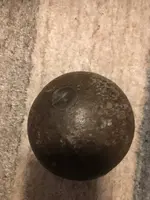
This ball's poster says it weighs 6 pounds and is 3.5-inches in diameter. Look it up in the Shot Tables. Regardless of whether it is a cannonball or not, this iron/steel ball's size and weight PROVE it can ONLY be a SOLID ball... absolutely not a hollow/explosive one. Therefore, the circle on it CANNOT be a "detonator" or fuze-hole.
In closing... I should mention that Tony in SC was probably also onto the fact that it is solid, not hollow. When the Original Poster said this iron/steel 6-pound ball's diameter is 2.5-inches, Tony (essentially) replied that that's not possible.... and then the ball's poster came back to say he miss-typed the size, correcting it to 3.5-inches. To be 6-pounds and only 2.5-inches in diameter, it would have to be made of a metal which is MUCH heavier than iron... such as lead.


 yup that's a 6 pound ball all right.



 Cops liked to blow stuff up so if you give it to them you may not find any pieces when they are done. A fuse was put in it and will come out the same way if still intact. Maybe a military guy you know can take care of it IF it is still intact.

















