What's new

A day of firsts

GTK96

Sr. Member
Joined
Jul 30, 2012
Messages
392
Reaction score
158
Golden Thread
0
Primary Interest:
Other
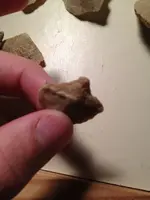
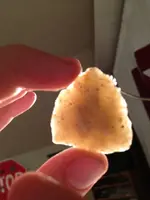
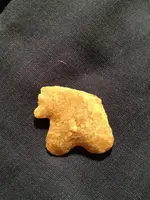
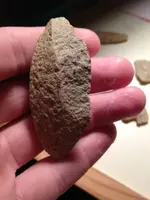
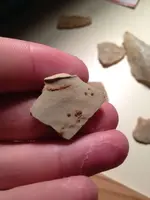
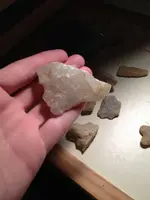
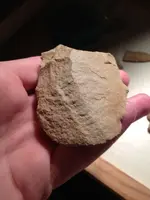
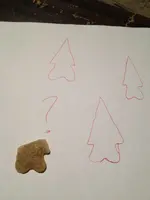
So there's this field I drive by every day on the way to school and I've never walked it. Today I decided to check it out and ended up with a couple things that I never found before...
1. Bifurcated base ?type?
2. A drill! Very worn down, but I'm counting it
3. Imported rhyolite

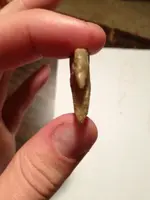
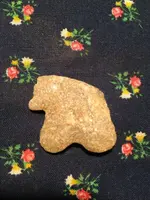
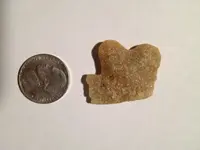
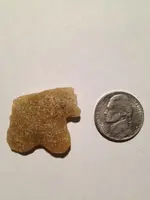
Had a blast, did better in one hour than the last 6 months of hunting combined... I'll definitely check it out again. Also scored a Madison, adze, and this thing that looks weird to me...the Madison is very translucent.
HH
 

Attachments

  • image-539724579.webp
    image-539724579.webp
    31.2 KB · Views: 154
  • image-3908060562.webp
    image-3908060562.webp
    17 KB · Views: 154
  • image-2764203924.webp
    image-2764203924.webp
    138.6 KB · Views: 149
  • image-1334703855.webp
    image-1334703855.webp
    21.1 KB · Views: 140
  • image-180323689.webp
    image-180323689.webp
    37.7 KB · Views: 143
  • image-1093186265.webp
    image-1093186265.webp
    32.8 KB · Views: 133
  • image-1172221136.webp
    image-1172221136.webp
    19.7 KB · Views: 147
  • image-1658565353.webp
    image-1658565353.webp
    21 KB · Views: 137
  • image-1457691904.webp
    image-1457691904.webp
    28.8 KB · Views: 135
Upvote 0
Gatorboy - I think you're right, St Albans is my best estimate, but it could be anyone of the types listed by others as well. It's on the large side for the type but I don't think it's out of range. I've seen points like this called Culpepper Bifurcates as well, but not consistently.
 
The material type is a little more common for the Saint Albans also.
I love how a post turns into more learning.
 
It was found in a field with a Madison point and where other LeCroys have been found recently, if that makes any difference...

Here's a few other angles for what it's worth
 

Attachments

  • image-3229971115.webp
    image-3229971115.webp
    14.1 KB · Views: 88
  • image-3815982881.webp
    image-3815982881.webp
    16.7 KB · Views: 78
  • image-2588673158.webp
    image-2588673158.webp
    117.1 KB · Views: 94
  • image-3558797487.webp
    image-3558797487.webp
    23.4 KB · Views: 83
  • image-3707764566.webp
    image-3707764566.webp
    24.2 KB · Views: 83
Also, the base has been ground to smoothness, unlike the piece of the edge that remains
 
Not trying to be a tool here, but I respectfully disagree with the ST Albans ID. I've personally handled a few ST Albans from VA and both were about the size of the broken example shown above. Also the lobes tended to hang more straight down, not flared out to the sides as shown above. My most recent assessment is that I tend to agree with Charl and his MacCorcle ID, a midsize bifurcate with lobes that tend to flare to the sides. There is also a much greater percentage of MacCorcle points made from Quartzite than ST Albans, although the greatest number of both types is made from Quartz and local cherts, from what I have read only a small percentage of ST Albans were made with Quartzite. It would also seem that all MacCorcle types show heavy basil grinding, but only some of the ST Albans show any. All of that being said, I may still be wrong.
 
Good luck with the ID, I can't help. Great stuff.

The more I see, the more I'm inclined to believe there is just no ID'g everything. Too many variables involved.
 
Good luck with the ID, I can't help. Great stuff.

The more I see, the more I'm inclined to believe there is just no ID'g everything. Too many variables involved.


Very true. I have more than a few points that exhibit characteristics of a few different types, and are still not typed, even by a few pros.
 

Users who are viewing this thread

Back
Top Bottom