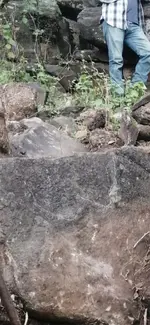
Here is what I mean about the letter W, I hope you can see it marked on the rock. I have heard a few storys about it but I was wondering if anybody has acctualy found one and knows the true meaning. ThanksThe letter W as to what? You need to be a little more specific with the question.
You are using an out of date browser. It may not display this or other websites correctly.
You should upgrade or use an alternative browser.
You should upgrade or use an alternative browser.
A GUIDE TO VAULT TREASURE HUNTING (Condensed)
- Thread starter Treasure Auras
- Start date
Secret squirl
Sr. Member
Looks like a 3. Also may have a water sign or think water collector or bowl behind the 3 rock but cant really tell. It would mean a reverse image or instruction. If upside down it could mirror a nearby ridge line. Hard to tell as Sandy mentions from the pic.Here is what I mean about the letter W, I hope you can see it marked on the rock. I have heard a few storys about it but I was wondering if anybody has acctualy found one and knows the true meaning. Thanks
Good luck

Crosse De Sign
Gold Member
- Joined
- Jun 19, 2013
- Messages
- 5,675
- Reaction score
- 6,136
- Golden Thread
- 0
- Location
- ~: Hell And Back :~
- Detector(s) used
- White's MXT ~ TM800 ~
- Primary Interest:
- Other
sandy1 my friend, what do you suppose could or would happen, if you or anyone else were to show pics on here of one of these treasures?Again, I couldn't Agree more.
I have shown in Pictures on here from the Auras to the Markers located at the auras (Boulder markers that are carved into familiar shapes from Turtles to Owls to Eagles to Ducks to Hearts to Skulls etc. repeated at multiple sites) I even showed a 70 foot Jesus Christ statue that you could enter through the wound in his side, Proving the site was Catholic Made.
I also showed how Alignments were going to Crisscross spots with the Same Measurements used over and over again at multiple sites Proving there was Intelligent Design (Man Made)
I also showed the Sentinel Planted Saguaros that are used as Alignments from old (large 200 plus years) to this very day (small) Old and New Aligned in conjunction with each other to the crisscross spots, Proving that the Sentinels are willing to continue remarking something of value still buried at these sites to this day. (I have already explained why they remark them instead of digging them up, there are far more of these vaults than you would ever think)
I have even shown a Vault I dug up at one of these Aura locations.
How Much more evidence is really necessary (as I have said before showing what was Found Inside a Vault (Precious Metals) would not be a smart idea on the web and if anybody thinks there is No Danger in showing treasure found then please go ahead and Announce the treasure you found in a Storage Vault to the world, I am sure there are some Agencies that would like to see what you have found as well as the Sentinels)
Yes this is me being a bit of a smartass but this whole "prove it" thing is getting a little old when I feel I have proven enough on the Internet, and Yes there Really are Treasures Still Buried out there.
View attachment 2239715
I don't want to stir up any kind of controversy, it just seems like maybe some don't understand what the issues or implications associated with
showing this kind of treasure(s) may be. It's sometimes a little hard to tell for sure, if one is just seriously curious or skeptical, or more than that,
maybe some kind of sentinel or government agent or just maybe jealosy & envy when throwing out comments like some heve through the years.
Like not understanding or caring about anyone else, or trying to provoke someone to do something dangerous, or trying to get the poster banned.
Your thoughts & views, experiences are really appreciated in advance, Thank you.
Last edited:
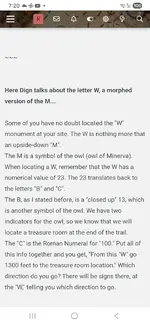
Hi everyone, I found this information reguarding the W does anyone know if there is any truth to this or does anyone know who this person is please comment. ThanksThe Real danger isnt in showing a gold bar or even a dig site, it would be in showing treasure/bars inside a vault since that is where the Archeologist's by Antiquities law are supposed to take over (before you ever touch the treasure) and heaven forbid if it were on anything other than Private property. Again I would suggest watching this Robert Kryder Video as a cautionary tale of what happens when you try to do everything legally, pay close attention to how the Archeologist is part of the coverup of this treasure.
https://www.treasurenet.com/threads...unting-condensed.519355/page-341#post-7400052
This is exactly what the AZ State worker (works at the State land office for permits) who talked with my parents told them when my mom asked if they were to find something of Spanish Origin, first he said there isn't any Spanish activity in AZ above Tucson then he said if they were to dig down and by some chance come across anything man made to stop digging immediately and Contact them so they could get properly trained people to investigate it.
Attachments

Treasure Auras
Bronze Member
- #6,865
Thread Owner
The Real danger isnt in showing a gold bar or even a dig site, it would be in showing treasure/bars inside a vault since that is where the Archeologist's by Antiquities law are supposed to take over (before you ever touch the treasure) and heaven forbid if it were on anything other than Private property. Again I would suggest watching this Robert Kryder Video as a cautionary tale of what happens when you try to do everything legally, pay close attention to how the Archeologist is part of the coverup of this treasure.sandy1 my friend, what do you suppose could or would happen, if you or anyone else were to show pics on here of one of these treasures?
I don't want to stir up any kind of controversy, it just seems like maybe some don't understand what the issues or implications associated with
showing this kind of treasure(s) may be. It's sometimes a little hard to tell for sure, if one is just seriously curious or skeptical, or more than that,
maybe some kind of sentinel or government agent or just maybe jealosy & envy when throwing out comments like some heve through the years.
Like not understanding or caring about anyone else, or trying to provoke someone to do something dangerous, or trying to get the poster banned.
Your thoughts & views, experiences are really appreciated in advance, Thank you.
https://www.treasurenet.com/threads...unting-condensed.519355/page-341#post-7400052
This is what the AZ State worker (works at the State land office for permits) who talked with my parents told them when my mom asked if they were to find something of Spanish Origin, first he said there isn't any Spanish activity in AZ above Tucson then he said if they were to dig down and by some chance come across anything man made to stop digging immediately and Contact them so they could get properly trained people to investigate it. (More Archeologists and State people who will never let you have the treasure you found)
This is exactly what the State of Florida did to Mel Fisher and the Atocha treasure The State of Florida stole his treasure even though he had all the proper paperwork for the salvage, it took him millions of dollars in legal fees and a federal judge to get his treasure back from the state of Florida (look into it)
Remember there are People who would turn you into the law in a second if they had the slightest knowledge of the possibility that you were going to make a recovery, either because they are trying to Protect the Treasures or out of Jealousy that you could have something they can't.
Last edited:
Crosse De Sign
Gold Member
- Joined
- Jun 19, 2013
- Messages
- 5,675
- Reaction score
- 6,136
- Golden Thread
- 0
- Location
- ~: Hell And Back :~
- Detector(s) used
- White's MXT ~ TM800 ~
- Primary Interest:
- Other
Yes, I've watched most all of the documentaries with Mel, his children & his team members I can find...The Real danger isnt in showing a gold bar or even a dig site, it would be in showing treasure/bars inside a vault since that is where the Archeologist's by Antiquities law are supposed to take over (before you ever touch the treasure) and heaven forbid if it were on anything other than Private property. Again I would suggest watching this Robert Kryder Video as a cautionary tale of what happens when you try to do everything legally, pay close attention to how the Archeologist is part of the coverup of this treasure.
https://www.treasurenet.com/threads...unting-condensed.519355/page-341#post-7400052
This is exactly what the AZ State worker (works at the State land office for permits) who talked with my parents told them when my mom asked if they were to find something of Spanish Origin, first he said there isn't any Spanish activity in AZ above Tucson then he said if they were to dig down and by some chance come across anything man made to stop digging immediately and Contact them so they could get properly trained people to investigate it. (More Archeologists and State people who will never let you have the treasure you found)
This is exactly what the State of Florida did to Mel Fisher and the Atocha treasure The State of Florida stole his treasure even though he had all the proper paperwork for the salvage, it took him millions of dollars in legal fees and a federal judge to get his treasure back from the state of Florida (look into it)
Imagine accidentally meeting his camera man that figured out how to map the Atocha & it worked for them,
at a mineral swim pool (full size) in S/W Montana just by mentioning the words Treasure Hunter. He confirmed alot,
& I think of it much like having found your 1st thread shortly after you started I think it was something like treasure signs.
Back almost 10 yrs. ago now {EDIT} definitely the most productive thread with the best info on the subject & I've read alot of 'em.
Thanks, I knew you would have somethings interesting to say about the subject. Hope you're alot warmer than us, there in S/W Arizona.
Last edited:
Treasure Auras
Bronze Member
- #6,867
Thread Owner
Something I have been working with is a 32 Point Compass I have found verified lines (boulders pointing to other important spots on the 32 point compass degrees such as 112.5 degrees) as well as other degrees that are on these compass points (45 and 315 degrees are very common) so it could be worth a look. This is Not for angle/turning degrees they used 360 single degrees for that (a transit with turning degrees such as 77 degrees and 49 degrees change of direction angles) these are specifically for outright compass headings. It is worth noting that Christopher Columbus used a 32 Point Compass.

As a side note in the book De Re Metallica the compass shown is a 24 point compass (pictured below) which is 15 degrees between each heading (instead of 11.25 Degrees like on the 32 point compass above) Another one worth checking out. I have found 75 degrees before as well as 105 degrees. If you count each one of the small lines in between there are 120 of them which are increments of 3 degrees each.

There was a 48 Point Compass as well and is 7.5 Degrees between each point and would cover every degree I mentioned above.
The first recorded use of a 48 position mariner's compass on sea navigation was noted in a book titled “The Customs of Cambodia” by Yuan dynasty diplomat Zhou Daguan, he described his 1296 voyage from Wenzhou to Angkor Thom in detail. Advanced mariners such as Zhèng Hé used a 48-point compass as well.
One last Note: Western and Arab compasses have 32 defined points on their rose-of-winds. Eastern has 24 and 48 points.
Now how do you suppose a 24 point compass that was used in the Far East ended up in the book (De Re Metallica) A book on Mining In Europe/Germany when everybody else was using the 32 point compass in Europe at that time.
When it comes right down to it these compasses start out with 4 points N. E. S. W then divide further with 8 points, N, NE, E, SE, S, SW, W, NW, then divide equally further by 16, 24, 32, 48, 64,128 etc. points all the way up to our modern degrees of 360 single degrees, which are just splitting the compass circle in halves over and over again reducing the degrees to more finite numbers (ie 360 degrees Divided by 128 degrees= 2.8125 degrees between each marked line) so the difference is you get half degrees and even quarter degrees (fractions) when you divide by these other numbers which effects your readings in the field so coming up with a degree such as 112.5 in the field makes no sense on a single 360 degree compass unless you are using a 32 or 48 or above compass rose which is marked right on 112.5 degrees.
As a side note in the book De Re Metallica the compass shown is a 24 point compass (pictured below) which is 15 degrees between each heading (instead of 11.25 Degrees like on the 32 point compass above) Another one worth checking out. I have found 75 degrees before as well as 105 degrees. If you count each one of the small lines in between there are 120 of them which are increments of 3 degrees each.
There was a 48 Point Compass as well and is 7.5 Degrees between each point and would cover every degree I mentioned above.
The first recorded use of a 48 position mariner's compass on sea navigation was noted in a book titled “The Customs of Cambodia” by Yuan dynasty diplomat Zhou Daguan, he described his 1296 voyage from Wenzhou to Angkor Thom in detail. Advanced mariners such as Zhèng Hé used a 48-point compass as well.
One last Note: Western and Arab compasses have 32 defined points on their rose-of-winds. Eastern has 24 and 48 points.
Now how do you suppose a 24 point compass that was used in the Far East ended up in the book (De Re Metallica) A book on Mining In Europe/Germany when everybody else was using the 32 point compass in Europe at that time.
When it comes right down to it these compasses start out with 4 points N. E. S. W then divide further with 8 points, N, NE, E, SE, S, SW, W, NW, then divide equally further by 16, 24, 32, 48, 64,128 etc. points all the way up to our modern degrees of 360 single degrees, which are just splitting the compass circle in halves over and over again reducing the degrees to more finite numbers (ie 360 degrees Divided by 128 degrees= 2.8125 degrees between each marked line) so the difference is you get half degrees and even quarter degrees (fractions) when you divide by these other numbers which effects your readings in the field so coming up with a degree such as 112.5 in the field makes no sense on a single 360 degree compass unless you are using a 32 or 48 or above compass rose which is marked right on 112.5 degrees.
Last edited:
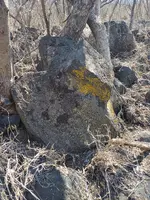
Hi Sandy, here is a clear picture of a heart with a diamond pertruding out and at the base of the heart where the tip is, there is a shape of a hole im not sure if you can appriciate it in the picture, from where im standing (taking the picture) to my right about 1 to 2 meters there is a large rock lying flat on the ground in the shape of a triangle and to the right of the triangle at about 4 to 5 meters there is a turdle. I want to point out that they are not in line. Please let me know what you think. Thanks again.Something I have been working with is a 32 Point Compass I have found verified lines (boulders pointing to other important spots on the 32 point compass degrees such as 112.5 degrees) as well as other degrees that are on these compass points (45 and 315 degrees are very common) so it could be worth a look. This is Not for angle/turning degrees they used 360 single degrees for that (a transit with turning degrees such as 77 degrees and 49 degrees change of direction angles) these are specifically for outright compass headings. It is worth noting that Christopher Columbus used a 32 Point Compass. View attachment 2242832
As a side note in the book De Re Metallica the compass shown is a 24 point compass (pictured below) which is 15 degrees between each heading (instead of 11.25 Degrees like on the 32 point compass above) Another one worth checking out. I have found 75 degrees before as well as 105 degrees. If you count each one of the small lines in between there are 120 of them which are increments of 3 degrees each.
View attachment 2242936
There was a 48 Point Compass as well and is 7.5 Degrees between each point and would cover every degree I mentioned above.
The first recorded use of a 48 position mariner's compass on sea navigation was noted in a book titled “The Customs of Cambodia” by Yuan dynasty diplomat Zhou Daguan, he described his 1296 voyage from Wenzhou to Angkor Thom in detail. Advanced mariners such as Zhèng Hé used a 48-point compass as well.
One last Note: Western and Arab compasses have 32 defined points on their rose-of-winds. Eastern has 24 and 48 points.
Now how do you suppose a 24 point compass that was used in the Far East ended up in the book (De Re Metallica) A book on Mining In Europe/Germany when everybody else was using the 32 point compass in Europe at that time.
When it comes right down to it these compasses start out with 4 points N. E. S. W then divide further with 8 points, N, NE, E, SE, S, SW, W, NW, then divide equally further by 16, 24, 32, 48, 64,128 etc. all the way up to our modern degrees of 360 single degrees, which are just splitting the compass circle in halves over and over again reducing the degrees to more finite numbers (ie 360 degrees Divided by 128 degrees= 2.8125 degrees between each marked line) so the difference is you get half degrees and even quarter degrees when you divide by these other numbers which effects your readings in the field so coming up with a degree such as 112.5 in the field makes no sense on a single 360 degree compass unless you are using a 32 or 48 or above compass rose which is marked right on 112.5 degrees.
Attachments
Treasure Auras
Bronze Member
- #6,869
Thread Owner
Yes that looks like a good diamond which is a good sign just like the heart of Jesus the diamond is the wound in Jesus's side indicating a holy place which is why they are together, however just like the heart it can be very misleading trying to get you to dig in a bad spot, these type signs will be set up all around a treasure area to keep you busy either digging or leading you all over the place, this is why it is so important to catch an aura first.Hi Sandy, here is a clear picture of a heart with a diamond pertruding out and at the base of the heart where the tip is, there is a shape of a hole im not sure if you can appriciate it in the picture, from where im standing (taking the picture) to my right about 1 to 2 meters there is a large rock lying flat on the ground in the shape of a triangle and to the right of the triangle at about 4 to 5 meters there is a turdle. I want to point out that they are not in line. Please let me know what you think. Thanks again.
Last edited:
Treasure Auras
Bronze Member
- #6,870
Thread Owner
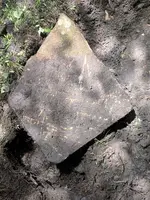
One of the things I very rarely talk about are buried Markers, at times while digging I would come across a buried marker at degrees and measured distances, sometimes it could be a heart or a diorama of a tunnel etc.
Here is one such marker I dug up and as you can see it is a Diamond/Rhombus which of course is the the fifth wound in Jesus's side. (and no this was not a corked in plug rock)

Here is one such marker I dug up and as you can see it is a Diamond/Rhombus which of course is the the fifth wound in Jesus's side. (and no this was not a corked in plug rock)

Quinoa
Bronze Member
- Joined
- Nov 25, 2011
- Messages
- 1,693
- Reaction score
- 3,551
- Golden Thread
- 0
- Location
- Purgatory
- Detector(s) used
- Garrett atx pi 12+20inch coil, Garrett mh series, Garrett 2500+t-hound attchmnt, fisher tw-6 two box, Pulsestar pro ii with various coils up to 98 inches, pulsemaster pro w/1.2 m coil
- Primary Interest:
- Other
Thanks for the last couple posts....good info for me. And I'm seeing alot of 32 point compass bearings where I am at. I call it a Mariner's compass.
Quinoa
Bronze Member
- Joined
- Nov 25, 2011
- Messages
- 1,693
- Reaction score
- 3,551
- Golden Thread
- 0
- Location
- Purgatory
- Detector(s) used
- Garrett atx pi 12+20inch coil, Garrett mh series, Garrett 2500+t-hound attchmnt, fisher tw-6 two box, Pulsestar pro ii with various coils up to 98 inches, pulsemaster pro w/1.2 m coil
- Primary Interest:
- Other
Also had a similar buried diamond marker on one site , didn't know what to make of of it, dig got shorted when we saw a man on a horse on nearby ridgeline. Haven't been back.
Here is a diamond that I dug out of the ground just the top portion of it was sticking out of the ground, I had no idea it was diamond until it came out. I dug right next to a medium size rock that looks like a ugly face and next to it was the tip of this diamond sticking out you can acctually see the dirt mark on it. I stoped digging because I ran into a huge rock in the ground so I figured it was natural ground. Any ideas of why it was there in the first place?
Attachments
Treasure Auras
Bronze Member
- #6,874
Thread Owner
Here is the Marker that I dug up at a Crisscross spot, it looks like a possible Duck head with its head turned around on its back.

SAndy at whay depth did you find it?Here is the Marker that I dug up at a Crisscross spot, it looks like a possible Duck head with its head turned around on its back.View attachment 2243290
At what depth was it Sandy?SAndy at whay depth did you find it?

coolhandluke7
Jr. Member
Looks like a rabbit as well ! Like ur looking down on it from behind !Here is the Marker that I dug up at a Crisscross spot, it looks like a possible Duck head with its head turned around on its back.View attachment 2243290
Treasure Auras
Bronze Member
- #6,878
Thread Owner
You can see the weed on the right bottom of the picture that is the ground surface so less than a foot deep.At what depth was it Sandy?
Treasure Auras
Bronze Member
- #6,879
Thread Owner
Yes if you look at it as having 2 ears to make a rabbit (the duck beak as one ear and the other in the shadow on the right, but I know your looking at the rabbit as the backwards duck head profile), sometimes they would make 2 markers out of one or even more on some rare occasions.Looks like a rabbit as well ! Like ur looking down on it from behind !
One of my favorites is the Humming Bird in the picture below, if you look closely you will see the Hummingbird looking to the right (towards the treasure) but where his wing would be is actually carved into a Duck Head Profile (looking down left, the Ducks Neck starts at the Hummingbirds Eye)
Last edited:
coolhandluke7
Jr. Member
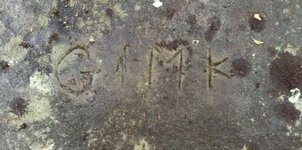
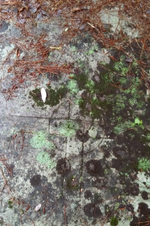
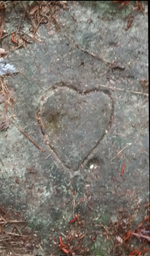
What do u think about these ! There all carved on one rock which is on top of a cave! I’m not sure what they mean thoYes if you look at it as having 2 ears to make a rabbit (the duck beak as one ear and the other in the shadow on the right, but I know your looking at the rabbit as the backwards duck head profile), sometimes they would make 2 markers out of one or even more on some rare occasions.
One of my favorites is the Humming Bird in the picture below, if you look closely you will see the Hummingbird looking to the right (towards the treasure) but where his wing would be is actually carved into a Duck Head (looking down left, the Ducks Neck starts at the Hummingbirds Eye)
View attachment 2243309
Attachments


Featured Treasure Finds
Featured Treasure Finds
Similar threads


- Replies
- 183
- Views
- 8K

Users who are viewing this thread
Total: 6 (members: 0, guests: 6)