What's new

Another Fire Nugget!

Crispin

Silver Member
Joined
Jun 26, 2012
Messages
3,636
Reaction score
2,857
Golden Thread
0
Location
Central Florida
Detector(s) used
Coinmaster Pro, Sand Shark
Primary Interest:
Other
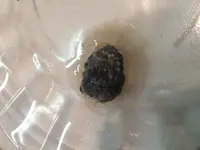
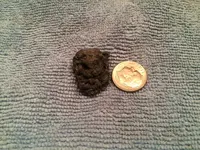
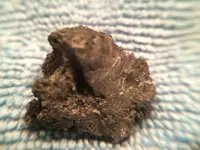
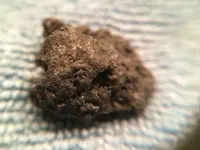
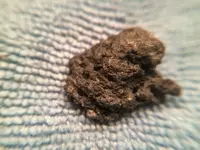
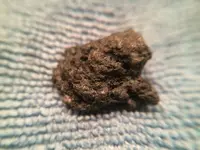
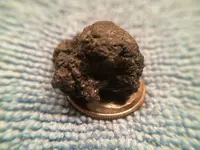
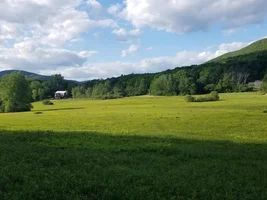
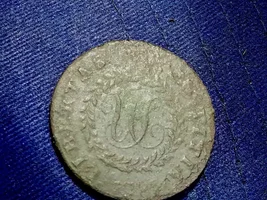
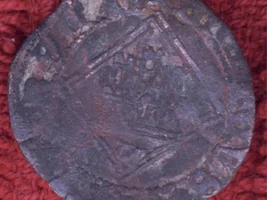
My antique site coughed this up today. Tested positive for silver with nitric acid, picture shown. Weighs 16.25g. I know I am opening myself up to torment but anybody got any ideas?

IMG_1146[1].webpIMG_1151[1].webpIMG_1152[1].webpIMG_1153[1].webpIMG_1154[1].webpIMG_1155[1].webpIMG_1156[1].webp
 
Top right picture looks more natural than a "fire nugget".
Are you thinking this is stuff that washed up from the water or been on land all along?
If land based more evidence should be turning up...tools or charcoal, post moulds, ect..
Any small ship wreck debris of rotten timber or ect.?
If recalled right you might be predating steam engines that could be cleaned,(beached, soot cleaned from flues to avoid a ka-boom, clinkers and debris tossed usually overboard) or re purposed, or nefarious silver alteration performed in one on board to destroy chance of i.d.ing source so a furnace or fire seems likely if material worked on site.
Whalers ran fires onboard beyond cookin for crew.....
Otherwise a scattered cache or drop going on .:dontknow:
Got to be a source for fired goods.

Didn't some Leary guy experiment with acid?
 
Last edited:
Upvote 0
GIB has been doing a lot of research on this area for me. I don't know if he wants to chime in. I'll try to sum it up the best I can. Early spanish explorers would build primitive forges on the beach to melt things down and make objects of need. When the explorers returned to Spain they had to report back to the king. The king would then take the majority of everything they brought back. So we have two theories going on.

1. Site of old forge: Pirates with stolen cobs who melted it down to disguise it.
2. Site of old forge: Explorers melted down cobs to hide from king.

No signs of a shipwreck at all. We ruled that one out. We also know that this is a site where Indians traded with the Spanish. Thus, the silver turtles. Everything found is coming from the water.

My first thought before reading the above was clinker. I used to use a forge when shoeing horses, and I would get clinkers that looked like that. The quality of my coal was very poor
the clinkers caused cooler spots in the fire, so I'd rake them out onto the ground. Getting your iron too hot would also make clinkers.
 
Upvote 0
In the early 1500's some Spaniard's were trapped on the west coast of Florida. The ships never came back (or found them) and they were taking slow steady deaths from the local indians.

They had to build a couple of boats to get away. So, as they ate their horses, they would take the tack, make a forge on the beach, and fashion a saw, tools and nails out of the metal to build boats.

That was in 1525, with all raw local resources, except for the horse tack. The Spaniards were constantly driven back to the shoreline, and preferred that as they only had to guard 1/2 of the area and could watch for their boats.

So, they had the technology to melt down stuff. The Indians also utilized copper disc's to remove sweat from their bodies. No local copper, so they were trading with other indigenous tribes through a fairly well established network.

The history is fascinating.

Later tribes were melting Spanish metals for jewelry and trade.
 
Upvote 0

Users who are viewing this thread

Back
Top Bottom