What's new

Another snow day

rginn

Gold Member
Joined
Oct 16, 2007
Messages
9,219
Reaction score
13,564
Golden Thread
0
Location
Summit County, CO
Detector(s) used
White's DFX, White's Classic 1 Coinmaster, Nokta Pointer
Primary Interest:
All Treasure Hunting
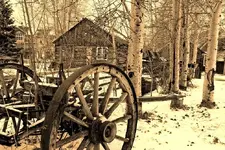
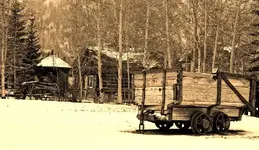
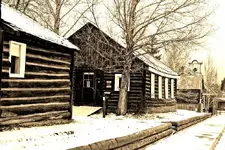
We still ain't got that 2 to 3 feet they forecasted. The front range did, though!
 

Attachments

  • snowdaya.webp
    snowdaya.webp
    138.5 KB · Views: 502
  • snowdayb.webp
    snowdayb.webp
    97.3 KB · Views: 496
  • snowdayc.webp
    snowdayc.webp
    115.4 KB · Views: 503
Nah, nowhere near pro. I just got a high dollar camera and live in a part of the country where it's real hard to take a bad picture. (but I have) I was plannin on bein an art major in college until I had to drop out and go to work. Or a nuclear physicist. Maybe that has somethin to do with it.
 
Interesting contrast with the warm sepia tones, of cold weather landscapes. First one is my favorite, I like all the different forms.

ng
 
we had snow once in 100 years in 2004.lots of kids and adults seen snow for the first time. you can keep it.i like it if it only lasted a month.i lived in montana so i seen lots as a kid.that was plenty.when ya'lls lakes are frozen i'm fishing and dont need an ogger.lol
 
Yeah, I hear that, Steve71. I got nephews in Mississippi that have never seen snow either. Being from farther south, when the lakes freeze up, I stay home. I would like to come up with some kind of program to bring snow to all the kids of the south. Get it out of my yard and all y'all can have it. It would be a novelty, but just like me they'd get tired of it pretty soon!
 
Professional, or not,,, you take some awesome photos... :thumbsup:
I really like the look of these pics... Very nice touch... Was the "Sepia" effect added after the shot was taken or is that an option on your camera itself?...
 
He's like me. We provide the camera and God provides the palette................NGE
 
I can set the camera to do that, but in this case I did it afterwards to see what it looked like. NGE is right on, too.
 
I think I love these the best the sepia relly has that certain....
 
Rando said:
RGINN said:
I was plannin on bein an art major in college until I had to drop out and go to work. Or a nuclear physicist. Maybe that has somethin to do with it.

:laughing9:

Well, whatever it is, you have a gift, brother.
I'll echoe what Rando said :o great pictures :notworthy:

SS
 
I graduated with a degree in Fine Art from West Chester University. That's why I'm a Sales Manager at a hotel :tongue3: You do have a great eye for your compositions. My personal fav is the 2nd picture. Beautiful depth of field and very well balanced. You always post such nice photographs. Sometimes I wish I lived out west for the beauty, but I think I would be giving up too much history.
 
By the way, I use a Nikon D90. What type of camera do you use?
 
Canon Rebel XS. If you can hold 'er steady and shoot, it takes good pics. Thanks, y'all.
 
awsome pics Bro , um btw I stole pic 2 as a new back ground on my laptop.
 
Those are outstanding. Is that what sepia is? I always called it black and white... :laughing7:
 
here is Wikipedia's definition of sepia toning; Sepia toning
See also: Sepia (color)
The term 'sepia' comes from the name of an artists' pigment made from the Sepia cuttlefish, found in the English Channel, Sepia officinalis, the Common Cuttlefish.

In sepia toning, chemicals convert the metallic silver in the print to a sulfide compound, which is much more resistant to the effects of environmental pollutants such as atmospheric sulfur compounds. This is why many old photographs are sepia toned—those are the ones that have survived until today.[citation needed]

There are three types of sepia toner in modern use;

Sodium sulfide toners - the traditional 'rotten egg' toner;
Thiourea (or 'thiocarbamide') toners - these are odourless and the tone can be varied according to the chemical mixture;
Polysulfide or 'direct' toners - these do not require a bleaching stage.
Except for polysulfide toners, sepia toning is done in three stages. First the print is soaked in a potassium ferricyanide bleach to re-convert the metallic silver to silver halide. The print is washed to remove excess potassium ferricyanide then immersed into a bath of toner, which converts the silver halides to silver sulfide.

Incomplete bleaching creates a multi-toned image with sepia highlights and grey mid-tones and shadows. This is called split toning. The untoned silver in the print can be treated with a different toner, such as gold or selenium.[4]

Sepia-toned images are associated with period photography of the 1800s and "that old-time feel". Many photographs of the American Old West were recorded in sepia tones, a notable example being Edward Weston's photos of Carmel. Consequently, sepia toning has been used in movies as a special effect to evoke nostalgia or the Wild West. For instance, the Kansas scenes in the 1939 movie The Wizard of Oz are rendered in sepia tone, while technicolor takes over in the land of Oz.

NGE
 

Users who are viewing this thread

Back
Top Bottom