What's new

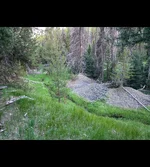
Are these dredge tailings? What type of dredge?

Bandiman

Tenderfoot
Joined
May 9, 2026
Messages
5
Reaction score
10
Golden Thread
0
Stumbled on these tailing that go on for a mile or so. The aren't crescent shaped but rather mounds. They dont span then entire length that was worked. Do these look like dredge tailing? What type of dredge would make they mounds?
 

Attachments

  • Screenshot_20260607_132607_Gallery.webp
    Screenshot_20260607_132607_Gallery.webp
    862.9 KB · Views: 323
Upvote 0
Stumbled on these tailing that go on for a mile or so. The aren't crescent shaped but rather mounds. They dont span then entire length that was worked. Do these look like dredge tailing? What type of dredge would make they mounds?
There would likely be a good size hole for the dredge and from the picture shows and what you say there is none.
Any diggings nearby?
 
Last edited:
Stumbled on these tailing that go on for a mile or so. The aren't crescent shaped but rather mounds. They dont span then entire length that was worked. Do these look like dredge tailing? What type of dredge would make they mounds.

Google is your friend. Search for historical gold mining reports, records, etc. for the gold district you are interested in and you will likely find photos and written reports of what equipment was used and much more info including the size of the placer gold being found....nuggets, fines or mixed.
The tailings stacker was probably attached to the dredge, dragline or whatever device was used in a fixed nondirectional position so piles were side by side as the plant repositioned.
Good luck.
 
A picture of the diggings and the final hole may answer some of your questions.
 
Floating dreadge piles...those fur trees grew after mining. Look for the old growth. That means they didn't dig there..
 
Floating dreadge piles...those fur trees grew after mining. Look for the old growth. That means they didn't dig there..
Where are the diggings is important to answer first.
 
Wouldn't it be the creek bottom? I am standing on a mound of dirt almost like a bike extending the length of all the tailings
Is the mound you are standing on to take the picture also a man made pile?
Is the time of the workings say just 80 years back?
Where is the bedrock in the creek?
 
It looks to me like maybe someone dug those with a backhoe for a test pit at some point in the last 100 years. Three pretty neat stacks. If it was hand work it would probably be not so high and more spread out. If it were a dredge of some kind you'd expect to see more of it all over but it's just that isolated spot.
 
Well so much for A.I. s answer !! as I said , yes they are drdge tailings that used a side unloader . Old time dredge!
 
Last edited:
It looks to me like maybe someone dug those with a backhoe for a test pit at some point in the last 100 years. Three pretty neat stacks. If it was hand work it would probably be not so high and more spread out. If it were a dredge of some kind you'd expect to see more of it all over but it's just that isolated spot.
The hole or holes are likely blocked as required if no longer working the test holes. If the holes were made before hydraulics was common, then a cable winch setup was used.
The key is finding were the hole / diggings are down to bedrock.
 
It looks to me like maybe someone dug those with a backhoe for a test pit at some point in the last 100 years. Three pretty neat stacks. If it was hand work it would probably be not so high and more spread out. If it were a dredge of some kind you'd expect to see more of it all over but it's just that isolated spot.
Where is the digging taking place for the neat stacks in the photo?
 
How do you cover a dredge hole thats underwater ?????? your NOT co,prehending what the question is !!!
Any underwater photos coming soon?
 
I've seen test stacks before, very similar to this, but they were dug and piled afterward by an excavator, which can easily create cone-shaped mounds like this.
The stacks I found, I detected, and as they were in a good nugget gold area, I was able to get some nice gold by scanning all around the piles. The material was highly mineralized, and I used a PI to punch through the hot rocks and crazy mineralization.
I found two more piles about a mile down the creek, and scanned them as well, but no targets at that location.
Is this area known for sizeable nugget gold?

Hope you find something interesting as you research the mining history, and all the best,

Lanny
The test stacks can be good enough to detect?
Would be better if one can find the test holes if they go down to bedrock and detect the bedrock itself.
The PI metal detector may be the only detector to use if the mineralization is very high for any kind of realistic depth.

One can bench test single rocks with the VLF detector and likely find something?
Yes, the stacks hold gold as the point of the cone at the top of the stack is the material from the bottom of the hole, so anything taken from the bedrock (if they hit it) would often be the best chance at a nugget, and lots of times the material around six feet from bedrock holds good gold, if that's the way it's been trending of course (I've seen this deposition pattern lots of times).

At another site I hit, there were two test piles within ten feet of each other and both had nice nuggets within three feet of the cone tip.

So, nothing set in stone about hunting those cones, but if they're in a proven nugget area, I'll detect them every chance I get.

(Moreover, unless you're there right quick when they're digging those test holes, and the material being excavated is stream-run, they slump back in a hurry, so that lessens the chance to detect the bedrock.)

All the best,

Lanny

 
One should not pass up the opportunity to both detect and look within the test hole (holes) likely near by the tailing stack.
With that being said only the OP can give feedback results of what is being found value wise with both the tailing stacks and better yet the test hole (holes) itself if safe enough to do so.
 
Last edited:
One should not pass up the opportunity to both detect and look within the test hole (holes) likely near by the tailing stack.
With that being said only the OP can give feedback results of what is being found value wise with both the tailing stacks and better yet the test hole (holes) itself if safe enough to do so.
As for the test holes, when it's safe to do so, that would be an option--safety being the prime concern, with shallower test holes being better, deeper ones, much harder to scramble out of and rock fall a risk too.
(Testing the cone above ground level perhaps an easier way to see if it's worth the drop down.)
So as not to let something else go without a comment, I've found nuggets in the material rimming the margins of throw-out piles too--hand-dug excavations in placer areas where miners dug down to test bedrock. I never walk by those disturbances any more, found too many sassy nuggets that got thrown out with the "waste dirt".

All the best,

Lanny

 

Users who are viewing this thread

Back
Top Bottom