What's new

Beautiful Day For a Desert Hunt

oldmxrat

Gold Member
🥇 Charter Member
Joined
Oct 25, 2020
Messages
10,828
Reaction score
47,184
Golden Thread
1
Location
Reno Nevada summers, Las Vegas winters
🥇 Banner finds
2
Detector(s) used
XP Deus 2
Primary Interest:
All Treasure Hunting
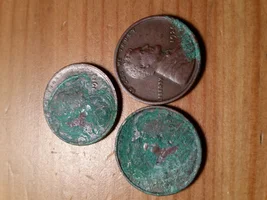
82 and sunny so I just had to get back out there. I went back to the place where I found the worn seated dime a couple of weeks ago.

IMG_0975.webp
IMG_0977.webp
IMG_0978.webp


Does anybody know what this lead piece is?
IMG_0996.webp
 
Upvote 25
Nice finds, and that lead tag...very cool. Is the location anywhere near some
railroad tracks?
 
Looks like a fine hunt, on a wing and a prayer you found some nice finds - I like that half plastre. Congratz!
 
82 and sunny so I just had to get back out there. I went back to the place where I found the worn seated dime a couple of weeks ago.

View attachment 2247094View attachment 2247095View attachment 2247096

Does anybody know what this lead piece is?
View attachment 2247098
Based on the markings, this is a
lead battery identification tag (or a lead plate from a battery case) dating back to October 1942.
During World War II, these types of heavy-duty batteries were used for industrial, military, and telecommunications backup systems.

Breakdown of the Markings:
  • TYPE DMCO-9A: This is the specific model or "type" designation. "DMCO" likely refers to the manufacturer or a specific design series.
  • 72 HOUR CAP 116 AMP HR: This indicates the battery's capacity. It was designed to deliver a total of 116 Ampere-hours when discharged slowly over a 72-hour period. This "long-rate" discharge is typical for standby power, such as for railroad signals, telegraph systems, or emergency lighting.
  • 1170 SP. GR.: This stands for Specific Gravity. It tells the user that when the battery is fully charged, the electrolyte (sulfuric acid) should have a density of 1.170. This is a relatively "low" specific gravity compared to modern car batteries (usually ~1.265), which was common for stationary batteries to ensure a longer life.
  • DATE 10 42: This confirms the manufacturing or installation date: October 1942.

Historical Context
In 1942, most lead and rubber production was diverted to the war effort. Industrial batteries like this one were critical for maintaining communication lines and infrastructure. Because the tag itself is made of lead, it was likely part of the battery's internal structure or a plate embedded into the side of a glass or hard-rubber battery jar.
 
Some unique finds . Thanks for sharing with us
 
Very cool finds! Congratulations and thanks for sharing.
 
Based on the markings, this is a
lead battery identification tag (or a lead plate from a battery case) dating back to October 1942.
During World War II, these types of heavy-duty batteries were used for industrial, military, and telecommunications backup systems.

Breakdown of the Markings:
  • TYPE DMCO-9A: This is the specific model or "type" designation. "DMCO" likely refers to the manufacturer or a specific design series.
  • 72 HOUR CAP 116 AMP HR: This indicates the battery's capacity. It was designed to deliver a total of 116 Ampere-hours when discharged slowly over a 72-hour period. This "long-rate" discharge is typical for standby power, such as for railroad signals, telegraph systems, or emergency lighting.
  • 1170 SP. GR.: This stands for Specific Gravity. It tells the user that when the battery is fully charged, the electrolyte (sulfuric acid) should have a density of 1.170. This is a relatively "low" specific gravity compared to modern car batteries (usually ~1.265), which was common for stationary batteries to ensure a longer life.
  • DATE 10 42: This confirms the manufacturing or installation date: October 1942.

Historical Context
In 1942, most lead and rubber production was diverted to the war effort. Industrial batteries like this one were critical for maintaining communication lines and infrastructure. Because the tag itself is made of lead, it was likely part of the battery's internal structure or a plate embedded into the side of a glass or hard-rubber battery jar.
Great info Pepper! Thanks for digging into it. :icon_thumright:
 
Based on the markings, this is a
lead battery identification tag (or a lead plate from a battery case) dating back to October 1942.
During World War II, these types of heavy-duty batteries were used for industrial, military, and telecommunications backup systems.

Breakdown of the Markings:
  • TYPE DMCO-9A: This is the specific model or "type" designation. "DMCO" likely refers to the manufacturer or a specific design series.
  • 72 HOUR CAP 116 AMP HR: This indicates the battery's capacity. It was designed to deliver a total of 116 Ampere-hours when discharged slowly over a 72-hour period. This "long-rate" discharge is typical for standby power, such as for railroad signals, telegraph systems, or emergency lighting.
  • 1170 SP. GR.: This stands for Specific Gravity. It tells the user that when the battery is fully charged, the electrolyte (sulfuric acid) should have a density of 1.170. This is a relatively "low" specific gravity compared to modern car batteries (usually ~1.265), which was common for stationary batteries to ensure a longer life.
  • DATE 10 42: This confirms the manufacturing or installation date: October 1942.

Historical Context
In 1942, most lead and rubber production was diverted to the war effort. Industrial batteries like this one were critical for maintaining communication lines and infrastructure. Because the tag itself is made of lead, it was likely part of the battery's internal structure or a plate embedded into the side of a glass or hard-rubber battery jar.
You nailed it! Great job!
 
Nice finds, and that lead tag...very cool. Is the location anywhere near some

railroad tracks?
Are those glasses I sat on? Looks just like em.😊
 

Users who are viewing this thread

Back
Top Bottom