What's new

Best operating frequency for handheld underwater detector

OBXmetalDet

Sr. Member
Joined
Aug 25, 2019
Messages
381
Reaction score
281
Golden Thread
0
Location
Virginia
Detector(s) used
Minelab Equinox 900
Primary Interest:
All Treasure Hunting
If I bought a handheld underwater detector like the attached picture and I was diving just right offshore in 10 - 20 feet of water and I'm hoping to find gold/silver coins and gold/silver rings, what is the best operating frequency and why?

Also, in the owner's manual it talks about frequency shift. It says, "there are 40 steps in frequency shift. The central frequency, which is the factory default, is indicated by double beeps/vibrations."

1. Are they saying there are 40 different frequencies?
2. Is there a multi-frequency option?
3. Which frequency is best for detecting gold and silver?
 

Attachments
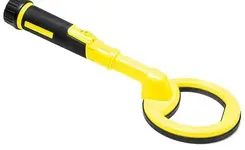
  • Handheld Underwater Detector.webp
    Handheld Underwater Detector.webp
    10.6 KB · Views: 107
Upvote 0
Generally, higher frequencies for low conductors, such as gold and platinum. Lower frequencies for high conductors such as silver and copper. The lower frequencies have better depth than their higher counterparts too. What brand and model is the one shown? Have you looked at the specs to see what frequency(ies) are used?
 
Generally, higher frequencies for low conductors, such as gold and platinum. Lower frequencies for high conductors such as silver and copper. The lower frequencies have better depth than their higher counterparts too. What brand and model is the one shown? Have you looked at the specs to see what frequency(ies) are used?
That's my Nokta Makro Pulse Diver. I took it in the water at the beach a few weeks ago for the 1st and only time and didn't turn it on when I was in the water. After I got home, I found out sometimes it detects some metals and sometimes none, so I don't know why it doesn't work. I'm well past the warranty. I don't know if it can be fixed.
 
A Nokta Pulse Dive is a PI detector. I'm not aware of any way to change frequencies or time delays on that machine. It should hit on all metals and doesn't discriminate, so, you'll have to dig everything using it.
 
A Nokta Pulse Dive is a PI detector. I'm not aware of any way to change frequencies or time delays on that machine. It should hit on all metals and doesn't discriminate, so, you'll have to dig everything using it.
I always dig everything anyway.

I forget how pulse induction is better than VLF.
 
With VLF frequency matters but with PI it is the sample delay that matters, not frequency. The Nokta has a minor frequency offset adjustment but it doesn't affect performance. PI runs well in salt water a also handles magnetite ground very well. And tends to go deeper.
 
With VLF frequency matters but with PI it is the sample delay that matters, not frequency. The Nokta has a minor frequency offset adjustment but it doesn't affect performance. PI runs well in salt water a also handles magnetite ground very well. And tends to go deeper.
This was very helpful. Can you explain sample delay and frequency offset?
 

Users who are viewing this thread

Back
Top Bottom