What's new

BIFURCATES

wells

Hero Member
Joined
Mar 1, 2008
Messages
683
Reaction score
561
Golden Thread
0
Location
Middleburg, Pa.
Primary Interest:
Other
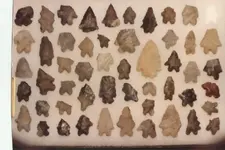
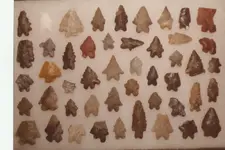
Here is about half of the bifurcated points i've found over the years.
 

Attachments

  • Bifs.webp
    Bifs.webp
    38.4 KB · Views: 151
  • Bifs 2.webp
    Bifs 2.webp
    35 KB · Views: 132
Upvote 0
Awesome collection of bifurcates Wells ! All the different styles and materials are represented there. Have you or anyone else ever heard a good or plausible reason for the bifurcations? I assume that perhaps these points were hafted onto a wood/bone shaft or handle that had a small protruding point or tit on it, and that the bifurcation fit over it, maybe allowing the hafting to be stronger in resisting side forces ? Has anybody read any wear and use analyses about bifurcates being confirmed to have been knives, or projectile points, or something else? It seems to me that most bifurcates ended up with tip breakage, and were then discarded or reworked again down to almost nothing left, you have several nice examples of heavily re-sharpened bifurcates represented here. It is also interesting to me that the bifurcates and the point styles that came just before them seem to be the most prevalent for heavy serrations, I wonder if this had anything to do with processing of plant materials that some say became an emphasis during the bifurcate time period. Thanks for showing
 
The one in the middle of second pic is killer !!!! Nice frames!!!
 
Awesome collection of bifurcates Wells ! All the different styles and materials are represented there. Have you or anyone else ever heard a good or plausible reason for the bifurcations? I assume that perhaps these points were hafted onto a wood/bone shaft or handle that had a small protruding point or tit on it, and that the bifurcation fit over it, maybe allowing the hafting to be stronger in resisting side forces ? Has anybody read any wear and use analyses about bifurcates being confirmed to have been knives, or projectile points, or something else? It seems to me that most bifurcates ended up with tip breakage, and were then discarded or reworked again down to almost nothing left, you have several nice examples of heavily re-sharpened bifurcates represented here. It is also interesting to me that the bifurcates and the point styles that came just before them seem to be the most prevalent for heavy serrations, I wonder if this had anything to do with processing of plant materials that some say became an emphasis during the bifurcate time period. Thanks for showing
I ask those same questions and dont have any answers. I .look at them and say "why". They really are unique and very cool. I find a lot of their sites on hill tops, as a matter of fact just about every hill field in our valley produces them.
 
Wow nice collection wells!
 
Broke or not those are SUPER lookin frames bud!!!! I like the flakin on BIFUR's, so simple yet so different.. NO expert but just how they are reworked suggests knifes.. HH..
 
"So I think I will go out and pick up a pocket full Bifurcates today." I wish.
Those are so cool. Seeing so many together is awesome. Thanks for sharing.
 
JMO I will say 2 reason's 1st it was a certain type like a calling card for that time period or clan. 2nd the groove in the bottom when hafted, hafting glue or what ever they used would harden inside the groove making a much stronger bond.
 
Real nice frames of points! I find the bifurcated more interesting too. They sure resharpened some down to the nub.
 

Users who are viewing this thread

Back
Top Bottom