castletonking
Full Member
- Joined
- Jun 20, 2011
- Messages
- 245
- Reaction score
- 16
- Golden Thread
- 0
- Location
- castleton vt.
- Primary Interest:
- Metal Detecting

hey thanks,thats awsomenova treasure said:Ball button,
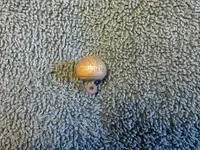
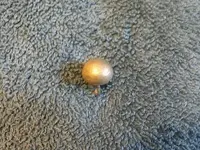
late 18th to early 19th century undecorated die-formed button, two-piece hollow sheet copper-alloy, mushroom or ball shaped with separate soldered iron wire shank, crimped joint. 15mm diameter.
Bill

there are no markings that i can make out. i can't believe it came out of the ground so shiny after all these years.TheCannonballGuy said:Please pardon me if you already know most of the following info. I'm giving it because some readers here probably don't already know all of it.
That specific form of button dates back to the 1700s ...but it is also still in use today, mainly on Military School cadet uniforms (such as the Virginia Military Institue cadets). That being said, the form of button you found was most-widely-used in the first half of the 1800s, and rapidly fell out of popularity afterwards, due to the advent of low-priced "more ornate" buttons.
Back in that earlier era, the specific form of button you found was called a ball-button or a bullet-button. It was frequently worn on civilian clothing, not just on military uniforms.
We diggers date that form of button by various small differences in the way it is constructed, such as its attachment-loop, and the Maker's-Mark (on buttons, it is called a backmark).
The ball-button is "probably" associated with the time-period of the other relics you found at that site. Does your ball-button have a backmark? If so, what does it say?
Edit: I see that Nova Treasure has already given you some of the same information while I was busy typing this reply.

why not? If gold plated it happens afters thousands of years depending on plough damage & environmental issues?castletonking said:there are no markings that i can make out. i can't believe it came out of the ground so shiny after all these years.TheCannonballGuy said:Please pardon me if you already know most of the following info. I'm giving it because some readers here probably don't already know all of it.
That specific form of button dates back to the 1700s ...but it is also still in use today, mainly on Military School cadet uniforms (such as the Virginia Military Institue cadets). That being said, the form of button you found was most-widely-used in the first half of the 1800s, and rapidly fell out of popularity afterwards, due to the advent of low-priced "more ornate" buttons.
Back in that earlier era, the specific form of button you found was called a ball-button or a bullet-button. It was frequently worn on civilian clothing, not just on military uniforms.
We diggers date that form of button by various small differences in the way it is constructed, such as its attachment-loop, and the Maker's-Mark (on buttons, it is called a backmark).
The ball-button is "probably" associated with the time-period of the other relics you found at that site. Does your ball-button have a backmark? If so, what does it say?
Edit: I see that Nova Treasure has already given you some of the same information while I was busy typing this reply.

Can you tell us who was wearing it?nova treasure said:Ball button,
late 18th to early 19th century undecorated die-formed button, two-piece hollow sheet copper-alloy, mushroom or ball shaped with separate soldered iron wire shank, crimped joint. 15mm diameter.
Bill

silly question, of course he canbigcypresshunter said:Can you tell us who was wearing it?nova treasure said:Ball button,
late 18th to early 19th century undecorated die-formed button, two-piece hollow sheet copper-alloy, mushroom or ball shaped with separate soldered iron wire shank, crimped joint. 15mm diameter.
Bill

CRUSADER said:silly question, of course he canbigcypresshunter said:Can you tell us who was wearing it?nova treasure said:Ball button,
late 18th to early 19th century undecorated die-formed button, two-piece hollow sheet copper-alloy, mushroom or ball shaped with separate soldered iron wire shank, crimped joint. 15mm diameter.
Bill
nova treasure said:CRUSADER said:silly question, of course he canbigcypresshunter said:Can you tell us who was wearing it?nova treasure said:Ball button,
late 18th to early 19th century undecorated die-formed button, two-piece hollow sheet copper-alloy, mushroom or ball shaped with separate soldered iron wire shank, crimped joint. 15mm diameter.
Bill
of course, it was this fellar. he was rather upset after losing it and having to change his shirt.


nova treasure said:CRUSADER said:silly question, of course he canbigcypresshunter said:Can you tell us who was wearing it?nova treasure said:Ball button,
late 18th to early 19th century undecorated die-formed button, two-piece hollow sheet copper-alloy, mushroom or ball shaped with separate soldered iron wire shank, crimped joint. 15mm diameter.
Bill
of course, it was this fellar. he was rather upset after losing the reale, the button and having to change his shirt.
TheCannonballGuy said:Fyrfftyr1, it seems you are using a web-browser which does not show the posted photo's filename (right below the photo). It is "Jean_Lafitte_.jpg"
You need to use the winking icon or someone may take you seriously.nova treasure said:Yes, ole Jean was a really bad dude early 19th Century and his serious looking picture from 1817 give me the opportunity to add alittle humor.


TCG,TheCannonballGuy said:Fyrfftyr1, it seems you are using a web-browser which does not show the posted photo's filename (right below the photo). It is "Jean_Lafitte_.jpg"
 I reckon I should have used the winking icon so Y'all would know I was just trying to be funny!
 but my picture says its Hernan Cortez.