What's new

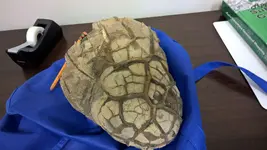
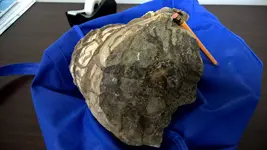
can someone identify this rock and any additional information?

sargdave

Tenderfoot
Joined
Jul 1, 2015
Messages
3
Reaction score
2
Golden Thread
0
Primary Interest:
All Treasure Hunting
This looks like somekind of igneous rock with pentagon shaped bodies that were filled in with magma . . . ???
 

Attachments

  • WP_20150701_08_32_47_Pro (1).webp
    WP_20150701_08_32_47_Pro (1).webp
    291.6 KB · Views: 117
  • WP_20150701_08_33_08_Pro.webp
    WP_20150701_08_33_08_Pro.webp
    294.9 KB · Views: 99
No idea maybe the rocks were on top of the maybe loose rocks then magma got in between the rocks and it turned into a large rock no idea cool rock thx for sharing
Jolteon
 
Post it in the rock and Gem section. Some experts in there will tell you exactly what it is.
Welcome to T-Net.
 
First of all welcome to T-net...!!! :occasion14:

Since it's Thursday and I know EVERYTHING on Thursdays here's what it is. It's an ancient tortoise cooked in the shell when it couldn't outrun the magna! :laughing7:

Ok.... I know, let's move on (again).
 
Taking an uneducated guess.......Possibly petrified wood.
 
My thoughts are that the specimen was originally dried, cracked mud in or very near the entrance to a cave. That Calcite or other form of Carbonates flowed in the cracks, the specimen then hardened into stone/rock and then rain and/or wind erosion weathered away the hardened but softer mud, leaving the harder Calcite/Carbonate protruding above the specimen's surface. Note: Calcite and other forms of Carbonates are what create Stalagmites and Stalactites in caves.


Frank
 
That is one weird looking rock! Almost looks like bone fragments. Hope you get an ID on it.
 
Well that looks really weird. Not that I know what I'm talking about--but I suppose most igneous rocks are pure igneous and spend most of their time in the mantle or upper crust slowly being very hot and mixing and growing; yet there has to exist some "shock zones" where igneous extrusions are hot enough to infiltrate and alter local in situ rocks but not hot enough to get beyond a quick alteration. Maybe this is one of the rare "igneous meets and alters some mud flat or sedimentary rock enough to change its atomic structure via heat but not enough to fully develop/melt/mix with it" or uh something. If my theory is right I think any crystals (in the "core" in the exposed middle) would be extremely small--microscopic, due to a very quick relative time from introduction to cooling.

If none of us dunderheads can answer the question I'd suggest trotting in to a local college or university's geology department and presenting it. They might be as interested and baffled as I am.
 
Last edited:
Looks like a ham to me.


ham.webp


As mentioned above, posting in the rock and gem forum will get more experts looking at it.
 
Please someone direct me to the "rock and gem" section. Thanks.
 

Users who are viewing this thread

Back
Top Bottom