Alwayslooking2
Full Member
- Joined
- Jun 21, 2019
- Messages
- 105
- Reaction score
- 180
- Golden Thread
- 0
- Primary Interest:
- All Treasure Hunting
- #1
Thread Owner
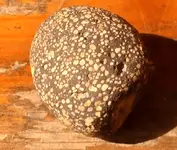
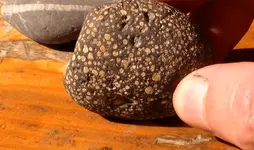
I found yhis in missouri and it sticks to a magnet.
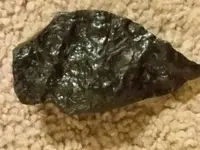
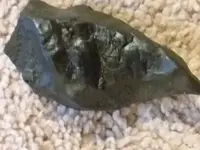

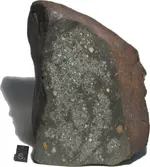
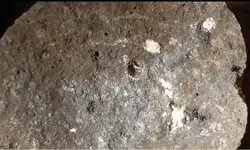
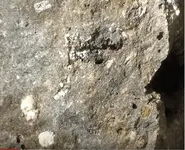
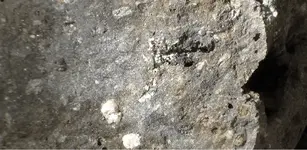
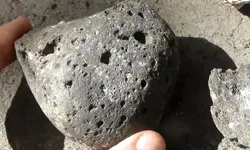
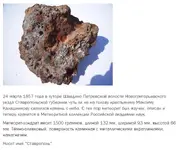

Could it be a stone meteorite?
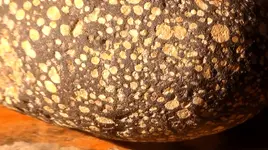
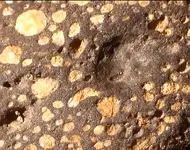
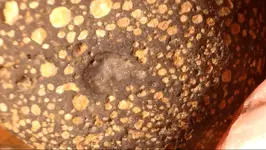
The fact that your stone has vesicles on the surface is a red flag. Meteorites do not display vesicles. That said, I cannot tell you what rock type your stone is, but I have collected both fossils and meteorites for many decades, and I don't believe the holes or vesicles contained fossil shells at any time. But, that is very clearly not a meteorite.
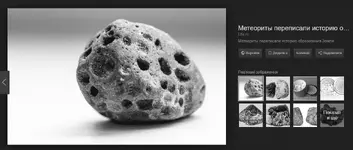
Well, I'll have to stand corrected. An extremely tiny percentage of meteorites show vesicular crust:
Vesicles in Meteorites
With that said, you would need to submit a sample to a lab recognized by the Meteoritical Society. The answer you desire cannot be provided to you based on photos..
and I don't believe the holes or vesicles contained fossil shells at any time.

I suppose that all the stones in the Universe are similar, because they are formed from primary dust in the process of forming stars and planets (high temperatures and pressure - I have a stone that is half sandstone and half already granite)Anyan, I believe that your pieces are something like vesicular Basalt or another bubbly igneous rock which is made via volcanic activity, with the pale stone "amygdules" representing a secondary deposition of quartz or calcite in the cavities.
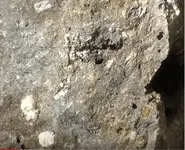
Thank you very much for your response! Logically, the only way to create a bubbly surface structure of a stone is if he flies close to the Sun - the Sun warms he to a boiling state and at the same time it remains a stone and retains its shape.
On Earth, it is impossible to repeat - only in space you can create something similar, since gravity does not change its shape and contact with other stones does not transform it.
Well, I don't know where you came up with these statements, but there is absolutely no truth to them at all. None whatsoever.
 then tell me what happens to the stone that flies close the sun? How will it look after heating in space?