What's new

Coin Help Needed

Woodland Detectors

Gold Member
Joined
Nov 23, 2008
Messages
12,783
Reaction score
143
Golden Thread
0
Location
Toll Free ~ 855~966~3563
Primary Interest:
Relic Hunting
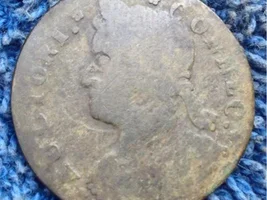
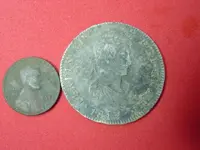
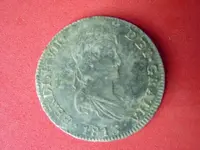
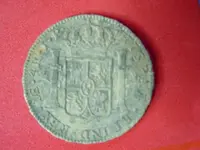
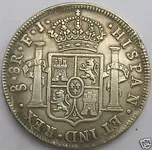
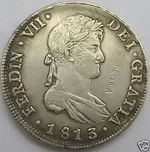
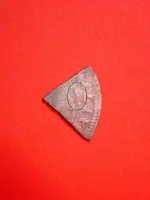
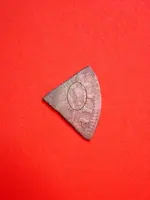
I just dug this one about an hour ago and I must say, when it rolled out of the plug it caught my attention! Does any one know any info on this Reale 4 coin please? Thanks!
 

Attachments

  • DSC00029.webp
    DSC00029.webp
    46.6 KB · Views: 557
  • DSC00030.webp
    DSC00030.webp
    38.8 KB · Views: 540
  • DSC00031.webp
    DSC00031.webp
    26.1 KB · Views: 541
its a 4 reale looks mexican
 
Upvote 0
It's a Spanish 4 reale :thumbsup:
 
Upvote 0
4-H said:
OK, I looked up 1813 spanish reale and it looks nothing like mine??? What gives? lol
Here's a picture of Spanish eight reale rep, :read2: I think yours is a four :thumbsup:
 

Attachments

  • 8.webp
    8.webp
    40.9 KB · Views: 513
  • 8r.webp
    8r.webp
    24.9 KB · Views: 521
Upvote 0
Silver Searcher said:
4-H said:
OK, I looked up 1813 spanish reale and it looks nothing like mine??? What gives? lol
Here's a picture of Spanish eight reale rep, :read2: I think yours is a four :thumbsup:

yeap, good ID, its a 4.
 
Upvote 0
Sweet find :icon_thumright: What the bits weren't good enough :D Congrats on a great coin.
 
Upvote 0
Mackaydon said:
It's from Lima, Peru. I agree with 'sscinder'.
Don.......
The mint mark for Lima/Peru would be JP for 4 Reals(1804-1821) :icon_scratch:
 
Upvote 0
Silver Searcher said:
Mackaydon said:
It's from Lima, Peru. I agree with 'sscinder'.
Don.......
The mint mark for Lima/Peru would be JP for 4 Reals(1804-1821) :icon_scratch:
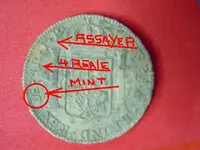
I just noticed this great find! J P is the Assayer. Its a 4 Reale and the slightly overlapped ME would be one of the Lima Peru mintmarks. :thumbsup:
 

Attachments

  • spanish 4R mint mark.webp
    spanish 4R mint mark.webp
    28.3 KB · Views: 384
Upvote 0
so its a 1813 SPANISH (SILVER) PERU MINT MADE 4 REALE INSPECTED BY ASSAYERS J & P (there were 2 ) --- very nice find . - in nice shape too.

while similar in "basic overall design" the 1813 8 reale shown above was made in a differant mint---see the mint mark? and thus had differant "mint assayers" letters as well - they checked its weight and silver % purity) * thus the differant mint mark & assayers letters than the 4 reale coin of yours --- a 8 reale was like a silver "dollar" ---a 4 reale was like a half dollar of its day --- which a lot of money back in those days . --- since wages were often a "dollar a day or less" for common working folks. (think a half days wages for a modern minumum wage earner.)
 
Upvote 0
Ivan, I agree; the initials JP stand for two assayers, Juan Martínez de Roxas and Pablo Cano Melgarejo, who worked together from 1803 to 1823.
Good catch.
Don.....
 
Upvote 0
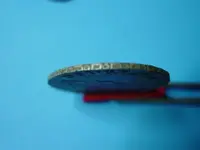
Very good ID's fellas! And I think we all learned a little more about the history of these. Thanks again. Here is a pic of the edge or reed? Design is very intricate. Mike
 

Attachments

  • DSC00036.webp
    DSC00036.webp
    5.5 KB · Views: 358
Upvote 0
Mike:

You mentioned the 'edge'.

Coinage issuers have long realized that placing an intricate, difficult-to-replicate pattern around the rim of a coin helps prevent the two scourges of trustworthy coinage: clipping and counterfeiting. Summarized below are the various edges you might find on coins.

A Decorated Edge is similar to an inscribed edge, but patterns and symbols instead of letters are used. This term could be applied to the circles-and-rectangles pattern applied to your Spanish "portrait" dollar, and to the recurring stars seen on many of the 2 euro coins.

A Plain Edge has no marking of any kind on the edge, applied with a simple, flat collar die. In modern times, almost without exception, only base-metal coins had this kind of edge. US cents and 5 cents have plain edges.

A Grooved Edge is plain, but has a deep score or groove halfway across, all the way around the rim. The initial reaction of someone seeing such a coin for the first time is "it looks like two coins glued together". The 2 eurocent is an excellent example of this feature.

A Reeded Edge has fine serrations like a file, all the way around the rim. Normally the reeding is vertical, but some early experiments had slanted reeding. Most modern silver and gold coins world-wide, and most of their cupronickel successors, have this kind of edge, also popularly known as a milled edge or filed edge.

A Security Edge is a combination of grooved and reeded edge; often the furrow of the groove is decorated with a pattern (dots, lettering or some such) to make it even harder to duplicate. But the high cost of applying has largely rendered this kind of edge obsolete.

An Inscribed Edge has text around the rim. On older coins (like Maria Theresa thalers, US gold coins and British crowns), this text was placed on the collar die. Modern versions (like the USA Presidential Dollars) tend to use a second stage in the minting process to add the edge inscriptions.

An Interrupted Reeded Edge has alternating sections of reeded and plain edge. The 1 euro and Australian $1 circulating coins are classic examples of interrupted reeding.

An Indented Edge is a plain or milled edge with several indents or notches regularly spaced around it. This type of edge has recently come into fashion; the 20 eurocent and new New Zealand 20¢ coin have this kind of edge, also known as "Spanish flower".

A Herringbone Edge is a specific kind of decorated edge, and resembles an early attempt at reeding; the pattern on the rim forms a series resembling interconnected arrows, or a "fish-bone" pattern. The Spanish "pillar dollar" of the early 1700's is a classic example of this kind of edge.

A Serrated Edge is the term usually applied to ancient Greek and Roman coins with v-shaped notches painstakingly carved into the coin at regular intervals. Apparently a very crude attempt at applying something resembling a reeded or security edge.

I give credit to the Moderator of Coin Community.com Forum who gave this (almost verbatim) response about two years ago on his website. I have found these terms come in handy when describing that portion of a coin.

Don.......
 
Upvote 0
ivan salis said:
so its a 1813 SPANISH (SILVER) PERU MINT MADE 4 REALE INSPECTED BY ASSAYERS J & P (there were 2 ) --- very nice find . - in nice shape too.
Yes thanks for explaining the assayer mark or in this case the assayerS. ;D I was just trying to explain that JP is not the mint mark.
Of interest here is there were several different mint marks used at the Lima mint.
Mintmark-P, or P with star above, or L, or LM, or LIMA, or a slightly overlapped ME.


http://metaldetectingworld.com/coins_silver_reales.shtml

Now you have found a whole 4 reale to compare with your piece. A few years back this would make banner. ...Honorable mention?
 

Attachments

  • spanish 4H.webp
    spanish 4H.webp
    23.7 KB · Views: 307
  • spanish 4H.webp
    spanish 4H.webp
    23.7 KB · Views: 318
Upvote 0

Users who are viewing this thread

Latest Discussions

Back
Top Bottom