What's new

Colonial HAIR CARE in the mud

Patriot Relics

Silver Member
Joined
Feb 6, 2014
Messages
3,712
Reaction score
5,634
Golden Thread
5
Location
Lowcountry, South Carolina / Richmond, Virginia
🥇 Banner finds
5
Detector(s) used
CTX-3030, Deus XP II
Primary Interest:
Relic Hunting
Hey guys,

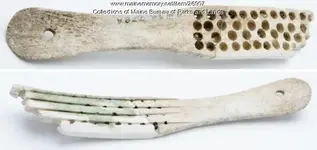
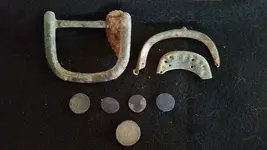
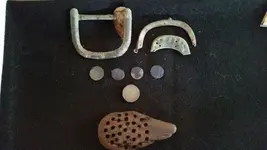
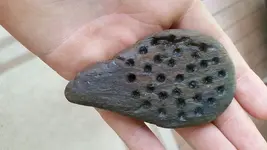
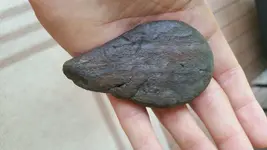
Returned to my British ferry site to hit the low tide this morning and after getting skunked, was surprised to see a round piece of wood sticking out of the mud. Honestly, I am not sure why I picked it up...just didn't want to go home empty handed and figured why not. When I flipped it over I could see multiple drilled holes at random intervals- certainly not machine made but could a wooden hair brush survive 200 years? After doing a bit of research this is the closet reference I can find- a 1600s era hair brush excavated from Fort William Henry in Maine. Crazy to think of who might have been holding this last. After getting it home I bubbled away the water and sealed it with hot paraffin wax. Went out for a second hunt at another later site and did manage a few tomac buttons and copper boot taps. Thanks for looking
20150907_135021_resized.webp20150907_135030_resized.webp26907.webp20150907_163039_resized.webp20150907_163102_resized.webp
 
Upvote 14
Thats so cool Jon.
That will look great in a display case.
And of course you are the button man!
 
Thats so cool Jon.
That will look great in a display case.
And of course you are the button man!

Thanks George, I refuse to end a hunt until I have at least 1 flat button...as it was I think found the remnants of an old shirt (all 4 of the small buttons were within 5 feet of each other)
 
AIRPOWER THAT BRUSH IS BONE , CORRECT. DANG YOU LUCKY DOG MAN YOU FIND SOME INTERESTING STUFF.
 
AIRPOWER THAT BRUSH IS BONE , CORRECT. DANG YOU LUCKY DOG MAN YOU FIND SOME INTERESTING STUFF.

Thanks sutphin, the reference listed 3rd is bone and was recovered in maine- the one I recovered is made of wood.
 
That is a very unique find, and one I have never recovered after digging many early pits. For some reason I would lean toward dating it to the 1700s, but guess it depends on the context in which it was found. I know you've found 1600s artifacts at this site so I guess it could be from that period as well.
 
That is a very unique find, and one I have never recovered after digging many early pits. For some reason I would lean toward dating it to the 1700s, but guess it depends on the context in which it was found. I know you've found 1600s artifacts at this site so I guess it could be from that period as well.

I think being in the water the whole time saved this piece. If it was in a pit it would be gone????
 
Last edited:
That is a very unique find, and one I have never recovered after digging many early pits. For some reason I would lean toward dating it to the 1700s, but guess it depends on the context in which it was found. I know you've found 1600s artifacts at this site so I guess it could be from that period as well.

Hey Bill, you are probably correct regarding that time period as the earliest pewters date the site to the early 1700s. I was just going off the information provided on the reference picture online. I was terrified after I pulled it out of the water that it would disintegrate given that it was very soft and saturated with water. Got it home and used a toothpick to carefully remove the mud from each drill hole- after which I boiled away the water in liquid paraffin. It's nice and stable now :laughing7:
 
Last edited:
I think being in the water the whole time saved this piece. If it was in a pit it would be gone????

That was my thought George, certainly it would have decomposed if buried inland and exposed to normal conditions.
 

Users who are viewing this thread

Back
Top Bottom