What's new

First Day With Son - Old Axe Head in VA

mcglamerye

Tenderfoot
Joined
Dec 28, 2013
Messages
2
Reaction score
5
Golden Thread
0
Primary Interest:
All Treasure Hunting
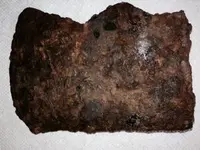
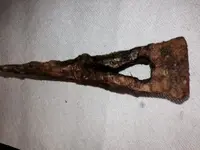
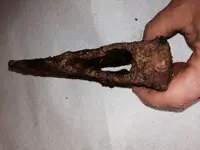
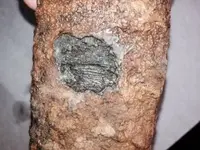
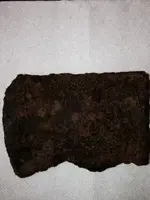
First day detecting with 11 year old son, Garrett 150 and Garrett 350. Found an old 12 gauge SG shell, UMC Co New Club No 12. Pretty cool but also found this really old axe head that has me more intrigued. Tried to clean as best I could but does anyone know how to go about dating one of these? Or how to better clean it up :-)
 

Attachments
  • photo_1.webp
    photo_1.webp
    10.2 KB · Views: 202
  • photo_2.webp
    photo_2.webp
    15.1 KB · Views: 198
  • photo_3.webp
    photo_3.webp
    10.4 KB · Views: 200
  • photo_4.webp
    photo_4.webp
    8.9 KB · Views: 198
  • photo_5.webp
    photo_5.webp
    17.2 KB · Views: 202
Upvote 10

love axe heads, i found the exact same one in a known civil war site id at least say 1800s its home made


edit i cleaned mine with an electric sander....looks beautiful
 
Probably 1800S. There Are Many Ways To Clean Iron... Soak It In Vinegar, Electrolysis, Bake It In The Oven, Take A Wire Brush To It, Or Just Chisel Away With A Screwdriver And A Hammer. Id Recommend Looking Up How To Do Electrolysis.it Has The Best Results In My Opinion.
 
Congrats on your finds and that you and son are detecting together awesome!
 
Electrolysis is a commonly used method of cleaning iron (and other metals, even coins at time), though at least one poster here has shown some really nice results using vinegar. Vinegar takes longer to show results than low-med power electrolysis, but some feel more confident using it as it's a much more gradual process.

Your ax head should clean up nice either way, good luck with it.
 
Agreed. Start by soaking the axe in apple cider vinegar (ACV) for a few weeks. After about a month the rust should flake right off. Electrolysis will rid the axe of any concretion the ACV could not remove and will loosen any clumps on the inner handle area. Scrub with a steel or brass wire brush and seal with clear Rustoleum spray lacquer.

Those who have said that electrolysis is faster are correct; however, even low power for long periods can degrade the metal; not to mention, you need a solid iron contact to attach the clips to in order to do electrolysis. By doing an ACV soak first you are allowing the low grade acetic and citric acids to break down the rust. Do the ACV soak first; electrolysis may not even be necessary.
 
Thanks for all the tips! I'll definitely try the ACV treatment and see how it goes. The axe head was hitting at the base of a tree. After digging down, and around two big roots, it was laying under the two big roots. Took a while to get to it, almost gave up and moved on.
 
After you remove the rust with the ACV, coat it with cooking oil to keep it from flash rusting and put it in the oven at 200 degrees for about an hour. That will remove any remaining moisture. Then coat it again with 3 in 1 oil or WD40.
 
I couldn't believe how well electrolysis worked on my first sample piece. Good find and welcome to the forum.
 
Last edited:
Glad to hear you & your son got out & found something , those (New Club) type Shotgun brass heads seem to be the most common ones I find & as for the ax head (that,s a nice one) everyone has their fav, method of cleaning and treatment IMO .

I'd just check out (cleaning Methods) and see what suites you best.

If you were closer I would offer to clean it for you , I need a reason to get un-lazy set up my Electrolysis set to clean Iron found over the Summer/Fall.

Welcome to the forum I wish you fellas luck in the New Year.

Davers
 

Users who are viewing this thread

Back
Top Bottom