What's new

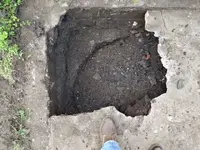
Found and 1840s privy today behind an 1840s house today. Should I dig it?

Helix

Bronze Member
Joined
Jul 27, 2013
Messages
1,429
Reaction score
1,316
Golden Thread
0
Detector(s) used
Garrett gti 2500, Whites DFX
Primary Interest:
All Treasure Hunting
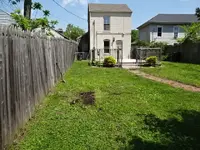
So I got permission yesterday to metal detect a yard on 1840s house... Nothing but trash but this caught my attention... Looks like a privy... :laughing7: full of goodies! Ok I will let the pictures do the talking. Have you note this was the richest town in Indiana during the 1840s.... DSC00678.webp DSC00679.webp DSC00686.webp DSC00688.webp You can clearly see the original cut stone, where it goes from modern concrete to cut stone and round... So I would say this is a good find for the day... just my 2 cents.... I will dig later some time.
 
Upvote 16
I've never dug a privy, but I'd love to try it some day. If I found one as old as yours I'd dig it without question
 
So I got permission yesterday to metal detect a yard on 1840s house... Nothing but trash but this caught my attention... Looks like a privy... :laughing7: full of goodies! Ok I will let the pictures do the talking. Have you note this was the richest town in Indiana during the 1840s.... View attachment 1449788 View attachment 1449791 View attachment 1449794 View attachment 1449797 You can clearly see the original cut stone, where it goes from modern concrete to cut stone and round... So I would say this is a good find for the day... just my 2 cents.... I will dig later some time.[/QUO

I forgot to mention,, my friend bought house and now being remodeled so I have full permissions here....
 
Yes, dig it. I have been cautioned by experienced privy diggers never to dig one alone. FYI Can be hazardous.
 
Yes, dig it. I have been cautioned by experienced privy diggers never to dig one alone. FYI Can be hazardous.


No, one of the best privy diggers between Louisville and Cincinnati lives a block down the street.... Don't want to name the guy but a lot of people would be like.... Yeah I know him in the bottle world and digging... Your safe.
 
....Oh yeah! I've had many finds from old privy sites . PISTOLS, GLASSES, BOTTLES, pair of baby shoes, knives, a sterling match safe..ect...
Have fun/be careful.
 
So what do you consider the richest town to be in Indiana in the 1840's?
 
Looks like you got yourself a winner.....hopefully never been hit before.
 
So what do you consider the richest town to be in Indiana in the 1840's?


James Franklin Doughty Lanier (November 22, 1800 – August 27, 1881) was an entrepreneur who lived in Madison, Indiana prior to the outbreak of the American Civil War (1861–1865). Lanier became a wealthy banker with interests in pork packing, the railroads, and real estate
 
During the 1820s, he was assistant clerk for the Indiana Legislature and later Clerk of the Indiana House of Representatives, where he was involved in assisting to move the capitol from Corydon to Indianapolis in 1825.
In the early 1830s, Lanier became involved in banking. He became president of the Bank of Indiana in 1833 and eventually became a large shareholder of its Madison branch and was also on the board of directors that oversaw all branches. In the later 1830s, Lanier was involved with construction of the state's first major rail line connecting Madison and Indianapolis. He became a major stockholder in the line, which was finally finished in 1847. The line turned out to be very profitable.
The same year, Lanier represented Indiana in a meeting with its European creditors. The state was on the verge of bankruptcy due to extreme overspending on internal improvement over the previous decade and was liquidating its assets. Lanier was able to negotiate the transfer of ownership of most of the Indiana canals to their bond holders in exchange for a 50% reduction in the value of the bonds.[SUP][2][/SUP]

Lanier Mansion in Madison


His sudden wealth allowed him to build a large mansion in Madison; it was completed in 1844. His wife Elizabeth died in 1846 and he was remarried to Margaret Mary McClure in 1848.
In 1849, he began trading railroad shares in New York in a bank he started there in the same year with Richard Winslow called Winslow, Lanier & Co.. In 1851, he moved out of the state to New York, where he would manage his new business. He never moved back to Indiana.
At the request of Gov. Oliver P. Morton, Lanier loaned the Indiana government over one million dollars without security to help the state avoid bankruptcy during the American Civil War. The money was used to pay interest on the state debt and outfit troops. It was all repaid by 1870. The state, grateful for his help, has preserved his residence in Madison, the Lanier Mansion, as a state historic site.[SUP][3][/SUP]
 
During the 1820s, he was assistant clerk for the Indiana Legislature and later Clerk of the Indiana House of Representatives, where he was involved in assisting to move the capitol from Corydon to Indianapolis in 1825.
In the early 1830s, Lanier became involved in banking. He became president of the Bank of Indiana in 1833 and eventually became a large shareholder of its Madison branch and was also on the board of directors that oversaw all branches. In the later 1830s, Lanier was involved with construction of the state's first major rail line connecting Madison and Indianapolis. He became a major stockholder in the line, which was finally finished in 1847. The line turned out to be very profitable.
The same year, Lanier represented Indiana in a meeting with its European creditors. The state was on the verge of bankruptcy due to extreme overspending on internal improvement over the previous decade and was liquidating its assets. Lanier was able to negotiate the transfer of ownership of most of the Indiana canals to their bond holders in exchange for a 50% reduction in the value of the bonds.[SUP][2][/SUP]

Lanier Mansion in Madison


His sudden wealth allowed him to build a large mansion in Madison; it was completed in 1844. His wife Elizabeth died in 1846 and he was remarried to Margaret Mary McClure in 1848.
In 1849, he began trading railroad shares in New York in a bank he started there in the same year with Richard Winslow called Winslow, Lanier & Co.. In 1851, he moved out of the state to New York, where he would manage his new business. He never moved back to Indiana.
At the request of Gov. Oliver P. Morton, Lanier loaned the Indiana government over one million dollars without security to help the state avoid bankruptcy during the American Civil War. The money was used to pay interest on the state debt and outfit troops. It was all repaid by 1870. The state, grateful for his help, has preserved his residence in Madison, the Lanier Mansion, as a state historic site.[SUP][3][/SUP]


The guy rode to Washington personally and baled out the State with his own money.... I would say that alone makes this the richest city during 1840s...
 
WOW Merry Christmas!
 
Oh I would dig for sure, be careful and HH!
 
Great info, thanks for sharing.
 
What types of hazards, out of curiosity?


The fact that old privy can get deep in depth makes it a hazard. Plus the rusted metal and broken glass and who knows what else was dumped down in pit.. We figured this one to be 12-14' deep...
 
The fact that old privy can get deep in depth makes it a hazard. Plus the rusted metal and broken glass and who knows what else was dumped down in pit.. We figured this one to be 12-14' deep...

Add to that the danger of toxic fumes or lack of oxygen, consider this as a Confined Space. You need an attendant to monitor you, you need to be tied off so that your unconscious body can be pulled out of the hole. Huge focus in the construction industry with many fatalities resulting from confined space entries.
 
Add to that the danger of toxic fumes or lack of oxygen, consider this as a Confined Space. You need an attendant to monitor you, you need to be tied off so that your unconscious body can be pulled out of the hole. Huge focus in the construction industry with many fatalities resulting from confined space entries.


Yes no way should anyone ever, ever attempt to dig privies alone I agree 100 %.. We hope to have a small backhoe, nice to have one on hand, just in case.
 
So I got permission yesterday to metal detect a yard on 1840s house... Nothing but trash but this caught my attention... Looks like a privy... :laughing7: full of goodies! Ok I will let the pictures do the talking. Have you note this was the richest town in Indiana during the 1840s.... View attachment 1449788 View attachment 1449791 View attachment 1449794 View attachment 1449797 You can clearly see the original cut stone, where it goes from modern concrete to cut stone and round... So I would say this is a good find for the day... just my 2 cents.... I will dig later some time.[/QUO

I forgot to mention,, my friend bought house and now being remodeled so I have full permissions here....

I was gonna say - Damn! They let you bust up their concrete? Get in there and dig!
 
Last edited:

Users who are viewing this thread

Back
Top Bottom